Code Review Best Practices for Engineering Teams
Proven code review practices from Google, Microsoft, and top engineering teams. PR size, review speed, feedback, automation, and effectiveness metrics.
Published:
Last Updated:
Why code review matters
Code review is one of the highest-leverage practices an engineering team can adopt. The data is unambiguous. Google’s internal research, published through their engineering practices documentation, found that code review is the single most effective method for finding defects in software - more effective than testing, static analysis, or formal verification when measured in isolation. Microsoft’s empirical studies reached a similar conclusion, showing that reviewed code had 20-30% fewer defects reaching production compared to unreviewed code of equivalent complexity.
SmartBear’s landmark study of 2,500 code reviews across multiple organizations revealed a more granular picture. Reviews consistently found 60-90% of defects before they reached QA, and the cost of finding a defect through code review was roughly 1/10th the cost of finding the same defect in production. The study also identified clear performance thresholds - reviewers examining more than 400 lines of code per session or spending more than 60 minutes in a single sitting experienced a sharp decline in defect detection rates.
But these numbers only tell part of the story. Code review delivers value far beyond bug detection.
Knowledge sharing. When every change passes through at least one other pair of eyes, domain knowledge spreads across the team naturally. The reviewer learns how the author approached a problem. The author learns from the reviewer’s suggestions. Over time, this eliminates single points of failure where only one engineer understands a critical system. Google’s engineering practices guide explicitly calls out knowledge transfer as a primary goal of code review - equal in importance to defect detection.
Codebase consistency. Without review, every developer writes code in their own style. Naming conventions diverge. Error handling patterns fragment. Architectural boundaries erode as individual contributors make expedient choices that contradict established patterns. Review keeps the codebase coherent by providing a natural enforcement mechanism for team conventions and architectural decisions.
Mentorship. Code review is one of the most effective mentorship channels in software engineering. Junior developers learn faster when senior engineers explain why a particular approach is problematic, not just that it needs to change. The asynchronous, written format of PR reviews creates a searchable knowledge base that benefits the entire team.
Quality culture. Teams that review code rigorously develop higher standards over time. Knowing that a colleague will read your code incentivizes cleaner implementations, better documentation, and more thorough testing. The effect is multiplicative - as review quality improves, code quality improves, which makes future reviews faster and more productive.
The counterargument to code review has always been speed. Reviews take time. They block merges. They create context switches. These are real costs, and teams that implement code review poorly end up slower, not faster. The rest of this guide is about how to implement code review well - capturing the full benefit while minimizing the friction.
The code review checklist - what to look for
Effective reviewers do not rely on gut instinct. They work from a mental checklist that they apply consistently to every pull request. The checklist below is drawn from published review guidelines at Google, Microsoft, and several high-performing open-source projects. Not every item applies to every PR, but a good reviewer considers each category for every change.
Correctness
Correctness is the most important dimension. Code that does the wrong thing is worse than code that does the right thing slowly, inelegantly, or with poor naming. Start every review by understanding what the code is supposed to do, then verify that it actually does that.
Does the code handle edge cases? Null inputs, empty collections, boundary values, concurrent access, network failures, disk full conditions. The specific edge cases depend on the domain, but the question applies universally. A function that processes user input but crashes on an empty string is not correct, regardless of how clean the implementation looks.
Are error paths handled? Follow every code path that can fail and verify that the failure is handled appropriately. This includes database queries that return no results, API calls that return non-200 status codes, file operations that throw IOException, and async operations that reject. One of the most common defect categories in production systems is unhandled error paths that were invisible during development because the happy path worked.
Is the logic correct for all states? State machines, feature flags, user permissions, and lifecycle transitions all create combinatorial complexity. Verify that the code handles the full matrix of possible states, not just the states the author had in mind when writing it.
// Common correctness issue: assuming data exists
async function getOrderTotal(orderId: string): Promise<number> {
  const order = await db.orders.findById(orderId);
  // What if order is null? This crashes in production.
  return order.items.reduce((sum, item) => sum + item.price * item.quantity, 0);
}

// Corrected version
async function getOrderTotal(orderId: string): Promise<number> {
  const order = await db.orders.findById(orderId);
  if (!order) {
    throw new OrderNotFoundError(orderId);
  }
  return order.items.reduce((sum, item) => sum + item.price * item.quantity, 0);
}
Security
Security review does not require you to be a security specialist. Most security vulnerabilities in application code fall into a small number of well-known categories. A reviewer who checks for these consistently will catch the majority of security issues before they reach production.
Input validation. Every value that comes from outside the system boundary - HTTP request parameters, form fields, file uploads, API payloads, environment variables read at runtime - should be validated before use. Check that the code validates type, length, format, and range. SQL injection, XSS, and path traversal vulnerabilities almost always trace back to insufficient input validation.
Authentication and authorization. When a PR modifies or adds an API endpoint, verify that the endpoint checks who the caller is (authentication) and whether they are allowed to perform the requested action (authorization). Missing authorization checks on internal endpoints are among the most common security issues found during code review.
Data exposure. Check that API responses do not leak sensitive fields. A common pattern is serializing an entire database record to JSON and sending it to the client, inadvertently exposing fields like password hashes, internal IDs, or email addresses that should not leave the server.
Secrets management. Verify that API keys, database credentials, tokens, and certificates are not hardcoded in source files. Check that they come from environment variables, secret managers, or encrypted configuration stores. Also verify that sensitive values are not included in log statements or error messages.
Dependency safety. If the PR adds a new dependency, check that the package is actively maintained, widely used, and does not have known vulnerabilities. A quick check of the package’s GitHub stars, last commit date, and security advisory history takes under a minute and can prevent supply chain attacks.
Performance
Performance review is not about premature optimization. It is about catching patterns that are known to cause problems at scale. You do not need to benchmark every change, but you should recognize the patterns that consistently lead to performance incidents in production.
N+1 queries. This is the single most common performance issue in web applications. It occurs when code executes one database query to fetch a list and then executes a separate query for each item in the list. The fix is usually a join or a batch query.
# N+1 query pattern - fires 1 + N queries
users = User.objects.all()
for user in users:
    orders = Order.objects.filter(user_id=user.id)  # N queries
    process_orders(user, orders)

# Fixed with a join - fires 1 query
users = User.objects.prefetch_related('orders').all()
for user in users:
    process_orders(user, user.orders.all())  # No additional queries
Unnecessary work inside loops. Object allocations, regex compilations, database connections, and configuration lookups inside loops that could be moved outside. This pattern is easy to spot during review and often yields significant performance improvements.
Missing pagination. Any query that returns an unbounded result set is a potential memory and performance issue. If the code fetches “all records” from a table without a limit, ask whether pagination is needed.
Memory leaks. Event listeners that are added but never removed. Cache entries that grow without bounds. Closures that capture large objects unnecessarily. These are subtle in individual PRs but devastating in long-running services.
Concurrency issues. Race conditions, deadlocks, and thread-safety violations. If the code modifies shared state, check that synchronization is handled correctly. If the code uses async/await, check for unhandled promise rejections and concurrent mutation of shared data structures.
Readability and maintainability
Readable code is cheaper to maintain, easier to debug, and less likely to contain hidden bugs. Readability is not about personal style preferences - it is about whether the next developer who reads this code can understand it quickly and modify it safely.
Naming. Variables, functions, classes, and modules should communicate their purpose through their names. A function named process tells you nothing. A function named calculateShippingCost tells you exactly what it does. Check that names are specific, accurate, and consistent with existing conventions in the codebase.
Function length and complexity. Functions longer than 30-40 lines or with more than 3-4 levels of nesting are typically harder to understand and test. If a function is doing multiple things, suggest breaking it into smaller, named functions that each do one thing.
Comments. Good code is mostly self-documenting through clear naming and structure. Comments should explain why, not what. A comment that says // increment counter above counter++ adds no value. A comment that says // Using retry with exponential backoff because the payment API rate-limits aggressive callers explains a non-obvious decision that future developers need to understand.
Consistency with codebase conventions. Even if the author’s approach is technically valid, it should follow the patterns established in the rest of the codebase. If the project uses repository classes for data access, a PR that makes raw SQL calls directly from a controller breaks the established pattern and should be refactored for consistency.
Complexity. Ask yourself: is there a simpler way to achieve the same result? Unnecessary abstraction is just as much a readability problem as duplicated code. A three-class inheritance hierarchy to handle two cases is harder to understand than a simple if/else.
Test coverage
Tests are not just a safety net - they are documentation that describes what the code is supposed to do and proves that it works. A PR without tests (for code that is testable) should raise a flag during review.
Are the new code paths tested? Every new function, branch, and error path should have a corresponding test. If the PR adds a new API endpoint, there should be tests covering the happy path, validation errors, authentication failures, and edge cases.
Do the tests actually verify behavior? A test that calls a function but does not assert anything meaningful is worse than no test because it creates false confidence. Check that assertions are specific and meaningful.
Are existing tests updated? If the PR changes behavior, the corresponding tests should change to match. If the existing tests still pass without modification, either the tests were not covering the changed behavior (a gap) or the PR did not actually change behavior (unnecessary code change).
Test quality. Tests should be independent, deterministic, and fast. Check for flaky test patterns: tests that depend on execution order, tests that use real network calls, tests that depend on timing, and tests that modify shared state without cleanup.
// Weak test - calls the function but barely verifies behavior
test('creates user', async () => {
  const result = await createUser({ name: 'Alice', email: '[email protected]' });
  expect(result).toBeDefined();
});

// Strong test - verifies specific behavior and edge cases
test('creates user with valid input', async () => {
  const result = await createUser({ name: 'Alice', email: '[email protected]' });
  expect(result.id).toMatch(/^usr_[a-z0-9]{12}$/);
  expect(result.name).toBe('Alice');
  expect(result.email).toBe('[email protected]');
  expect(result.createdAt).toBeInstanceOf(Date);
});

test('rejects user creation with duplicate email', async () => {
  await createUser({ name: 'Alice', email: '[email protected]' });
  await expect(
    createUser({ name: 'Bob', email: '[email protected]' })
  ).rejects.toThrow(DuplicateEmailError);
});
Pull request best practices
The quality of a code review depends heavily on how the pull request itself is structured. A well-crafted PR makes the reviewer’s job easier, leading to faster and more thorough reviews. A poorly structured PR leads to rubber-stamping, slow turnaround, and missed defects.
Keep PRs small
This is the single most impactful practice for improving code review quality. The data is consistent across every study. Google’s internal research shows that PRs under 400 lines changed receive significantly higher-quality reviews than larger ones. Microsoft’s data tells the same story. SmartBear’s study found that defect density - the number of defects found per line reviewed - drops sharply once a review exceeds 400 lines.
The reason is cognitive. Humans cannot hold more than a few hundred lines of context in working memory simultaneously. When a reviewer opens a 2,000-line PR, they skim. They check formatting, spot obvious issues, and approve. The subtle logic bugs, the missing edge cases, the security oversights - those survive because no one can hold the full context of a 2,000-line change in their head.
Keeping PRs small requires discipline in how you plan work. Here are practical strategies:
Break features into vertical slices. Instead of one PR that adds a database migration, API endpoint, service logic, and frontend component, create separate PRs for each layer. Each PR can be reviewed and merged independently, and each one stays under the 400-line threshold.
Use stacked PRs. When changes have dependencies between them, stacked PRs let you break a large feature into an ordered chain of small, reviewable changes. Each PR builds on the previous one, but reviewers only need to focus on the diff at each level. Tools like Graphite make stacked PRs practical by handling the rebasing and merge coordination that would otherwise make them painful to manage.
Separate refactoring from behavior changes. A PR that refactors a module and adds new behavior is hard to review because the reviewer cannot tell which changes affect functionality and which are mechanical. Split these into two PRs: one for the refactoring (which should not change any behavior) and one for the new feature (which builds on the clean structure).
Ship database migrations separately. Schema changes are high-risk and deserve focused review. A migration PR that adds a column should not be bundled with the application code that uses that column. Review and ship them independently.
Write descriptive PR titles and descriptions
The PR title and description are the reviewer’s first point of contact with your change. A title that says “fix bug” or “update code” tells the reviewer nothing. A title that says “Fix null pointer crash in payment processing when card is declined” tells them exactly what the change does and why it exists.
A good PR description includes:
What changed and why. Not a line-by-line diff summary - the reviewer can see the diff. Explain the problem you are solving, the approach you chose, and why you chose it over alternatives.
How to test. If the change is not fully covered by automated tests, describe how the reviewer can verify it manually. Include curl commands, test account credentials, or steps to reproduce the original bug.
Screenshots or recordings. For UI changes, include before/after screenshots. A 30-second screen recording is worth a thousand words of description for frontend PRs.
Links to context. Link to the issue, ticket, design document, or Slack thread that motivated the change. This gives the reviewer the full context without requiring them to ask.
Callouts for specific areas. If there is a particular file or function where you are unsure about your approach, call it out explicitly. “I’m not sure whether the retry logic in PaymentService.charge() handles idempotency correctly - would appreciate a close look at that section” directs the reviewer’s attention to where it is needed most.
## Fix race condition in inventory reservation

### Problem
When two orders for the same SKU are processed concurrently, both can
pass the availability check before either decrements the inventory count.
This results in overselling. Reported in JIRA-4521.

### Solution
Added optimistic locking using a version column on the inventory table.
The reservation query now includes a WHERE clause on the version, and
retries up to 3 times on conflict.

### Testing
- Added unit tests for concurrent reservation scenarios
- Load tested with 50 concurrent requests for the same SKU
- Verified retry behavior with intentionally injected conflicts

### Notes
- Migration in PR #892 (already merged)
- Considered pessimistic locking but rejected due to throughput impact
Use draft PRs for early feedback
If you are unsure about your approach, open a draft PR early rather than spending three days on an implementation that the reviewer will ask you to rewrite. Draft PRs signal that the code is not ready for final review but that you want directional feedback. This catches architectural misalignment early when the cost of changing course is low.
Include relevant reviewers
Assign reviewers who have context on the code being changed. The engineer who originally built the module you are modifying, the team lead who owns the architectural standards, and a peer who will need to maintain this code in the future are all good choices. Avoid assigning too many reviewers - two is usually optimal. More than three creates diffusion of responsibility where everyone assumes someone else is doing the thorough review.
Review speed and turnaround time
Review speed is the second most impactful factor in code review effectiveness, right after PR size. Google’s engineering practices documentation states that if you are not in the middle of a focused task, you should do a code review shortly after it comes in. Their internal data shows that review latency - the time from PR creation to first reviewer response - is the single strongest predictor of overall development velocity at the team level.
The 24-hour rule
Every engineering team should aim for a first review response within 24 hours of a PR being opened. This does not mean the review must be complete in 24 hours - it means the author gets initial feedback within that window. This initial feedback might be a full approval, a request for changes, a question seeking clarification, or even a comment saying “I need more time to review this but I’ve seen it.”
The 24-hour threshold matters because of compounding delays. When a PR waits 48 hours for the first response, the author has moved on to other work. They now need to context-switch back, which takes 15-30 minutes. If the review requests changes, another round trip begins. A change that could have been merged in a day stretches to a week. Multiply this by every PR in flight, and the cumulative impact on team velocity is severe.
Timebox your review sessions
SmartBear’s research shows that review effectiveness peaks in the first 30-60 minutes and declines rapidly after that. If a PR requires more than 60 minutes of review time, that is a signal that the PR is too large, not that you should extend your review session.
When you encounter a large PR that cannot be broken down (sometimes this is unavoidable), split your review into multiple sessions. Review the data layer in one session, the business logic in another, and the API layer in a third. This gives each section the focused attention it deserves.
Reduce context-switching costs
Batching reviews into dedicated time blocks is more efficient than responding to every PR notification immediately. Many high-performing teams designate two daily review windows - one in the morning and one after lunch - where engineers focus exclusively on reviewing open PRs. This approach balances responsiveness (PRs get reviewed within half a business day) with focus (engineers get uninterrupted blocks for their own coding work).
Communication tools can further reduce the friction. Axolo creates a temporary Slack channel for each pull request, bringing the review conversation into the tool where teams already communicate. This eliminates the need to switch between Slack and GitHub to follow review discussions, and it makes it easy to see which PRs need attention without scanning a notification queue.
Do not block on non-blocking issues
One of the most common causes of slow review cycles is holding a PR hostage over minor suggestions. If your feedback is “consider renaming this variable” or “you could simplify this with a ternary,” approve the PR with those as non-blocking comments. The author can address them in a follow-up commit or a separate PR. Blocking on suggestions that do not affect correctness, security, or maintainability is a form of gatekeeping that slows the entire team.
How to give effective feedback
The way you deliver feedback determines whether code review feels like a collaborative learning experience or a confrontational interrogation. The same technical observation can be constructive or demoralizing depending on how it is phrased. Engineering teams that write effective review feedback build trust, share knowledge faster, and retain talent. Teams with toxic review cultures experience higher turnover, slower velocity, and lower code quality.
Be specific and actionable
Vague feedback wastes everyone’s time. If you see a problem, point to the exact line, explain what the problem is, and suggest a fix. “This looks wrong” forces the author to guess what you mean. “The findUser function on line 47 does not handle the case where userId is null, which will cause a NullPointerException in production. Consider adding a null check that returns a 404 response.” tells the author exactly what to fix and why.
Explain the why, not just the what
“Use a HashMap instead of a TreeMap” is a directive without justification. “Use a HashMap instead of a TreeMap here because we do not need sorted iteration, and HashMap provides O(1) lookups versus O(log n) for TreeMap. Given that this map is accessed on every API request, the performance difference is meaningful under load.” teaches the author something they can apply to every future decision about data structures. The best code review feedback is educational.
Use collaborative language
Small changes in phrasing have a large impact on how feedback is received.
Adversarial: “You forgot to validate the input. This is a security vulnerability.”
Collaborative: “It looks like input validation might be missing here. Without it, an attacker could inject SQL through the userId parameter. What do you think about adding a validation step before the query?”
The collaborative version conveys the same technical information but frames it as a shared problem rather than a personal failure. Use “we” language instead of “you” language. Ask questions instead of making accusations. Treat the code review as a conversation between two people trying to make the code better, not an exam where one person grades the other’s work.
Distinguish blocking from non-blocking feedback
Not all review comments carry the same weight. A missing authorization check is a blocker - the PR should not merge until it is fixed. A suggestion to rename a variable from data to userProfile is a nice improvement but not a reason to block the merge.
Make this distinction explicit in your comments. Many teams adopt a prefix convention:
- [blocking] - Must be addressed before merge. Security issues, correctness bugs, missing error handling.
- [suggestion] - Would improve the code but should not block the merge. Better naming, simpler structure, minor performance improvements.
- [nit] - Trivial preference. Feel free to ignore. Whitespace, import ordering, comment phrasing.
- [question] - Seeking understanding, not requesting a change. “Why did you choose this approach over X?”
- [praise] - Calling out something done well. “Nice pattern here - this error handling is really clean.”
Praise good work
Code review is not only about finding problems. When you see a clean implementation, a well-written test, or an elegant solution to a complex problem, say so. Positive feedback reinforces good practices and makes the review experience less adversarial. A reviewer who only leaves critical comments trains the author to dread reviews. A reviewer who mixes critique with genuine praise builds a relationship where feedback is welcomed rather than feared.
Provide examples when suggesting alternatives
When you suggest a different approach, show the alternative in code. “Consider using a reducer here” is less helpful than providing a concrete example:
// Current approach - mutates state inside a loop
let total = 0;
let discountedItems = 0;
for (const item of cart.items) {
  if (item.discount > 0) {
    total += item.price * (1 - item.discount);
    discountedItems++;
  } else {
    total += item.price;
  }
}

// Suggested alternative - pure reduction, easier to test
const { total, discountedItems } = cart.items.reduce(
  (acc, item) => ({
    total: acc.total + item.price * (1 - (item.discount || 0)),
    discountedItems: acc.discountedItems + (item.discount > 0 ? 1 : 0),
  }),
  { total: 0, discountedItems: 0 }
);
A concrete example removes ambiguity and lets the author evaluate your suggestion against their own implementation directly.
How to receive feedback well
Code review is a two-way interaction. Authors who receive feedback defensively make the review process slower and more adversarial for everyone. Learning to receive feedback well is as important as learning to give it well.
Separate your identity from your code
The most important mindset shift for receiving code review feedback is understanding that criticism of your code is not criticism of you. Your pull request is a draft of a solution. The reviewer is helping you improve that draft. Professional writers expect their work to go through rounds of editing. Professional software engineers should expect the same.
When you feel defensive about a comment, pause before responding. Ask yourself whether the reviewer has a valid technical point, regardless of how the comment was phrased. In most cases, they do.
Assume good intent
If a comment feels harsh, assume the reviewer was trying to be helpful and chose their words poorly. Written communication lacks tone, facial expressions, and body language. A comment that reads as blunt or dismissive was likely written quickly between meetings, not crafted to insult you. If the phrasing genuinely feels inappropriate, address it through a private conversation rather than escalating in the PR thread.
Respond to every comment
Acknowledge every piece of feedback, even if you disagree with it. “Good catch, fixed” for accepted feedback. “I considered that approach but chose this one because [reason] - what do you think?” for feedback you want to discuss. Ignoring comments signals disrespect and makes reviewers less likely to invest effort in future reviews.
Ask for clarification when needed
If you do not understand a reviewer’s suggestion, ask them to elaborate rather than guessing. “Can you clarify what you mean by ‘the abstraction is leaky here’? I want to make sure I address the right concern.” A clarification question is not a sign of weakness - it is a sign that you take the feedback seriously enough to understand it fully before acting on it.
Know when to defer and when to push back
Not every review comment requires agreement. If you have a strong technical reason for your approach and the reviewer’s suggestion would make the code worse, explain your reasoning clearly and respectfully. Good reviewers appreciate well-reasoned pushback because it means the author is thinking critically about the code, not blindly accepting every suggestion.
However, pick your battles. If the disagreement is about style rather than substance - tabs versus spaces, trailing commas, brace placement - defer to the team’s established conventions or the reviewer’s preference. Save your pushback energy for decisions that actually affect correctness, performance, or maintainability.
Automating the mechanical parts
One of the biggest time sinks in code review is spending human attention on problems that machines can detect faster and more reliably. Formatting violations, linting errors, type mismatches, known vulnerability patterns, and style inconsistencies should never reach a human reviewer. Every minute a reviewer spends pointing out that a line is too long or an import is unused is a minute they are not spending on the logic, architecture, and design decisions that actually require human judgment.
The modern code review toolchain has three layers: deterministic automation (linters, formatters, type checkers), AI-powered review (LLM-based analysis), and human review. Each layer catches different categories of issues, and a well-configured pipeline ensures that human reviewers only see the problems that genuinely require human intelligence.
Layer 1: Linters, formatters, and type checkers
These are the foundation. Formatters like Prettier and Black eliminate all style discussions by enforcing a single canonical format. Linters like ESLint and Pylint catch common mistakes, enforce team conventions, and flag code smells. Type checkers like TypeScript’s compiler and mypy catch type errors at build time. Run all of these in CI so that PRs cannot be merged if they fail.
The key benefit is removing an entire category of review comments. When Prettier formats all code automatically, no reviewer ever needs to comment “inconsistent indentation” again. When ESLint enforces the no-unused-vars rule, no reviewer needs to manually spot unused imports. This frees human attention for higher-value review.
Layer 2: Static analysis and security scanning
Beyond formatting and basic linting, static analysis tools examine code for deeper patterns - security vulnerabilities, performance issues, complexity violations, and code duplication. These tools sit between basic linters and human review, catching issues that are too complex for simple rules but too mechanical for human attention.
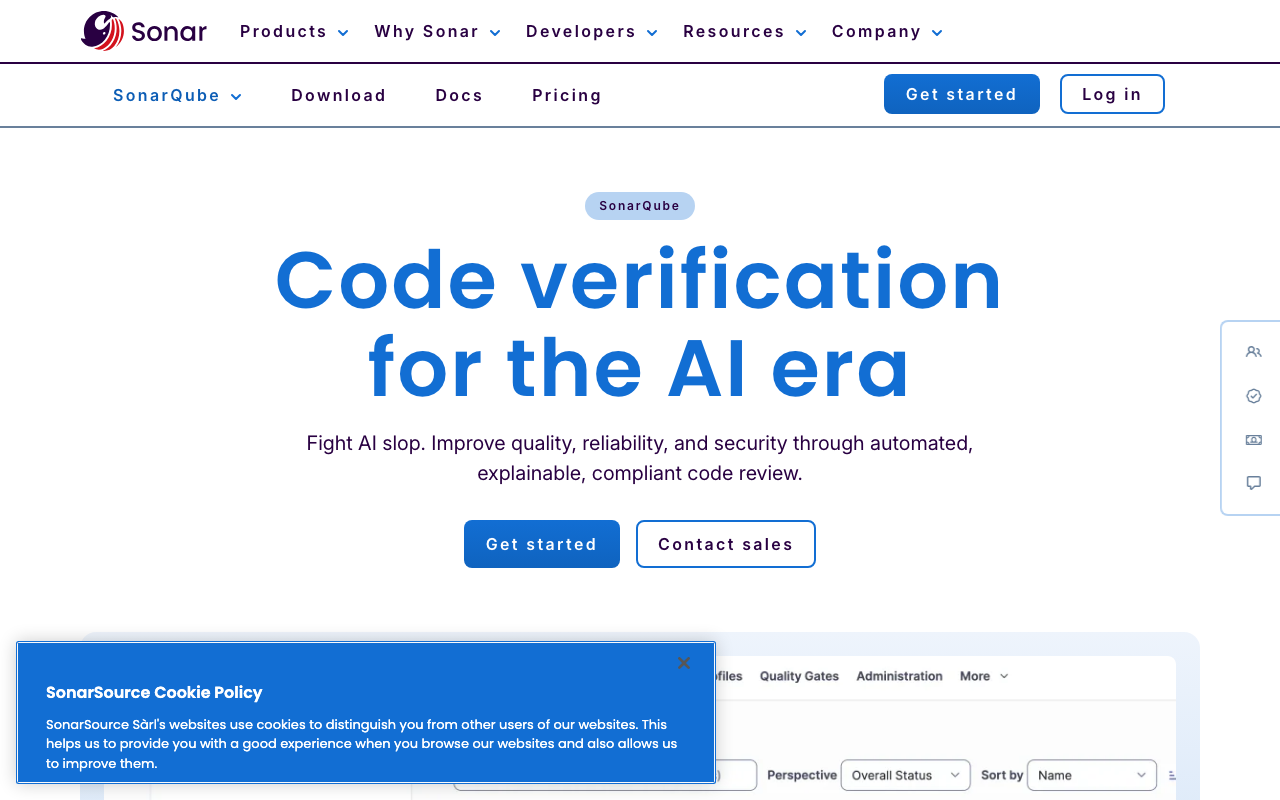
SonarQube provides over 6,000 built-in rules across 35+ languages, covering bugs, security vulnerabilities, code smells, and technical debt. It enforces quality gates that can block merges when code does not meet defined standards for coverage, duplication, or issue severity. For teams that need comprehensive, deterministic code quality enforcement, SonarQube is the industry standard.
Semgrep takes a different approach, optimizing for security-focused scanning with a rule authoring system that lets teams write custom patterns in YAML. If your team has specific security requirements - for example, ensuring that all database queries use parameterized statements, or that all API endpoints validate authentication tokens - Semgrep makes it straightforward to encode those requirements as automated checks.
Layer 3: AI-powered code review
The most significant shift in code review tooling over the past two years has been the emergence of AI-powered review tools that use large language models to understand code semantics. Unlike rule-based tools that match against fixed patterns, AI reviewers can catch logic errors, identify missing edge cases, and suggest improvements that require understanding the code’s intent.
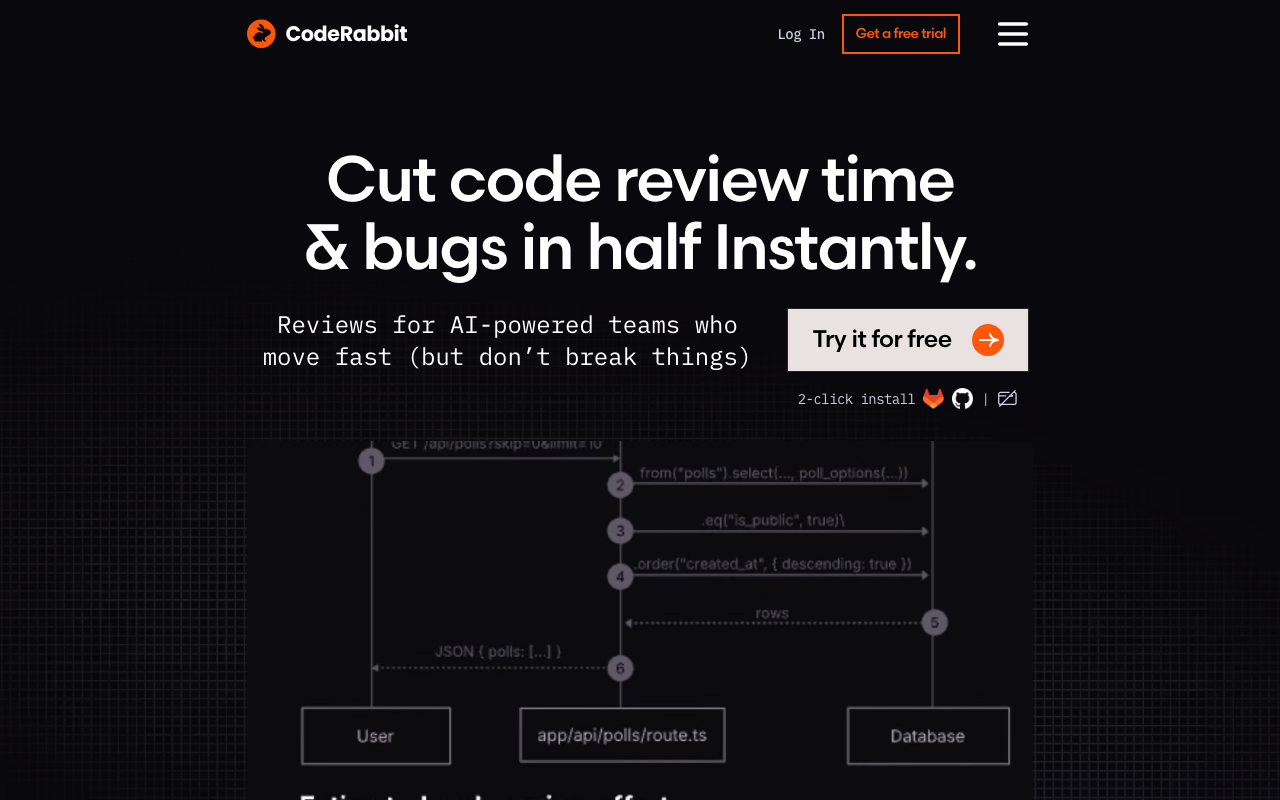
CodeRabbit is the most widely adopted tool in this category, with over 2 million repositories connected on GitHub. It reviews every pull request the moment it is opened, generating a structured walkthrough that summarizes what changed and why, then posting inline comments on specific lines where it identifies issues. The comments cover bugs, security vulnerabilities, performance concerns, and code quality improvements, each with a concrete fix suggestion that can be applied with one click.
What makes AI review tools valuable in the context of code review best practices is that they provide instant feedback. The moment a developer opens a PR, they get an initial review within minutes. This means the author can address obvious issues before the human reviewer even looks at the PR, resulting in cleaner code when the human review begins and fewer round trips overall.
GitHub Copilot has also expanded into code review with its code review feature that provides AI-generated feedback directly within GitHub pull requests. For teams already in the GitHub ecosystem, this provides a low-friction path to AI-assisted review without adding another tool to the stack.
The important principle is that AI review should complement human review, not replace it. AI tools excel at catching mechanical issues - null pointer risks, missing error handling, input validation gaps, and known vulnerability patterns. They do not evaluate whether the code solves the right problem, whether the architecture makes sense, or whether the implementation meets product requirements. Human reviewers should be freed from the mechanical checks so they can focus on these higher-order concerns.
Layer 4: Workflow tools for review management
Beyond the tools that analyze code directly, a separate category of tools focuses on the workflow around code review - how PRs are created, how reviewers are assigned, how discussions happen, and how progress is tracked.
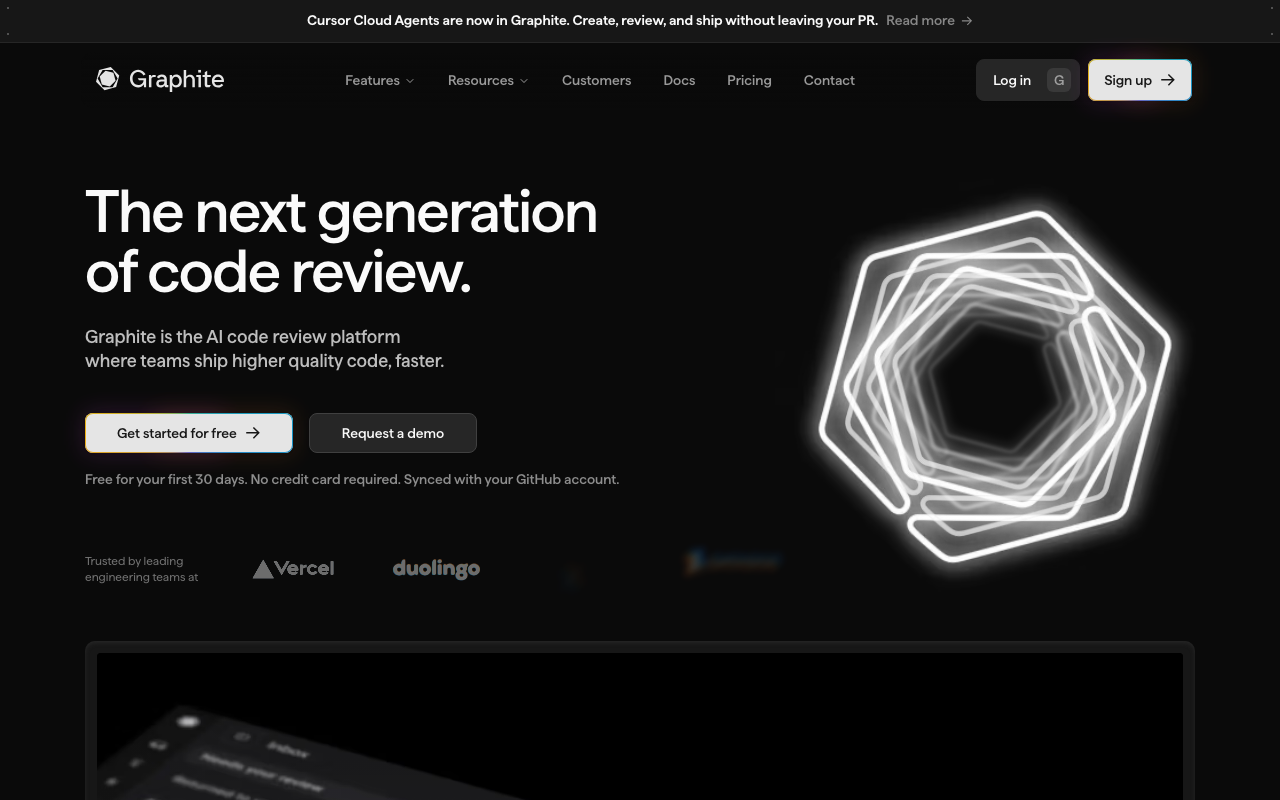
Graphite addresses one of the most persistent friction points in code review: large PRs. It provides a workflow for stacked pull requests, where a large change is broken into an ordered chain of small, dependent PRs. Each PR can be reviewed independently, and Graphite handles the rebasing and merge coordination that would otherwise make stacked PRs impractical. For teams that struggle with PR size, Graphite changes the workflow enough to make small PRs the path of least resistance.
Axolo brings PR discussions into Slack by creating a temporary channel for each pull request. This eliminates the context-switching cost of jumping between Slack and GitHub to follow review conversations. When the PR merges, the channel archives itself. For teams where Slack is the primary communication tool, this keeps code review visible without requiring engineers to monitor a separate notification stream.
Putting the layers together
The ideal automated review pipeline runs in this order:
- Pre-commit hooks run formatters and basic linters locally before the code is pushed, catching trivial issues before they even enter the review system.
- CI pipeline runs the full linting suite, type checking, static analysis, and test suite. If any of these fail, the PR is marked as failing and human reviewers know not to waste time on it until the automated checks pass.
- AI review runs in parallel with CI and posts its findings as PR comments within minutes. The author addresses the AI’s feedback while waiting for human review.
- Human review happens last, focusing on logic, architecture, design, and business requirements - the areas where human judgment is irreplaceable.
This pipeline ensures that by the time a human reviewer opens the PR, all the mechanical issues have already been caught and (ideally) fixed. The human reviewer can focus entirely on whether the code is correct, well-designed, and meets the requirements.
Common code review anti-patterns
Understanding what not to do is as valuable as understanding best practices. These anti-patterns are common, recognizable, and damaging. If you see your team falling into any of these patterns, address them directly.
Rubber-stamping
Rubber-stamping is approving a PR without genuinely reviewing it. The reviewer glances at the diff, sees nothing obviously wrong, and clicks “Approve” within 30 seconds. This is the most common review anti-pattern and the most dangerous, because it creates the illusion of quality control without the substance.
Rubber-stamping typically happens when PRs are too large (the reviewer cannot realistically evaluate 2,000 lines), when there is pressure to ship quickly (deadlines override quality), or when the reviewer does not feel qualified to review the code (they approve because they do not know what to look for).
The fix is structural. Keep PRs small so they are reviewable. Set expectations that reviews take time and that is acceptable. Pair less experienced reviewers with mentors who can guide them on what to look for.
Nitpicking
Nitpicking is leaving a disproportionate number of comments about trivial style preferences while ignoring substantive issues. A reviewer who leaves ten comments about variable naming and zero comments about the missing null check in a critical code path is nitpicking. The nit comments might each be individually valid, but collectively they signal that the reviewer is focused on surface-level concerns rather than the issues that matter.
The fix is automation plus discipline. Automate all style enforcement through formatters and linters so that style issues never reach human review. Then, when you review code, train yourself to prioritize correctness, security, and architecture over style. If you do leave a nit, label it clearly as [nit] so the author knows it is not a blocker.
Gatekeeping
Gatekeeping occurs when a senior engineer uses code review as a power mechanism rather than a quality mechanism. Symptoms include requiring their personal approval on every PR regardless of scope, blocking PRs over stylistic disagreements that are not covered by team conventions, requesting unnecessary rewrites that reflect their personal preferences rather than genuine improvements, and using review feedback to demonstrate technical superiority rather than to teach.
Gatekeeping demoralizes the team, creates bottlenecks (everyone waits for the gatekeeper’s approval), and discourages junior developers from taking ownership of their code. The fix is establishing clear, written review criteria that anyone can apply, rotating review assignments so no single person controls the merge queue, and addressing gatekeeping behavior directly in one-on-one conversations.
Ping-pong reviews
Ping-pong reviews happen when a reviewer leaves one or two comments, the author addresses them, the reviewer finds one or two more comments, the author addresses those, and this cycle repeats four or five times. Each round trip adds latency. A PR that could have been resolved in one review round stretches to a week.
The fix is thoroughness on the first pass. When you review a PR, review the entire thing and leave all of your feedback at once. Do not submit a partial review because you want to be responsive. It is better to take 60 minutes to do a complete review than to do a 10-minute partial review that kicks off a five-round ping-pong cycle.
Review-by-committee
Review-by-committee happens when too many people are assigned as reviewers and each person leaves their own set of comments, some of which contradict each other. The author ends up trying to satisfy five different reviewers with five different opinions, which is often impossible.
The fix is limiting reviewers. Two reviewers is ideal for most PRs. Three is the maximum. If the change crosses multiple domain areas, assign one reviewer per domain rather than asking every reviewer to review the entire PR.
The hero reviewer
The hero reviewer is one person on the team who reviews the majority of PRs. They are responsive, thorough, and knowledgeable. The problem is that they become a bottleneck when they are on vacation, in meetings, or focused on their own work. They also accumulate disproportionate context about the codebase, which contradicts the knowledge-sharing goal of code review.
The fix is distributing reviews evenly. Use round-robin assignment (GitHub supports CODEOWNERS and team-based review assignment) to ensure that every team member participates in review regularly. This is slower in the short term but builds a team where multiple people can review any part of the codebase.
Measuring code review effectiveness
You cannot improve what you do not measure. But measuring code review is tricky because the most important outcomes - knowledge sharing, defect prevention, codebase consistency - are difficult to quantify directly. The following metrics provide useful proxies when tracked over time.
Review turnaround time
The time from PR creation to first reviewer response. This is the single most actionable metric because it directly correlates with development velocity and because teams can improve it through process changes alone. Track the median, not the average, because a few outliers (holiday weekends, complex architectural changes) will skew the average.
Target: Under 24 hours for first response. Under 4 hours is excellent.
Time to merge
The total time from PR creation to merge. This includes review time, revision time, and any waiting time for CI or additional approvals. Long time-to-merge often indicates large PRs, slow review turnaround, or excessive ping-pong cycles.
Target: Under 48 hours for a standard PR. Under 24 hours is excellent.
PR size distribution
Track the distribution of PR sizes across your team. If the majority of PRs are under 400 lines, your team is in good shape. If you see a significant number of PRs over 1,000 lines, that indicates a process issue that needs attention.
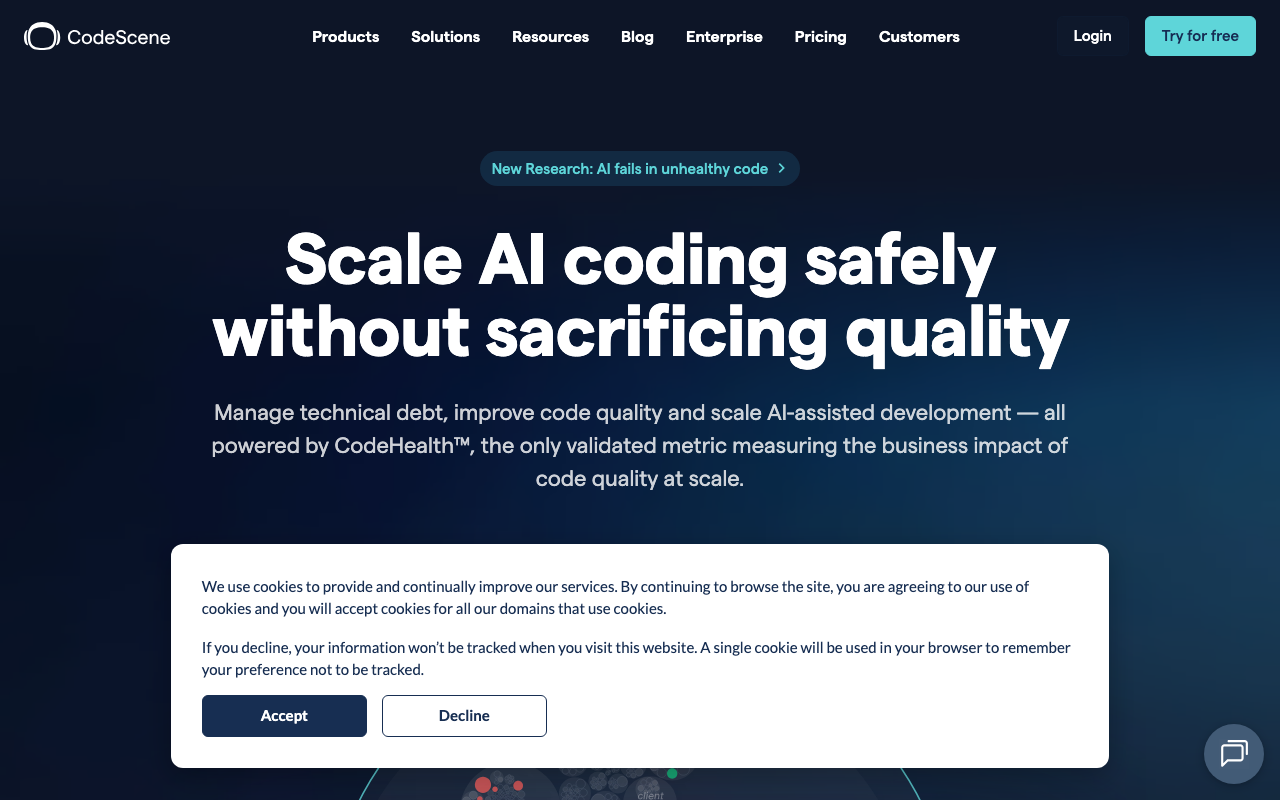
Tools like CodeScene and LinearB provide dashboards that track these metrics automatically, giving engineering leaders visibility into review health without requiring manual data collection. CodeScene goes further by analyzing code complexity and change frequency to identify the parts of the codebase where review quality matters most - the areas that change frequently and have the highest complexity.
Review depth
The number of substantive comments per PR. If most PRs receive zero comments before approval, that suggests rubber-stamping. If most PRs receive fifteen comments, that suggests either nitpicking or PRs that are too large. A healthy range is two to five substantive comments per PR, though this varies by team and PR complexity.
Defect escape rate
The number of bugs that reach production despite passing code review. Track production incidents and trace them back to the PR that introduced the bug. Was the bug in a reviewed file? Did the reviewer miss it, or was the file not in the review scope? This metric closes the feedback loop - it shows you where your review process is failing and what categories of defects are slipping through.
Reviewer load distribution
How evenly are reviews distributed across the team? If one person is reviewing 60% of the PRs, that is a bus factor risk and a burnout risk. Track the number of reviews per person per week and actively rebalance when the distribution skews.
Using metrics responsibly
A word of caution: code review metrics are easy to game. If you measure review turnaround time, people will approve PRs faster without reviewing them thoroughly. If you measure comment count, people will leave more trivial comments to hit the number. Metrics should inform conversations, not drive incentives. Use them to identify patterns and start discussions, not to create leaderboards or performance criteria.
LinearB provides engineering metrics dashboards that track many of these indicators, correlating review metrics with delivery outcomes like cycle time and deployment frequency. This higher-level view helps teams understand whether their review process is contributing to or detracting from their ability to ship.
Building a healthy code review culture
Tools and processes matter, but culture is the foundation. A team with excellent tooling and a toxic review culture will still have bad outcomes. A team with basic tooling and a healthy review culture will produce consistently good results and improve over time.
Establish written guidelines
Every team should have a written code review guide that covers what reviewers should look for, how feedback should be phrased, what constitutes blocking versus non-blocking feedback, expected turnaround times, and how disagreements are resolved. Write it down, put it in the repository, and refer new team members to it.
The guidelines do not need to be long. Google’s public code review guide is thorough but concise. A one-page document that covers the essentials is better than a thirty-page document that no one reads.
Make review a shared responsibility
Code review should not be the exclusive domain of senior engineers. Junior developers should review code too, even if their reviews focus on different aspects. A junior developer might not catch a subtle concurrency bug, but they are often better at identifying readability issues because they experience the confusion firsthand. When junior developers review code, they learn faster. When senior developers review junior code, they mentor efficiently. When everyone reviews everyone’s code, the team develops shared ownership of the codebase.
Invest in onboarding reviewers
New team members need guidance on how to review code in your specific codebase. Pair them with experienced reviewers for their first few weeks. Have them shadow reviews before they review independently. Provide examples of good review comments from your team’s PR history. This upfront investment pays dividends in review quality for years.
Address bad behavior directly
If someone on the team is gatekeeping, nitpicking excessively, leaving dismissive comments, or rubber-stamping, address it directly in a one-on-one conversation. Do not let bad review behavior persist because confrontation is uncomfortable. Unchecked bad behavior poisons the entire team’s review culture and is one of the most common reasons developers cite for leaving a team.
Celebrate good reviews
Recognize engineers who write thorough, constructive reviews. Call out particularly good review comments in team retrospectives. Treat review skill as a first-class engineering competency that is valued in promotions and performance reviews. When the team sees that review quality is valued and rewarded, review quality improves.
Timebox escalations
When a reviewer and an author disagree on a technical decision and cannot resolve it through PR comments, establish a clear escalation path. A 15-minute synchronous conversation (video call, pair session, or in-person discussion) resolves most disagreements faster than a ten-comment thread. If the conversation does not resolve it, escalate to the tech lead or architect for a final decision. The goal is to keep PRs from stalling indefinitely on unresolved disagreements.
Run retrospectives on your review process
Once per quarter, review your review process itself. Look at the metrics (turnaround time, PR size distribution, merge time). Read through a sample of recent PR threads and discuss what went well and what could improve. Ask the team what frustrates them about the current process and what they wish were different. Continuous improvement of the review process keeps it healthy as the team and codebase evolve.
Code review for different team structures
Code review practices need to adapt to how your team is organized. What works for a five-person startup does not work for a hundred-person organization with multiple teams and codebases.
Small teams (2-5 developers)
On small teams, everyone reviews everyone’s code. There is no need for formal assignment rules or CODEOWNERS files. The challenge is review fatigue - on a five-person team, each developer reviews roughly one PR for every PR they write, which adds up. Keep PRs small, use AI tools to handle the first pass, and batch reviews into dedicated time blocks to manage the load.
Medium teams (5-20 developers)
Medium teams need structure. Use CODEOWNERS to define who reviews which parts of the codebase. Implement round-robin assignment within teams to distribute load. Establish a written review guide and enforce turnaround expectations. At this scale, one slow reviewer can bottleneck the entire team, so monitoring reviewer load distribution becomes important.
Large organizations (multiple teams)
In large organizations, cross-team review is common when changes affect shared libraries, APIs, or infrastructure. Establish clear ownership boundaries and require review from the owning team when external contributors modify their code. Use branch protection rules to enforce this automatically. At this scale, the tools for managing review workflow - assignment automation, notification management, metric tracking - become essential rather than optional.
Open source projects
Open-source review has unique challenges: contributors are volunteers, they may be unfamiliar with project conventions, and maintainers are chronically time-constrained. A thorough CONTRIBUTING.md that explains code style, test requirements, and PR conventions saves maintainers from repeating the same feedback on every PR. AI review tools are especially valuable here because they provide instant feedback to contributors regardless of maintainer availability, reducing the wait time that discourages first-time contributors from staying engaged.
Conclusion
Code review is not a checkbox on a process compliance form. It is a practice that, when done well, makes code better, developers smarter, and teams more resilient. The research is clear: teams that review code effectively ship fewer bugs, share knowledge more broadly, and maintain higher code quality over time.
The core principles are straightforward. Keep PRs small - under 400 lines. Review promptly - within 24 hours. Use a checklist covering correctness, security, performance, readability, and test coverage. Give feedback that is specific, actionable, and respectful. Automate everything that can be automated so human reviewers focus on what matters most.
The tooling landscape has matured to the point where there is no excuse for spending human attention on problems that machines solve better. Formatters eliminate style debates. Linters catch common mistakes. Static analysis tools like SonarQube and Semgrep enforce security and quality standards. AI review tools like CodeRabbit catch logic errors and provide instant feedback. Workflow tools like Graphite and Axolo reduce the friction that makes review slow. Analytics tools like CodeScene and LinearB provide the visibility needed to continuously improve.
But tools are the easy part. The hard part is culture. Building a team where review feedback is welcomed rather than feared, where reviewers invest genuine effort rather than rubber-stamping, where junior and senior engineers learn from each other through every PR, and where the process improves over time through deliberate retrospection - that is the work that separates teams that ship reliably from teams that ship anxiously.
Start with the practice. Keep PRs small and review them promptly. The rest follows from there.
Further Reading
- How to Reduce Code Review Time by 50% - Proven Strategies and Tools
- 13 Best Code Quality Tools in 2026 - Platforms, Linters, and Metrics
- 12 Best Free Code Review Tools in 2026 - Open Source and Free Tiers
- 10 Best Code Climate Alternatives for Code Quality in 2026
- AI Code Review for Enterprise Teams: Security, Compliance, and Scale in 2026
- DORA Metrics Explained - The 4 Keys and How Code Review Drives Them (2026)
 Gitar
GitarComments are not enough
Gitar applies the fix, validates it in CI, and clears the queue.
See it on your repo Read our independent Gitar reviewFrequently Asked Questions
What are the best practices for code review?
Keep PRs small (under 400 lines changed), review within 24 hours, use a checklist covering correctness, security, performance, and readability, automate mechanical checks with linters and AI tools, provide constructive feedback with suggestions rather than demands, and focus on learning and knowledge sharing rather than gatekeeping.
How long should a code review take?
Individual review sessions should take 30-60 minutes maximum. Research from SmartBear shows that review quality drops significantly after 60 minutes. For large changes, break review into multiple sessions. The first review response should happen within 24 hours of the PR being opened - Google's internal data shows this is the single most impactful metric for development velocity.
What should you look for in a code review?
Focus on correctness (does the code do what it claims), security (input validation, authentication, data exposure), performance (unnecessary loops, N+1 queries, memory leaks), readability (naming, structure, comments where needed), and maintainability (complexity, coupling, test coverage). Let automated tools handle style and formatting.
How do I give good code review feedback?
Be specific and actionable - point to the exact line and suggest a fix. Explain why, not just what. Use 'we' language instead of 'you' language. Distinguish between blocking issues and suggestions. Ask questions rather than making accusations. Praise good code, not just criticize bad code. Keep feedback about the code, not the person.
What is the ideal PR size for code review?
Research from Google and Microsoft consistently shows that PRs under 400 lines changed receive the highest quality reviews. PRs over 1,000 lines are rubber-stamped more than 50% of the time. Tools like Graphite help teams break large changes into stacked PRs that can be reviewed incrementally.
Should code review be blocking?
Yes, for production code. Requiring at least one approval before merge catches issues that would otherwise reach production. However, the process should not be slow - teams should aim for under 24-hour turnaround. Use AI review tools to provide immediate feedback while waiting for human review, and configure branch protection to require both automated checks and human approval.
What is the best AI code review tool in 2025?
CodeRabbit is the most widely adopted AI code review tool with over 2 million connected repositories, offering deep contextual analysis of pull requests with automated fix suggestions. GitHub Copilot provides native code review for teams already in the GitHub ecosystem. For self-hosted needs, PR-Agent (by Qodo) is the leading open-source option that works with your own LLM API keys.
How many lines of code should a pull request be?
Smaller than most teams ship, and the widely quoted numbers are weaker than their reputation. The 'Google says under 200 lines' rule is a misattribution - Google's published engineering practices actually say 100 lines is usually a reasonable size and 1000 lines is usually too large (verified 2026-10-18). SmartBear's 200-400 line figure is real but comes from a 2006 Cisco study. Our own measurement of 2,896 human-authored merged pull requests across 10 major open-source repositories found a median of 63 changed lines across 3 files, and that inline review threads per 100 changed lines fall from 1.55 on PRs under 50 lines to 0.085 on PRs over 1,000 lines, an 18-fold drop in scrutiny density. 52% of merged PRs over 1,000 lines carried no inline review comments at all.
What is the difference between code review and code audit?
Code review is an ongoing practice where peers examine each pull request before it merges, focusing on correctness, readability, and maintainability. A code audit is a periodic, comprehensive examination of an entire codebase - often performed by external parties for security or compliance purposes. Both are valuable, but code review catches issues at the point of introduction while audits assess cumulative quality.
How do you handle disagreements in code review?
Start by discussing the technical merits in the PR thread with clear reasoning for each position. If the disagreement persists, escalate to a 15-minute synchronous conversation rather than a long comment thread. For unresolved disputes, defer to the tech lead or architect for a final decision. Save pushback for issues that affect correctness, security, or maintainability - defer on style preferences.
What are the best free code review tools?
CodeRabbit offers a free tier with unlimited repositories and AI-powered PR review. SonarQube Community Build provides free self-hosted static analysis with over 5,000 rules. Semgrep OSS is free for up to 10 contributors and excels at security scanning. GitHub also includes basic review features like CODEOWNERS and branch protection at no extra cost.
How do I set up a code review process for my team?
Start by establishing written guidelines covering what reviewers should look for, expected turnaround times, and how feedback should be delivered. Configure branch protection to require at least one approval before merging. Add automated checks for linting, formatting, and type checking in your CI pipeline. Then layer on AI review tools for immediate feedback and distribute review assignments via round-robin to prevent bottlenecks.
What is rubber-stamping in code review and how do you prevent it?
Rubber-stamping is when a reviewer approves a pull request without genuinely reviewing the code, often by glancing at the diff and clicking approve within seconds. It typically happens when PRs are too large or there is pressure to ship quickly. Prevent it by keeping PRs under 400 lines, tracking review depth metrics like comment count per PR, and pairing less experienced reviewers with mentors.
How does code review improve team productivity?
Code review improves productivity by catching defects early when they are 10x cheaper to fix than in production, spreading knowledge so no single engineer is a bottleneck, maintaining codebase consistency that makes future development faster, and providing natural mentorship that accelerates junior developer growth. Google's internal research identifies code review as the single most effective method for finding defects in software.
Can AI replace human code reviewers?
AI cannot fully replace human code reviewers. AI tools excel at catching mechanical issues like null pointer risks, missing error handling, security vulnerabilities, and style inconsistencies. However, human reviewers are still essential for evaluating architecture decisions, verifying business logic correctness, assessing design quality, and providing mentorship. The best approach uses AI to handle 60-80% of mechanical review work so humans can focus on higher-order concerns.
Explore More
Tool Reviews
 CodeRabbit Review
 GitHub Copilot Code Review Review
 Graphite Review
 Axolo Review
 SonarQube Review
 CodeScene Review
 LinearB Review
Free Newsletter
Stay ahead with AI dev tools
Weekly insights on AI code review, static analysis, and developer productivity. No spam, unsubscribe anytime.
Join developers getting weekly AI tool insights.
Related Articles
How to Measure AI Code Review False Positives: An Open Protocol
A reproducible protocol for measuring AI code review false positives: taxonomy, PR selection, blind classification and variance. Nobody has run it.
October 18, 2026
guideQodo Merge Pricing: Free vs Pro for PR Reviews in 2026
Qodo Merge pricing verified 2026-10-19 - a flat team fee near $30 a month for up to 30 users, pooled credits at $0.012, and free MIT PR-Agent.
March 4, 2026
guideQodo AI Pricing: Free vs Teams vs Enterprise Plans in 2026
Qodo pricing verified 2026-10-19 - a flat team fee near $30/month for up to 30 users, credits at $0.012 pooled with no rollover, and no free tier.
March 4, 2026