Snyk vs Checkmarx: Developer Security vs Enterprise AppSec in 2026
Snyk vs Checkmarx - developer-first security vs enterprise AppSec, SAST, SCA, DAST, pricing, compliance, and when to use each. Vendor-neutral analysis.
Published:
Last Updated:
Quick Verdict
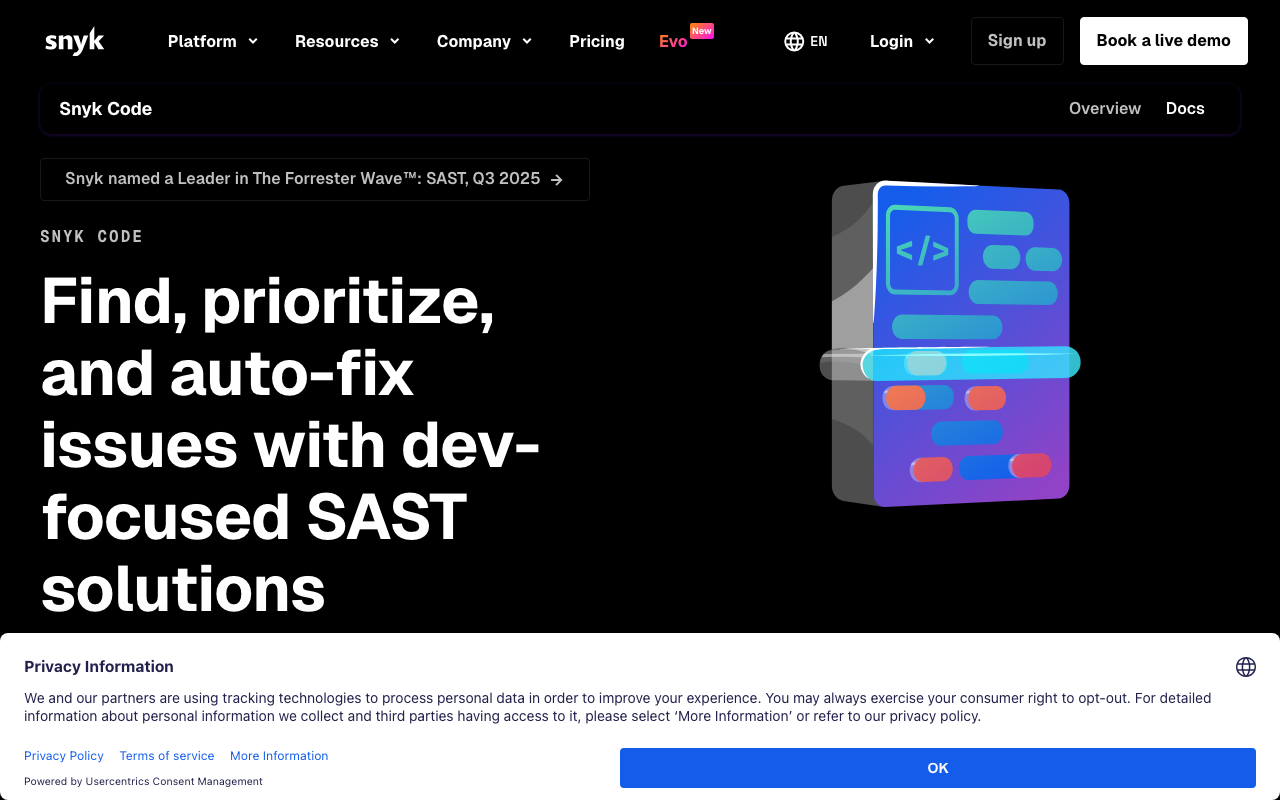
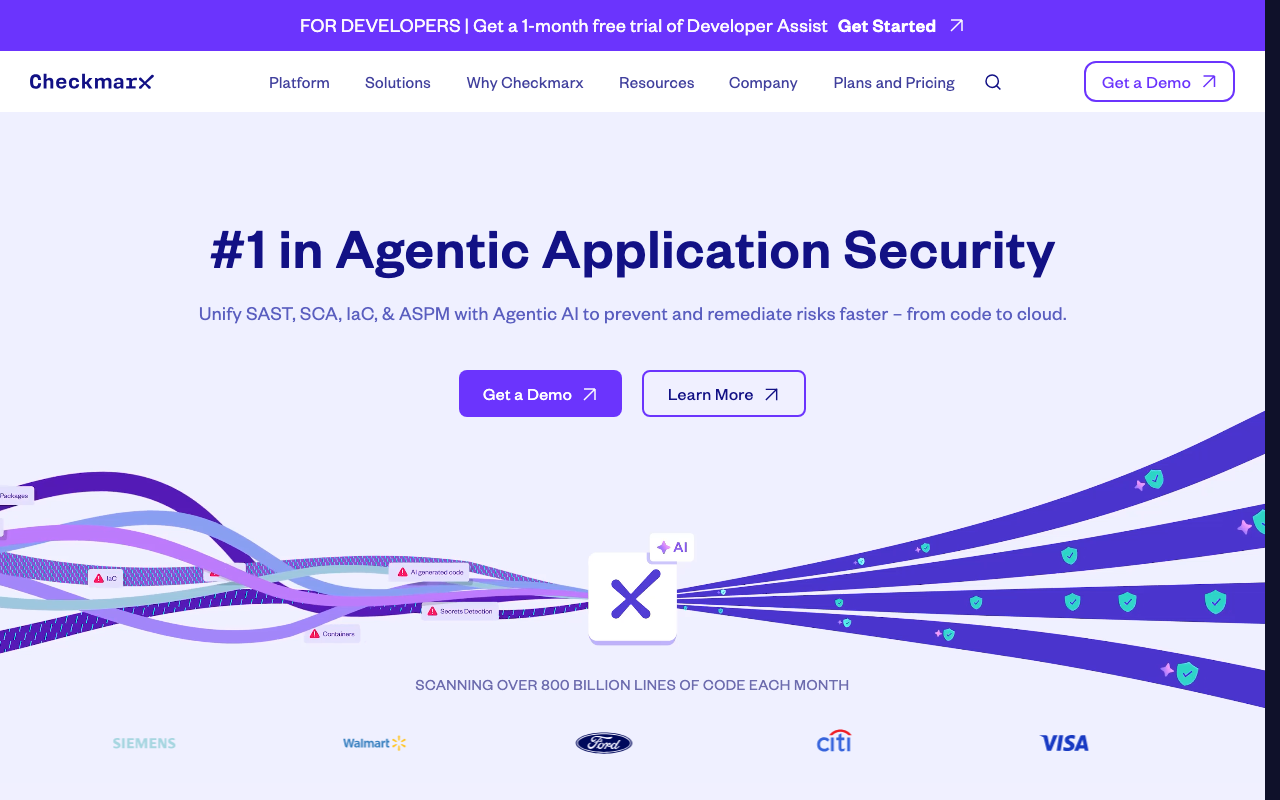
Snyk and Checkmarx represent two fundamentally different philosophies for solving the same problem: application security. Snyk is a developer-first platform built to embed security into the developer workflow with speed, simplicity, and automated remediation. Checkmarx is an enterprise-first platform built to give security teams comprehensive coverage, centralized governance, and deep compliance reporting across SAST, DAST, SCA, and API security. Both are leaders in the Gartner Magic Quadrant for Application Security Testing, but they approach the market from opposite directions.
If you can only pick one: Choose Snyk if developer adoption, speed, and SCA depth are your top priorities. Snyk gets developers scanning in minutes, provides AI-powered fix suggestions, and offers the most mature dependency vulnerability scanning with reachability analysis. Choose Checkmarx if you need the broadest possible AppSec coverage in a single vendor - SAST, DAST, SCA, API security, IaC, and container scanning - with enterprise governance, centralized policy management, and deep compliance reporting.
The real answer: The choice hinges on who drives security at your organization. If security is developer-led (engineering teams own their own security posture), Snyk fits naturally into that model. If security is centrally managed by a dedicated AppSec team that needs to enforce policies across hundreds of developers and dozens of applications, Checkmarx provides the governance layer that Snyk lacks. Some large enterprises run both - Snyk for developer-facing workflows and Checkmarx for security team oversight and DAST coverage.
At-a-Glance Feature Comparison
| Category | Snyk | Checkmarx |
|---|---|---|
| Primary focus | Developer-first security | Enterprise AppSec platform |
| SAST | DeepCode AI engine (19+ languages) | CxSAST / Checkmarx One SAST (30+ languages) |
| SCA | Core strength - reachability analysis, auto-fix PRs | Checkmarx SCA - solid but less mature than Snyk |
| DAST | No | Yes - Checkmarx DAST |
| API security | No | Yes - Checkmarx API Security |
| Container scanning | Yes (Docker, ECR, GCR, ACR) | Yes (via container security module) |
| IaC scanning | Yes (Terraform, CloudFormation, K8s) | Yes (KICS open-source engine) |
| Supply chain security | Dependency monitoring + malicious package detection | Supply chain security with reputation scoring |
| AI remediation | DeepCode AI auto-fix | Checkmarx AI Guided Remediation |
| IDE integration | VS Code, JetBrains | VS Code, JetBrains, Eclipse, Visual Studio |
| Free tier | Yes - 100 SAST, 400 SCA, 300 IaC, 100 container tests/month | No free tier |
| Paid starting price | $25/dev/month (Team, min 5 devs) | Contact sales (enterprise-only pricing) |
| Enterprise price | ~$67K-$90K/year (100 devs) | ~$59K-$120K+/year (varies by bundle) |
| Deployment | Cloud only | Cloud (Checkmarx One) or self-hosted (legacy CxSAST) |
| DAST included | No - requires third-party tool | Yes - unified platform |
| Compliance reporting | Enterprise plan only | Deep compliance mapping (PCI DSS, HIPAA, SOC 2, NIST) |
| Gartner MQ position | Leader (2025) | Leader (2025) |
| Target buyer | Engineering teams, DevSecOps leads | CISOs, AppSec teams, security directors |
What Is Snyk?
Snyk (pronounced “sneak”) is a developer-first application security platform founded in 2015 by Guy Podjarny and Assaf Hefetz. The company started with open-source dependency scanning (SCA) and has since expanded into a comprehensive security platform covering SAST, SCA, container security, IaC security, and cloud security posture management. Snyk was named a Gartner Magic Quadrant Leader for Application Security Testing in 2025 and is used by over 4,500 organizations including Google, Salesforce, and Atlassian.
Snyk’s core philosophy is that security works only when developers actually use the tools. Every product in the Snyk platform is designed for speed, simplicity, and integration into existing developer workflows - IDEs, pull requests, CI/CD pipelines, and package managers. This developer-first approach distinguishes Snyk from traditional enterprise security vendors like Checkmarx and Veracode, which historically built tools for security teams to scan code after it was written rather than for developers to catch issues as they code.
Snyk’s Core Products
Snyk Code (SAST) is the static analysis product powered by the DeepCode AI engine. Unlike traditional SAST tools that rely primarily on pattern matching, Snyk Code uses machine learning trained on over 25 million data flow cases from open-source projects. It performs interfile data flow analysis, tracing how tainted data moves through your application across multiple files and functions. When a vulnerability is found, DeepCode generates AI-powered fix suggestions trained on curated human remediation patterns. Snyk Code supports 19+ languages and completes scans in seconds rather than the minutes or hours that traditional SAST tools require.
Snyk Open Source (SCA) was the company’s original product and remains its deepest capability. The platform maintains one of the most rapidly updated vulnerability databases in the industry, typically incorporating new CVEs within 24 hours of public disclosure. The defining feature is reachability analysis, which determines whether vulnerable code paths in your dependencies are actually called by your application. This dramatically reduces noise - most SCA tools flag every CVE in your dependency tree, but Snyk tells you which ones actually matter. Automatic PR generation for dependency upgrades means fixes can be merged with one click.
Snyk Container scans Docker images for vulnerabilities in base images and installed packages. It integrates with Docker Hub, Amazon ECR, Google Container Registry, and Azure Container Registry. Beyond just flagging issues, Snyk Container recommends specific base image upgrades that fix the most vulnerabilities with the least disruption to your application.
Snyk IaC scans Terraform, CloudFormation, Kubernetes manifests, and ARM templates for security misconfigurations before they reach production. It catches issues like overly permissive IAM policies, unencrypted storage buckets, public-facing database ports, and missing network security rules.
Snyk’s Strengths
Developer adoption is unmatched in the security tool market. Snyk’s onboarding takes minutes - connect a repository, run a scan, see results. The IDE plugins provide real-time feedback as developers write code. PR checks post inline comments with vulnerability details and AI-generated fix suggestions. This frictionless experience means developers actually use the tool rather than treating it as a compliance checkbox they avoid. High adoption rates translate directly into more vulnerabilities caught and fixed.
SCA with reachability analysis is industry-leading. The combination of a rapidly updated vulnerability database, reachability analysis that filters out irrelevant alerts, and automatic remediation PRs creates a workflow that meaningfully reduces dependency risk with minimal developer effort. No other SCA tool matches this combination of depth and automation.
Scan speed enables shift-left in practice, not just in theory. Snyk Code scans complete in seconds. Container scans run in the CI/CD pipeline without meaningful build time impact. When security scanning is fast enough to run on every PR without annoying developers, it becomes part of the natural workflow rather than a bottleneck that teams route around.
The free tier provides genuine value. With 100 SAST tests, 400 SCA tests, 300 IaC tests, and 100 container tests per month, small teams and open-source projects can get real security coverage at zero cost. This is a major advantage over Checkmarx, which has no free tier and requires a sales conversation to get started.
Snyk’s Limitations
No DAST capabilities. Snyk only performs static analysis. It cannot test running applications for runtime vulnerabilities like authentication bypass, session fixation, server misconfiguration, or CORS issues. Teams that need DAST must add a separate tool alongside Snyk - tools like OWASP ZAP, Burp Suite, or Checkmarx DAST.
No dedicated API security scanning. As API-first architectures dominate modern development, the inability to scan APIs for security issues is a growing gap. Checkmarx, by contrast, offers dedicated API security as part of its unified platform.
Cloud-only deployment. Snyk does not offer a self-hosted option. Organizations with strict data sovereignty requirements - particularly in government, defense, and certain financial sectors - may be unable to use Snyk if sending source code to a third-party cloud violates their policies. Checkmarx offers both cloud and self-hosted deployment options.
Enterprise governance is lighter than Checkmarx. While Snyk’s Enterprise plan includes policy management, compliance reporting, and role-based access controls, these features are not as granular or deeply integrated as Checkmarx’s enterprise governance capabilities. Organizations where a central security team needs to enforce policies across dozens of application teams may find Snyk’s governance layer insufficient.
Pricing scales steeply at enterprise volumes. The Team plan at $25/dev/month is competitive, but Enterprise pricing can reach $67,000-$90,000/year for 100 developers. Combined with the need for a separate DAST tool, the total cost of achieving comprehensive coverage with Snyk can approach or exceed Checkmarx’s pricing.
What Is Checkmarx?
Checkmarx is an enterprise-grade application security platform founded in 2006 in Tel Aviv, Israel, by Maty Siman. The company pioneered commercial SAST technology and has since expanded into a comprehensive AppSec platform covering SAST, SCA, DAST, API security, IaC scanning, container security, and software supply chain security. Checkmarx was acquired by Hellman & Friedman in 2020 for approximately $1.15 billion and has continued to invest heavily in its cloud-native Checkmarx One platform. Checkmarx is positioned as a Leader in the Gartner Magic Quadrant for Application Security Testing and serves over 1,800 enterprise customers worldwide, including many Fortune 500 companies.
Checkmarx’s philosophy is that application security requires comprehensive coverage governed by centralized policies. The platform is built for organizations where a dedicated security team manages AppSec across the entire software portfolio, defining policies, triaging results, and reporting on security posture to executive leadership. This enterprise-first approach means Checkmarx invests heavily in breadth of scanning, compliance frameworks, governance controls, and executive-level dashboards - capabilities that matter deeply to CISOs and security directors.
Checkmarx’s Core Products
Checkmarx One is the cloud-native unified platform that consolidates all Checkmarx scanning engines into a single dashboard. Launched as the successor to the legacy standalone products (CxSAST, CxSCA, CxDAST), Checkmarx One provides correlated findings across all scan types, unified risk scoring, and centralized policy management. The platform is available as a cloud service with optional hybrid deployment for organizations that need to keep source code on-premises while leveraging cloud-based analysis.
Checkmarx SAST (CxSAST) is the flagship static analysis engine supporting 30+ programming languages. It uses a combination of data flow analysis, control flow analysis, and pattern matching to detect vulnerabilities in source code. Checkmarx SAST has been in the market since 2006, giving it nearly two decades of rule refinement and language-specific tuning. The tool provides deep analysis capabilities including interfile and interprocedural analysis, though this thoroughness comes at the cost of longer scan times compared to newer tools like Snyk Code.
Checkmarx SCA scans open-source dependencies for known vulnerabilities, license compliance risks, and malicious packages. It supports all major package ecosystems including npm, Maven, PyPI, NuGet, Go modules, RubyGems, and more. Checkmarx SCA includes a software bill of materials (SBOM) generator and integrates with Checkmarx’s supply chain security capabilities to provide broader visibility into open-source risk.
Checkmarx DAST performs dynamic application security testing on running web applications and APIs. It sends crafted requests to discover runtime vulnerabilities that static analysis cannot detect - authentication flaws, session management issues, server misconfiguration, insecure headers, and injection vulnerabilities that only manifest when the application is executing. This is a capability that Snyk does not offer at all.
Checkmarx API Security discovers and tests APIs for security vulnerabilities, including shadow APIs that are undocumented and potentially exposed. As API-first architectures become the norm, this dedicated API security capability addresses a growing attack surface that traditional SAST and DAST tools may miss.
KICS (Keeping Infrastructure as Code Secure) is Checkmarx’s open-source IaC scanner for Terraform, CloudFormation, Kubernetes, Docker, Ansible, and other infrastructure-as-code formats. Unlike Snyk’s proprietary IaC scanner, KICS is fully open-source and can be used independently of the Checkmarx platform.
Checkmarx’s Strengths
Breadth of coverage is unmatched. No other single vendor offers SAST, DAST, SCA, API security, IaC scanning, container security, and supply chain security in one unified platform. Teams that need to check multiple compliance boxes - “we need SAST, DAST, and SCA” - can source everything from Checkmarx rather than assembling a multi-vendor stack. The unified dashboard correlates findings across scan types, so a vulnerability found in source code (SAST) can be validated against the running application (DAST) for confirmation.
Enterprise governance and policy management are deeply mature. Checkmarx has been selling to enterprise security teams for nearly two decades. The policy engine allows security teams to define scanning requirements, severity thresholds, and remediation SLAs per application, per team, or across the entire organization. Role-based access controls separate what developers see from what security teams manage. Executive dashboards provide portfolio-level security posture views that CISOs can present to boards.
Compliance reporting is best-in-class. Checkmarx maps findings to compliance frameworks including PCI DSS, HIPAA, SOC 2, OWASP Top 10, CWE Top 25, SANS Top 25, and NIST. For organizations in regulated industries where audit evidence is a regular requirement, Checkmarx generates the reports that auditors expect. This compliance depth is a decisive factor for many Checkmarx customers - the tool is not just finding vulnerabilities but generating the documentation that proves you looked for them.
DAST fills a gap that Snyk cannot address. Dynamic testing is a fundamentally different approach from static analysis, catching vulnerabilities that only appear when the application is running - authentication bypass, session management flaws, CORS misconfiguration, and server-side request forgery (SSRF) that depends on runtime behavior. Many compliance frameworks and security standards require both SAST and DAST. Checkmarx covers both; Snyk covers only SAST.
Self-hosted deployment is available. While Checkmarx One is primarily cloud-native, Checkmarx still supports self-hosted deployment options for organizations that cannot send source code to the cloud. Legacy CxSAST installations can run entirely on-premises, and hybrid deployment models allow code to stay on-premises while leveraging cloud-based analysis for certain scan types.
Language coverage is broader. Checkmarx SAST supports over 30 programming languages including enterprise-specific languages and frameworks. This broader coverage matters for large organizations with diverse technology stacks spanning modern and legacy systems.
Checkmarx’s Limitations
Developer experience lags behind Snyk. Checkmarx was built for security teams, and it shows. The interface is powerful but complex, optimized for security analysts who need to triage hundreds of findings rather than developers who need to fix one vulnerability in their PR. Scan times are longer, the onboarding process requires security team involvement, and the feedback loop from “code written” to “vulnerability reported” is slower than Snyk’s near-instant approach. This developer friction reduces adoption rates - a security tool that developers avoid using provides less value regardless of its technical capabilities.
Scan times are significantly longer. Traditional Checkmarx SAST scans can take 30 minutes to several hours for large codebases. While Checkmarx One has improved scan performance and incremental scanning reduces subsequent scan times, the initial full scan is substantially slower than Snyk Code’s seconds-to-minutes approach. Long scan times make it impractical to scan every PR in fast-moving development workflows, which means vulnerabilities are caught later in the cycle.
No free tier or self-service option. Checkmarx requires a sales conversation to get started. There is no free tier, no self-service trial that developers can spin up on their own, and no transparent pricing on the website. This sales-driven model is standard for enterprise security vendors but is a significant barrier for smaller teams, startups, and individual developers who want to evaluate the tool before committing to a procurement process.
Higher false positive rates in SAST. Checkmarx SAST has historically been known for generating more false positives than newer AI-driven tools like Snyk Code. While the platform provides triage workflows to mark false positives and train the system, the initial noise can overwhelm development teams - especially teams without a dedicated security analyst to review and triage findings. The Checkmarx One platform has improved this with better result correlation and machine learning-assisted validation, but the reputation persists.
Pricing is opaque and enterprise-heavy. Without published pricing, prospective customers cannot budget for Checkmarx without engaging sales. Industry estimates suggest costs range from $59,000 to well over $120,000 per year depending on team size and product bundle. For mid-market companies, this pricing puts Checkmarx out of reach, which is why many growing companies start with Snyk and only evaluate Checkmarx when they reach enterprise scale.
SCA lacks Snyk’s reachability analysis depth. While Checkmarx SCA is a solid dependency scanning product, it does not match Snyk’s reachability analysis, which traces whether vulnerable code paths in dependencies are actually invoked by your application. This means Checkmarx SCA generates more dependency alerts that may not be actionable, increasing the triage burden on development teams.
Feature-by-Feature Breakdown
SAST: AI-Driven Speed vs. Deep Enterprise Analysis
Snyk’s SAST approach is AI-driven and optimized for developer speed. The DeepCode AI engine uses machine learning trained on over 25 million data flow cases to perform interfile and interprocedural analysis. It detects complex vulnerability patterns including second-order SQL injection, prototype pollution, path traversal, and deserialization attacks across multiple files. Scans complete in seconds, and results include AI-generated fix suggestions that developers can apply directly from their IDE or PR. The tradeoff is that Snyk Code supports fewer languages (19+ vs. Checkmarx’s 30+) and the AI-driven approach, while fast, may miss some patterns that Checkmarx’s deeper analysis catches on very large or complex codebases.
Checkmarx’s SAST approach is thorough and language-deep. With nearly two decades of rule development, Checkmarx SAST has an enormous rule set covering both common and obscure vulnerability patterns across 30+ languages. The analysis engine performs deep data flow and control flow analysis that can trace complex vulnerability paths through large codebases. Custom query language (CxQL) allows security teams to write their own SAST rules for organization-specific patterns - a capability Snyk does not offer. The tradeoff is significantly longer scan times and a higher false positive rate that requires dedicated triage effort.
The practical difference: Snyk catches vulnerabilities faster and with less noise, making it more likely that developers will actually fix issues before merging. Checkmarx catches a broader range of vulnerabilities with deeper analysis, but the longer scan times and higher false positive rates mean findings are often reviewed by security analysts after the code has been merged, not by developers before the merge. In an ideal workflow, vulnerabilities are caught early (Snyk’s strength). In enterprise reality, some vulnerabilities are complex enough to require the deep analysis only Checkmarx provides.
Software Composition Analysis (SCA)
Snyk’s SCA is the market benchmark. Snyk Open Source was the company’s first product, and it remains the deepest SCA capability available. The vulnerability database is updated within 24 hours of CVE disclosure. Reachability analysis determines whether your application actually calls the vulnerable code paths in your dependencies, reducing false alerts by 30-70% in typical projects. Automatic remediation PRs suggest the minimum version upgrade that fixes the vulnerability while minimizing breaking changes. Continuous monitoring alerts you when new CVEs affect packages already deployed to production. License compliance checking ensures your open-source usage complies with corporate policy.
Checkmarx SCA is solid but less differentiated. Checkmarx SCA scans all major package ecosystems for known vulnerabilities and license risks. It generates SBOMs in standard formats (CycloneDX, SPDX) and integrates with Checkmarx’s supply chain security capabilities for broader visibility. Malicious package detection identifies compromised packages before they enter your dependency tree. However, Checkmarx SCA lacks the reachability analysis depth that makes Snyk’s SCA genuinely actionable. Without reachability, every CVE in the dependency tree is flagged regardless of whether the vulnerable code is actually executed, leading to higher alert volumes and more triage effort.
The gap is significant. For teams that manage hundreds of open-source dependencies - which includes virtually every modern development team - Snyk’s SCA provides a materially better experience. The combination of faster CVE updates, reachability-based prioritization, and automatic remediation PRs means developers spend less time triaging alerts and more time on actual fixes. If SCA is a top priority, Snyk is the clear winner in this comparison.
DAST: Checkmarx’s Exclusive Domain
This is where Checkmarx has a capability Snyk simply does not offer. Dynamic Application Security Testing runs against your live application, sending crafted HTTP requests to discover vulnerabilities that static analysis cannot detect. Authentication bypass, session fixation, insecure cookie handling, CORS misconfiguration, server-side request forgery, and many injection vulnerabilities only manifest at runtime.
Checkmarx DAST integrates into the Checkmarx One platform, correlating dynamic findings with static findings from SAST and SCA. When Checkmarx DAST discovers a runtime vulnerability, it can be cross-referenced against the source code analysis to pinpoint the exact code location responsible. This correlation between static and dynamic findings is a significant advantage of using a unified platform - findings from one scan type enrich the context of findings from another.
Snyk has no DAST product. Teams using Snyk that need dynamic testing must add a separate tool - OWASP ZAP (free, open-source), Burp Suite (popular with penetration testers), or a commercial DAST product. This means managing a separate tool, separate dashboard, and separate findings that are not correlated with Snyk’s static analysis results.
Why this matters: Many enterprise security programs and compliance frameworks require both SAST and DAST. PCI DSS, for example, requires dynamic testing of web applications. NIST SP 800-53 recommends both static and dynamic analysis. Organizations that need to demonstrate compliance with these frameworks can check both boxes with Checkmarx alone, while Snyk users need a separate DAST vendor.
API Security
Checkmarx offers dedicated API security scanning. This goes beyond DAST’s basic API testing to include API discovery (finding undocumented or shadow APIs), API-specific vulnerability detection, and analysis of API contracts against their implementation. As microservices architectures proliferate and APIs become the primary attack surface, this dedicated capability addresses a real and growing risk.
Snyk does not have a dedicated API security product. Snyk Code can detect some API-related vulnerabilities through static analysis (insecure API endpoints, missing authentication checks in code), but it does not perform the runtime API discovery and testing that Checkmarx’s dedicated product provides.
The practical impact depends on your architecture. If your applications expose APIs to external consumers, partners, or the public internet, API security testing is important. If your APIs are internal-only and behind multiple network security layers, the risk may be lower. Most modern architectures, however, rely heavily on APIs, making this an increasingly relevant capability gap for Snyk.
Container and IaC Scanning
Both tools offer container and IaC scanning, but with different approaches.
Snyk Container is a mature product that scans Docker images for vulnerabilities in base images and installed packages. It integrates directly with container registries (Docker Hub, ECR, GCR, ACR) and recommends specific base image upgrades that fix the most vulnerabilities with the least effort. Continuous monitoring alerts you when new CVEs affect images already deployed to production. Snyk IaC scans Terraform, CloudFormation, Kubernetes, and ARM templates for misconfigurations.
Checkmarx provides container scanning through its container security module and IaC scanning through KICS (Keeping Infrastructure as Code Secure). KICS is open-source - you can use it independently without purchasing Checkmarx. It supports Terraform, CloudFormation, Kubernetes, Docker, Ansible, Helm, and other IaC formats. The breadth of IaC format coverage in KICS is slightly broader than Snyk IaC.
The differentiator is maturity and integration. Snyk’s container scanning is more mature and provides better remediation guidance (specific base image upgrade recommendations). KICS, while open-source and broadly capable, is less tightly integrated into the Checkmarx One workflow than Snyk’s IaC product is integrated into the Snyk platform. However, the open-source nature of KICS means teams can evaluate and use it at zero cost, which is a significant advantage for organizations exploring IaC security.
IDE and Developer Integration
Snyk’s IDE experience is purpose-built for developer security workflow. The VS Code and JetBrains plugins highlight vulnerabilities inline as developers write code, with real-time scanning that provides immediate feedback. Fix suggestions appear directly in the IDE, and developers can apply AI-generated remediation without leaving their editor. The experience is designed to feel like a natural extension of the development workflow rather than a separate security activity.
Checkmarx provides IDE plugins for VS Code, JetBrains, Eclipse, and Visual Studio. The plugins allow developers to trigger scans and view results within the IDE. Checkmarx has broader IDE coverage (Eclipse and Visual Studio support that Snyk lacks), but the scanning experience is less real-time - developers typically trigger a scan and wait for results rather than receiving inline feedback as they type. The Checkmarx IDE experience has improved significantly with Checkmarx One, but it still feels more like “running a security scan in the IDE” than Snyk’s “security integrated into your coding flow.”
Where Snyk leads: Faster feedback, more intuitive fix suggestions, and a workflow that feels native to developers.
Where Checkmarx leads: Broader IDE support (Eclipse, Visual Studio) and the ability to run SAST scans with the full depth of the Checkmarx analysis engine from within the IDE, including custom CxQL queries.
CI/CD Integration
Both tools integrate with all major CI/CD platforms - GitHub Actions, GitLab CI, Jenkins, Azure DevOps, Bitbucket Pipelines, CircleCI, and more. The integration experience differs substantially.
Snyk’s CI/CD integration is lightweight and fast. Install the CLI, run snyk test, and the scan completes in seconds. Container scanning (snyk container test), IaC scanning (snyk iac test), and dependency scanning (snyk test) each run as independent steps with their own pass/fail criteria. The total pipeline impact is typically under 2 minutes for all scan types combined. This minimal overhead means Snyk can run on every PR without developers complaining about slow pipelines.
Checkmarx’s CI/CD integration is more comprehensive but heavier. The Checkmarx One CLI or plugin triggers scans that include SAST, SCA, and optionally DAST and API security. Full SAST scans can add significant time to the pipeline, though incremental scans reduce subsequent scan times. The advantage is that a single CI/CD step can trigger multiple scan types and report unified results. The disadvantage is that the scan time overhead may lead teams to run Checkmarx only on specific branches (main, release) rather than on every PR.
A common pattern for teams using Checkmarx: Run incremental SAST and SCA on every PR for fast feedback. Run full SAST scans nightly or on merge to main. Run DAST scans on staging environments as part of the release pipeline. This tiered approach balances coverage with pipeline speed, but it means some vulnerabilities are caught later than they would be with Snyk’s every-PR scanning model.
Compliance and Governance
Checkmarx has a decisive advantage here. The platform was built for compliance-driven enterprises and it shows. Findings are mapped to PCI DSS, HIPAA, SOC 2, OWASP Top 10, CWE Top 25, SANS Top 25, NIST SP 800-53, and other frameworks. Security teams can define policies per application or portfolio that specify required scan types, minimum scan frequency, maximum allowed vulnerability severity, and remediation SLAs. Executive dashboards show portfolio-level security posture with trend analysis over time. Audit-ready reports can be generated on demand for compliance evidence.
Snyk’s compliance capabilities exist but are less mature. The Enterprise plan includes compliance reporting, security policies, and SBOM generation. Snyk maps findings to OWASP and CWE, and the reporting is sufficient for many compliance needs. However, Snyk’s compliance features are not as granular as Checkmarx’s - there are fewer compliance framework mappings, less customizable policy enforcement, and the executive dashboards are focused more on security posture than regulatory compliance evidence.
When this matters: If your organization undergoes regular security audits for PCI DSS, HIPAA, FedRAMP, or similar frameworks, and auditors specifically ask for evidence of SAST, DAST, and SCA scanning with results mapped to the relevant standard, Checkmarx generates exactly the reports auditors expect. Snyk can provide compliance evidence, but assembling audit packages may require more manual effort.
False Positive Rates
False positive rates are one of the most consequential differences between the two tools because they directly affect developer trust and tool adoption. A tool that cries wolf too often gets ignored.
Snyk generally produces fewer false positives. The DeepCode AI engine is trained on real-world code patterns and produces findings with higher confidence. For SCA, reachability analysis filters out vulnerabilities in dependencies where the vulnerable code path is not actually invoked by your application, which alone can reduce SCA alerts by 30-70%. Snyk’s overall approach prioritizes precision (fewer false positives) over recall (catching every possible vulnerability), which aligns with the developer-first philosophy - developers are more likely to trust and act on findings when they are almost always real.
Checkmarx SAST historically produces more false positives. The deep analysis that makes Checkmarx thorough also generates more speculative findings that turn out to be false positives upon manual review. Checkmarx provides triage workflows to mark false positives, and these markings persist across scans so the same false positive is not re-reported. Machine learning-assisted result validation in Checkmarx One has improved false positive rates compared to legacy CxSAST. Nevertheless, most organizations using Checkmarx allocate dedicated security analyst time for result triage - a resource requirement that is largely unnecessary with Snyk.
The compounding effect: High false positive rates do not just waste triage time. They erode developer trust in the tool. When developers learn that many of the reported vulnerabilities are false positives, they start ignoring all findings, including real ones. This “alert fatigue” is one of the primary reasons enterprise SAST programs fail to deliver value despite significant investment. Snyk’s lower false positive rate means developers are more likely to take every finding seriously and fix it promptly.
Pricing Comparison
Snyk Pricing
| Plan | Price | What You Get |
|---|---|---|
| Free | $0 | 100 SAST tests/month, 400 SCA tests, 300 IaC tests, 100 container tests |
| Team | $25/dev/month (min 5, max 10 devs) | Unlimited scans, AI auto-fix, PR checks, Jira integration |
| Enterprise | Custom (~$670-$900/dev/year) | SSO, custom policies, compliance reporting, premium support |
Checkmarx Pricing
| Plan | Price | What You Get |
|---|---|---|
| Checkmarx One | Contact sales | SAST, SCA, DAST, API security, IaC, container scanning |
| Legacy CxSAST | Contact sales | Self-hosted SAST-only deployment |
| KICS (IaC only) | Free (open-source) | IaC scanning for Terraform, CloudFormation, K8s, Docker, Ansible |
Checkmarx does not publish transparent pricing. Based on industry estimates and publicly available contract data, typical costs are:
| Team Size | Estimated Checkmarx Cost (Annual) |
|---|---|
| 25 developers | ~$35,000-$59,000 |
| 50 developers | ~$59,000-$85,000 |
| 100 developers | ~$85,000-$120,000+ |
| 200+ developers | Custom negotiation (significant volume discounts available) |
These estimates vary widely based on which products are included (SAST only vs. full platform), contract length, and negotiation. Multi-year commitments typically yield 15-30% discounts.
Side-by-Side Pricing at Scale
| Team Size | Snyk Cost (Annual) | Checkmarx Cost (Annual) | Notes |
|---|---|---|---|
| 5 devs (startup) | $1,500 (Team) | Not available (no SMB plan) | Snyk wins by default - Checkmarx has no option for this size |
| 25 devs | ~$16,750-$22,500 (Enterprise) | ~$35,000-$59,000 | Snyk is cheaper, but Checkmarx includes DAST |
| 50 devs | ~$33,500-$45,000 (Enterprise) | ~$59,000-$85,000 | Snyk + separate DAST tool may approach Checkmarx total cost |
| 100 devs | ~$67,000-$90,000 (Enterprise) | ~$85,000-$120,000+ | Comparable total when factoring Snyk + DAST tool cost |
Key pricing observations:
Snyk is cheaper at every team size - but the comparison is not apples to apples. Snyk does not include DAST. If you need DAST (and most enterprise compliance programs do), adding a commercial DAST tool to Snyk’s cost narrows or eliminates the pricing advantage. A commercial DAST tool like Invicti or Qualys WAS can cost $15,000-$40,000/year, which brings the Snyk + DAST total into Checkmarx territory.
Checkmarx’s total cost of ownership may be higher due to triage overhead. Higher false positive rates mean more security analyst time spent triaging results. If a senior security engineer spends 10 hours per week triaging Checkmarx findings versus 2 hours per week triaging Snyk findings, the labor cost difference is significant over a year. This “hidden cost” of false positive triage rarely appears in vendor comparison spreadsheets but is real.
Snyk’s free tier enables bottom-up adoption. Developers can start using Snyk before any procurement process begins. By the time the team decides to purchase, Snyk is already integrated into workflows and providing value. Checkmarx requires a top-down purchase decision before anyone can use the tool. This difference in adoption path significantly affects time-to-value.
Negotiation is expected with both vendors at enterprise scale. Snyk typically offers 20-45% discounts on multi-year commitments. Checkmarx pricing is always negotiated. Both vendors will discount against each other if you are evaluating both - use this competitive tension to your advantage during procurement.
Language and Framework Support
Snyk Code (SAST) Language Support
Snyk Code supports 19+ languages through the DeepCode AI engine:
Java, JavaScript, TypeScript, Python, C#, Go, Ruby, PHP, C/C++, Kotlin, Swift, Scala, Apex (Salesforce), and additional languages added regularly. The AI-driven analysis model means adding new languages primarily requires training data rather than manually writing language-specific rules, which allows Snyk to expand coverage faster than traditional SAST tools.
Framework-specific support includes popular frameworks like Spring (Java), Express/Next.js (JavaScript), Django/Flask (Python), ASP.NET (C#), and Ruby on Rails. The interfile analysis understands framework-specific patterns, so a vulnerability that flows through a Spring controller to a JPA repository is correctly traced across the framework’s conventions.
Checkmarx SAST Language Support
Checkmarx SAST supports 30+ languages with deep rule sets:
Java, JavaScript, TypeScript, Python, C#, Go, Ruby, PHP, C/C++, Kotlin, Swift, Scala, Objective-C, Groovy, Perl, COBOL, ABAP, Apex (Salesforce), VB.NET, VBScript, PL/SQL, RPG, and additional enterprise languages. The broader language coverage matters for organizations with diverse or legacy technology stacks.
Checkmarx’s nearly two decades of rule development means each supported language has a deep, mature rule set. Enterprise languages like COBOL, ABAP, and PL/SQL are covered - these are important for financial institutions and government agencies running mainframe systems that need security scanning for compliance purposes.
The practical difference: If your stack uses mainstream languages (Java, JavaScript/TypeScript, Python, Go, C#), both tools provide excellent coverage. If your organization also maintains legacy systems in COBOL, ABAP, PL/SQL, or other enterprise languages, Checkmarx’s broader language support becomes a decisive factor.
Use Cases: When to Choose Each Tool
Choose Snyk When
Your engineering team drives security decisions. If developers are expected to own the security of their code - scanning in their IDEs, fixing vulnerabilities in their PRs, and managing dependency upgrades - Snyk is built for exactly this model. The developer experience is the product’s core advantage.
SCA and dependency security are your highest priority. If your applications rely heavily on open-source packages (and most do), Snyk’s SCA with reachability analysis provides the most actionable dependency vulnerability management available. The automatic remediation PRs turn SCA from a reporting tool into an automated fix workflow.
You are a startup or mid-market company. Snyk’s free tier, self-service onboarding, and transparent pricing make it accessible to teams of any size. You can start scanning in minutes without a procurement process, sales meeting, or security team involvement.
Speed matters more than analysis depth. If your priority is catching the most common vulnerabilities as quickly as possible and fixing them before code merges, Snyk’s seconds-to-minutes scan time and inline PR feedback is more effective than Checkmarx’s deeper but slower analysis.
You are building cloud-native applications. If your stack includes containers (Docker, Kubernetes) and infrastructure-as-code (Terraform, CloudFormation), Snyk provides unified scanning across application code, dependencies, container images, and infrastructure configuration. The continuous monitoring for production containers is particularly valuable.
You need a tool that developers will actually use. This is perhaps the most important consideration. The most sophisticated security tool in the world provides zero value if developers route around it. Snyk’s focus on developer experience - fast scans, low false positives, inline fix suggestions, simple onboarding - maximizes the probability that developers will actively use the tool rather than treating it as a compliance checkbox.
Choose Checkmarx When
A dedicated security team manages AppSec centrally. If your organization has a security team that defines scanning policies, triages results, manages vulnerability remediation tracking, and reports to the CISO, Checkmarx is built for this operating model. The governance, policy management, and executive dashboards support centralized security management at scale.
You need DAST as part of your security program. If your compliance framework or security standards require dynamic application testing alongside static analysis, Checkmarx provides both in a single platform. Using Snyk for SAST/SCA and a separate vendor for DAST creates integration challenges and finding correlation gaps that Checkmarx’s unified platform avoids.
Compliance is a primary driver. If your organization operates in a heavily regulated industry (financial services, healthcare, government, defense) where security audit evidence is regularly required, Checkmarx’s deep compliance mapping, audit-ready reporting, and framework-specific dashboards reduce the effort required to demonstrate compliance.
You have a large, diverse technology stack. If your organization maintains applications in 15+ programming languages, including enterprise and legacy languages like COBOL, ABAP, or PL/SQL, Checkmarx’s broader language coverage ensures consistent security scanning across the entire portfolio.
Custom SAST rules are important. If your organization has application-specific vulnerability patterns that standard SAST rules do not cover, Checkmarx’s CxQL (Checkmarx Query Language) allows security teams to write custom queries. This extensibility is valuable for organizations with unique codebases, proprietary frameworks, or industry-specific security requirements.
Self-hosted deployment is required. If your data sovereignty requirements prohibit sending source code to any third-party cloud, Checkmarx offers self-hosted deployment options. Snyk is cloud-only and cannot accommodate this requirement.
You are evaluating a single-vendor AppSec platform. If your procurement strategy favors consolidating security tools under a single vendor for simplified vendor management, contract negotiation, and support, Checkmarx provides the broadest single-vendor coverage available - SAST, DAST, SCA, API security, IaC, container scanning, and supply chain security.
Using Snyk and Checkmarx Together
While choosing between Snyk and Checkmarx is the most common decision, some large enterprises run both tools. This is not as redundant as it might seem.
The Case for a Dual-Tool Approach
Different tools for different users. Snyk serves developers in their daily workflow - fast SCA scanning in PRs, IDE-integrated vulnerability detection, container scanning in CI/CD, automatic dependency remediation. Checkmarx serves the security team - deep SAST analysis on nightly builds, DAST scanning on staging environments, compliance reporting for audits, policy enforcement across the portfolio. Each tool is optimized for its user base.
DAST coverage without leaving Snyk. Teams that love Snyk’s developer experience but need DAST can add Checkmarx specifically for dynamic testing rather than adopting a standalone DAST tool that does not integrate with their static analysis results. The Checkmarx platform correlates DAST findings with Checkmarx SAST findings, even if the primary SAST tool for developers is Snyk.
Defense in depth for high-risk applications. For applications that handle sensitive financial data, personal health information, or government classified information, running two independent SAST engines catches vulnerabilities that either tool alone might miss. The SAST finding overlap between Snyk and Checkmarx is approximately 40-60%, meaning each tool catches unique vulnerabilities the other does not.
A Typical Dual-Tool Workflow
- Developer writes code. Snyk IDE plugin provides real-time security feedback as code is written.
- Developer opens a PR. Snyk Code runs SAST in seconds. Snyk Open Source scans dependencies with reachability analysis. Snyk Container scans the Docker image. Results post inline to the PR.
- PR merges to main. Checkmarx One runs a full SAST scan (deeper analysis with broader rule set). Checkmarx SCA provides a second layer of dependency scanning.
- Release branch is cut. Checkmarx DAST scans the staging environment. API security testing runs against the staging APIs.
- Security team reviews Checkmarx dashboard for portfolio-wide security posture, compliance status, and vulnerability trends. Audit reports are generated from Checkmarx.
- Developers fix issues using Snyk’s AI auto-fix and PR-based remediation workflow for the highest-priority findings.
When the Dual Approach Does Not Make Sense
For most organizations, one tool is sufficient. Running two security platforms doubles the vendor management overhead, creates duplicate findings that need deduplication, increases total cost, and adds complexity to the CI/CD pipeline. Unless you have a specific requirement that one tool cannot meet - DAST coverage, self-hosted deployment, custom SAST rules, or defense-in-depth for high-risk applications - choosing one platform and investing deeply in it will deliver better results than spreading investment across two.
Alternatives to Consider
Before finalizing a decision between Snyk and Checkmarx, consider these alternative tools that may fit your specific needs better.
Semgrep
Semgrep is an open-source, fast, and lightweight static analysis tool that supports custom rules. Semgrep is particularly strong for teams that want to write their own security and code quality rules using a simple YAML-based syntax. Semgrep’s approach is different from both Snyk and Checkmarx - it provides a rule engine that you configure rather than a comprehensive security platform. The Semgrep AppSec Platform (commercial offering) adds managed rules, CI/CD integration, and a dashboard. Consider Semgrep if you want maximum control over your analysis rules and are comfortable managing your own rule sets.
Veracode
Veracode is another enterprise AppSec platform that competes directly with Checkmarx. Like Checkmarx, Veracode offers SAST, DAST, and SCA in a unified platform. Veracode’s differentiator is its binary analysis capability (analyzing compiled code without source access) and its Software Security Lab that provides remediation coaching. Consider Veracode as an alternative to Checkmarx if you need binary analysis or prefer Veracode’s developer training approach.
SonarQube
SonarQube is a code quality platform that includes some security capabilities. It is not a direct competitor to either Snyk or Checkmarx for security, but it complements both tools by providing code quality gates, technical debt tracking, and coding standards enforcement. Many teams use SonarQube for quality alongside Snyk for security or alongside Checkmarx for quality metrics that Checkmarx does not cover. If code quality is as important as security for your team, adding SonarQube to either Snyk or Checkmarx creates a comprehensive quality-and-security workflow.
Migration Paths
Migrating from Checkmarx to Snyk
If you are considering moving from Checkmarx to Snyk - typically motivated by developer experience or cost concerns - here is a practical approach:
- Start with Snyk Free alongside Checkmarx. Install the Snyk CLI and IDE plugins. Run Snyk on the same repositories Checkmarx scans. Compare findings, false positive rates, and developer experience over 4-6 weeks. This costs nothing and provides real data for the decision.
- Assess the DAST gap. If you currently use Checkmarx DAST, identify a replacement before removing Checkmarx. Options include OWASP ZAP (free, open-source), Burp Suite Enterprise, or Invicti. Budget for this additional tool cost when comparing Snyk vs. Checkmarx total cost.
- Migrate SCA first. Snyk’s SCA is stronger than Checkmarx SCA for most teams. Start by routing dependency scanning through Snyk while continuing to use Checkmarx for SAST and DAST. This reduces the migration risk by moving one capability at a time.
- Migrate SAST second. Switch PR-level SAST scanning to Snyk Code while optionally keeping Checkmarx SAST running on nightly builds during the transition period. Compare findings to ensure Snyk catches the vulnerabilities your team cares about.
- Address compliance reporting. If you rely on Checkmarx’s compliance reports, ensure Snyk Enterprise’s reporting meets your audit requirements before fully decommissioning Checkmarx. Work with your compliance team to validate the transition.
- Do not rush the cutover. Run both tools in parallel for at least one audit cycle to ensure the new toolchain meets all compliance requirements. The cost of running both tools for 3-6 months is small compared to the risk of a compliance gap.
Migrating from Snyk to Checkmarx
This migration typically happens when organizations reach enterprise scale and need DAST, deeper compliance, or centralized governance.
- Evaluate whether Checkmarx truly replaces Snyk. Many organizations find that they want Checkmarx for DAST and governance but still prefer Snyk for developer-facing SCA and container scanning. Consider whether you are truly replacing Snyk or adding Checkmarx alongside it.
- Pilot Checkmarx One on a subset of applications. Start with 3-5 applications that represent your technology stack. Run Checkmarx alongside Snyk for 4-8 weeks. Compare findings, scan times, false positive rates, and developer experience.
- Factor in the developer experience change. Developers who are accustomed to Snyk’s speed and simplicity may resist moving to a slower, more complex tool. Plan for change management - communicate why the move is happening, provide training on Checkmarx workflows, and set realistic expectations about scan time differences.
- Leverage Checkmarx’s onboarding support. Enterprise Checkmarx contracts typically include professional services for onboarding. Use this support to optimize scan configurations, tune false positive thresholds, and configure policies before rolling out to the full development team.
Starting Fresh
For teams setting up application security scanning for the first time:
- Start with Snyk Free. It takes minutes to set up, covers SAST, SCA, container, and IaC scanning at zero cost, and provides immediate value. This is the fastest path to a baseline security posture.
- If you need DAST from day one, evaluate Checkmarx One alongside Snyk. The unified platform covers SAST, DAST, and SCA, eliminating the need to assemble a multi-vendor stack. The tradeoff is higher cost and longer time-to-value compared to starting with Snyk.
- Add code quality alongside security. Neither Snyk nor Checkmarx provides code quality analysis. Pair your chosen security tool with SonarQube for quality gates and technical debt tracking to cover both quality and security.
- Scale investment as your security program matures. Start with SAST and SCA (the highest-value scan types for most teams). Add DAST when your security program is mature enough to process the findings. Add container and IaC scanning as your infrastructure grows. Do not try to deploy every scan type on day one - you will overwhelm your team with more findings than they can process.
Head-to-Head on Specific Scenarios
| Scenario | Better Choice | Why |
|---|---|---|
| Developer fixing a vulnerability in a PR | Snyk | Faster scan, inline fix suggestions, AI auto-fix in the PR |
| Security team auditing 50 applications | Checkmarx | Portfolio-level dashboards, centralized policy management |
| Scanning npm dependencies for CVEs | Snyk | Mature SCA with reachability analysis and auto-fix PRs |
| PCI DSS compliance evidence | Checkmarx | Deeper compliance framework mapping and audit-ready reports |
| Scanning a running web application | Checkmarx | DAST capability that Snyk does not have |
| Container image scanning in CI/CD | Snyk | More mature container scanning with base image upgrade guidance |
| Startup with 5 developers | Snyk | Free tier, self-service onboarding, transparent pricing |
| Enterprise with 500 developers and CISO oversight | Checkmarx | Enterprise governance, policy enforcement, executive dashboards |
| Custom SAST rules for proprietary framework | Checkmarx | CxQL allows custom security queries |
| Detecting prototype pollution in Node.js | Snyk | DeepCode AI trained on real-world vulnerability patterns |
| API security testing | Checkmarx | Dedicated API security product; Snyk has no equivalent |
| IaC scanning (Terraform, K8s) | Tie | Both provide solid IaC scanning; KICS is open-source |
| Minimizing false positives | Snyk | AI-driven analysis produces fewer false positives |
| Legacy language support (COBOL, ABAP) | Checkmarx | Broader language coverage for enterprise languages |
| Self-hosted / air-gapped deployment | Checkmarx | Snyk is cloud-only; Checkmarx offers self-hosted options |
| Fastest time-to-first-scan | Snyk | Minutes to first scan vs. days/weeks for Checkmarx setup |
How Snyk and Checkmarx Compare to Other Tools
Understanding where Snyk and Checkmarx fit in the broader AppSec landscape helps contextualize this comparison.
Snyk vs. Veracode: Veracode is closer to Checkmarx than to Snyk - it is an enterprise platform with SAST, DAST, and SCA. Veracode’s differentiator is binary analysis (scanning compiled artifacts without source code). Snyk wins on developer experience and SCA depth; Veracode wins on binary analysis and developer security training.
Checkmarx vs. Veracode: The two most comparable enterprise AppSec platforms. Checkmarx has stronger SAST with custom query language and the open-source KICS project. Veracode has binary analysis and a stronger developer training program. Both are Gartner MQ Leaders.
Snyk vs. Semgrep: Semgrep appeals to teams that want a lightweight, customizable analysis engine they control. Snyk provides a more comprehensive platform with SCA, container, and IaC scanning. Semgrep’s custom rules are more flexible; Snyk’s out-of-the-box experience is more complete.
Snyk vs. SonarQube: These tools are complementary rather than competitive. SonarQube is a code quality platform; Snyk is a security platform. Most teams benefit from using both. See our detailed Snyk vs SonarQube comparison for the full analysis.
Final Recommendation
Snyk and Checkmarx represent the two poles of the application security market in 2026. Snyk optimizes for the developer - speed, simplicity, low friction, and automated remediation. Checkmarx optimizes for the enterprise - breadth, governance, compliance, and centralized control. The right choice depends not just on technical requirements but on how your organization operates.
For developer-led security (teams of 5-100): Choose Snyk. The free tier gets you started immediately. The developer experience maximizes adoption and actual vulnerability remediation. The SCA with reachability analysis is best-in-class. If you later need DAST, add it as a separate tool or consider adding Checkmarx specifically for dynamic testing.
For security-team-led programs (100+ developers, dedicated AppSec team): Evaluate Checkmarx One. The unified SAST/DAST/SCA platform simplifies vendor management. The governance and compliance features support centralized security management. The executive dashboards give CISOs the visibility they need. Supplement with Snyk if developers find Checkmarx too heavy for their daily workflow.
For compliance-driven organizations (financial services, healthcare, government): Start with Checkmarx. The compliance mapping, audit-ready reporting, and DAST coverage align with regulatory requirements. Add Snyk for developer-facing SCA if dependency management is a pain point that Checkmarx SCA does not adequately address.
For startups and budget-conscious teams: Start with Snyk Free. It is the fastest path to real application security at zero cost. There is no equivalent on-ramp with Checkmarx. When you reach the scale where enterprise governance, DAST, or deep compliance reporting becomes necessary, evaluate whether to add Checkmarx or supplement Snyk with specialized tools for the capabilities you need.
The uncomfortable truth is that neither tool alone provides complete application security. Snyk misses DAST and API security. Checkmarx’s developer experience causes adoption problems that leave vulnerabilities unfixed. The ideal security stack includes developer-friendly tools for the inner loop (writing and reviewing code) and enterprise tools for the outer loop (compliance, governance, and runtime testing). Whether that means Snyk alone, Checkmarx alone, both together, or one of them combined with SonarQube for code quality and Semgrep for custom rules - the answer depends on your team, your compliance requirements, and your budget.
Choose the tool your team will actually use. The best security tool is the one that catches vulnerabilities that get fixed, not the one with the most impressive feature comparison chart.
Frequently Asked Questions
Is Snyk better than Checkmarx?
Snyk is better for developer-centric teams that prioritize speed, ease of use, and integrated SCA with reachability analysis. Checkmarx is better for large enterprises that need comprehensive AppSec coverage including DAST, API security, and deep compliance reporting. Snyk wins on developer experience and time-to-value. Checkmarx wins on breadth of scanning capabilities and enterprise governance. Neither is universally better - the right choice depends on your team size, compliance requirements, and whether developer adoption or security coverage breadth is more important.
Does Checkmarx have SCA like Snyk?
Yes, Checkmarx offers SCA through Checkmarx SCA (formerly known as CxSCA). It scans open-source dependencies for known vulnerabilities, license compliance risks, and malicious packages. However, Snyk's SCA is generally considered more mature, with faster CVE database updates (typically within 24 hours), reachability analysis that determines whether vulnerable code paths are actually called by your application, and automatic remediation PRs. Checkmarx SCA provides solid enterprise-grade dependency scanning but lacks Snyk's reachability analysis depth.
Does Checkmarx offer DAST scanning?
Yes, Checkmarx offers DAST (Dynamic Application Security Testing) through Checkmarx DAST. This scans running web applications and APIs for vulnerabilities that static analysis cannot detect, such as authentication flaws, session management issues, and server misconfiguration. Snyk does not offer DAST at all. If your security program requires both static and dynamic testing - which most enterprise compliance frameworks do - Checkmarx covers both in a single platform while Snyk requires a third-party DAST tool.
How much does Checkmarx cost per developer?
Checkmarx does not publish transparent per-developer pricing. Enterprise contracts are custom-quoted based on the number of developers, scanning volume, and which products are included (SAST, SCA, DAST, API security, IaC). Industry estimates suggest Checkmarx costs roughly $59,000 to $120,000+ per year for teams of 50-100 developers, depending on the product bundle. Checkmarx does not offer a free tier or self-service plans. All pricing requires a sales conversation, which is typical of enterprise-focused security vendors.
Can Snyk replace Checkmarx?
Snyk can partially replace Checkmarx for teams that primarily need SAST and SCA. However, Snyk cannot fully replace Checkmarx if you rely on DAST, API security scanning, or Checkmarx's deep compliance and governance features. Snyk lacks dynamic application testing entirely, and its enterprise governance capabilities are less mature than Checkmarx's policy management and centralized reporting. Teams migrating from Checkmarx to Snyk often need to add a separate DAST tool and may lose some compliance reporting granularity.
Is Checkmarx a SAST or DAST tool?
Checkmarx is both. The Checkmarx One platform includes SAST (Checkmarx SAST, also known as CxSAST), DAST (Checkmarx DAST), SCA (Checkmarx SCA), API security scanning, IaC security, container scanning, and supply chain security. Checkmarx started as a SAST-only vendor in 2006 and expanded into a full application security platform through organic development and acquisitions. The unified Checkmarx One platform consolidates all scanning engines into a single dashboard with correlated results.
What is the false positive rate for Snyk vs Checkmarx?
Snyk generally reports lower false positive rates than Checkmarx SAST, particularly for its SCA product where reachability analysis filters out vulnerabilities in code paths your application does not call. Snyk claims its DeepCode AI engine achieves lower false positive rates than traditional pattern-matching SAST tools. Checkmarx SAST has historically been known for higher false positive rates, though the Checkmarx One platform has improved this with better triage workflows and machine learning-assisted result validation. Exact false positive rates vary significantly by language, framework, and codebase.
Which tool is better for compliance - Snyk or Checkmarx?
Checkmarx is generally better for compliance-driven organizations. It provides deeper compliance reporting mapped to frameworks like PCI DSS, HIPAA, SOC 2, OWASP, and NIST. Checkmarx also offers DAST scanning, which many compliance frameworks require alongside SAST. The centralized policy management and role-based access controls in Checkmarx One are designed for enterprise compliance workflows with multiple stakeholders. Snyk's Enterprise plan includes compliance features, but they are not as granular as Checkmarx's offerings for heavily regulated industries.
Can I use Snyk and Checkmarx together?
Yes, some large enterprises run both tools. Snyk is used by developers in their daily workflow for fast SCA scanning, dependency remediation PRs, and container security. Checkmarx is used by the security team for comprehensive SAST audits, DAST scanning, and compliance reporting. This dual-tool approach provides the best developer experience (Snyk) alongside the broadest security coverage (Checkmarx), though it increases total cost and requires managing two platforms. The overlap in SAST and SCA means some findings will be duplicated.
What languages does Checkmarx support vs Snyk?
Checkmarx SAST supports over 30 programming languages and frameworks, including Java, C#, JavaScript, TypeScript, Python, Go, Ruby, PHP, C/C++, Kotlin, Swift, Scala, Groovy, Apex (Salesforce), and more. Snyk Code supports 19+ languages through its DeepCode AI engine. Both tools cover all mainstream languages, but Checkmarx has broader coverage for enterprise and legacy languages. For SCA, both tools support all major package ecosystems including npm, Maven, PyPI, NuGet, Go modules, and RubyGems.
Is Snyk free to use?
Yes, Snyk offers a free tier that includes 100 SAST tests per month, 400 SCA tests per month, 300 IaC tests per month, and 100 container tests per month. The free tier supports unlimited projects for SCA scanning and includes basic reporting. This free tier is one of Snyk's key advantages over Checkmarx, which does not offer any free tier or self-service option. Snyk's paid Team plan starts at $25 per developer per month with a minimum of 5 developers.
How long does a Checkmarx scan take compared to Snyk?
Snyk scans are significantly faster than traditional Checkmarx SAST scans. Snyk Code typically completes in seconds to a few minutes, even for large codebases. Checkmarx SAST full scans can take 30 minutes to several hours depending on codebase size and complexity, though incremental scans are much faster. Checkmarx One has improved scan performance compared to legacy CxSAST, but Snyk still holds a clear speed advantage. This speed difference is a major factor in developer adoption - tools that take minutes or hours per scan tend to get run less frequently.
Which is better for a startup - Snyk or Checkmarx?
Snyk is almost always the better choice for startups. It offers a free tier with meaningful capabilities, self-service onboarding that takes minutes, developer-friendly UX, and a Team plan at $25 per developer per month. Checkmarx has no free tier, requires a sales process to get started, and is priced for enterprise budgets. Unless a startup is in a heavily regulated industry that mandates specific compliance reporting from day one, Snyk provides better value and faster time-to-security for small teams.
Explore More
 Snyk Code Review
 Checkmarx Review
 SonarQube Review
 Veracode Review
 Semgrep Review
Related Articles
- Codacy vs Checkmarx: Developer Code Quality vs Enterprise AppSec in 2026
- Snyk vs Veracode: Developer-First Security vs Enterprise AppSec Platform (2026)
- SonarQube vs Checkmarx: Code Quality vs Enterprise Security in 2026
- SonarQube vs Veracode: Code Quality vs Application Security in 2026
- I Reviewed 32 SAST Tools - Here Are the Ones Actually Worth Using (2026)
Free Newsletter
Stay ahead with AI dev tools
Weekly insights on AI code review, static analysis, and developer productivity. No spam, unsubscribe anytime.
Join developers getting weekly AI tool insights.
Related Articles
Checkmarx vs Veracode: Enterprise SAST Platforms Compared in 2026
Checkmarx vs Veracode - enterprise SAST, DAST, SCA, Gartner positioning, pricing ($40K-250K+), compliance, and when to choose each AppSec platform.
March 13, 2026
comparisonCodacy Free vs Pro: Which Plan Do You Need in 2026?
Codacy Free vs Pro compared - features, limits, pricing, and when to upgrade. Find the right Codacy plan for your team size and workflow.
March 13, 2026
comparisonCodacy vs Checkmarx: Developer Code Quality vs Enterprise AppSec in 2026
Codacy vs Checkmarx - developer code quality vs enterprise AppSec, pricing ($15/user vs $40K+), SAST, DAST, SCA, compliance, and when to choose each.
March 13, 2026