Snyk vs Veracode: Developer-First Security vs Enterprise AppSec Platform (2026)
Snyk vs Veracode - SAST, SCA, DAST, binary analysis, developer experience, enterprise compliance, pricing, and when to choose each AppSec platform.
Published:
Last Updated:
Quick Verdict
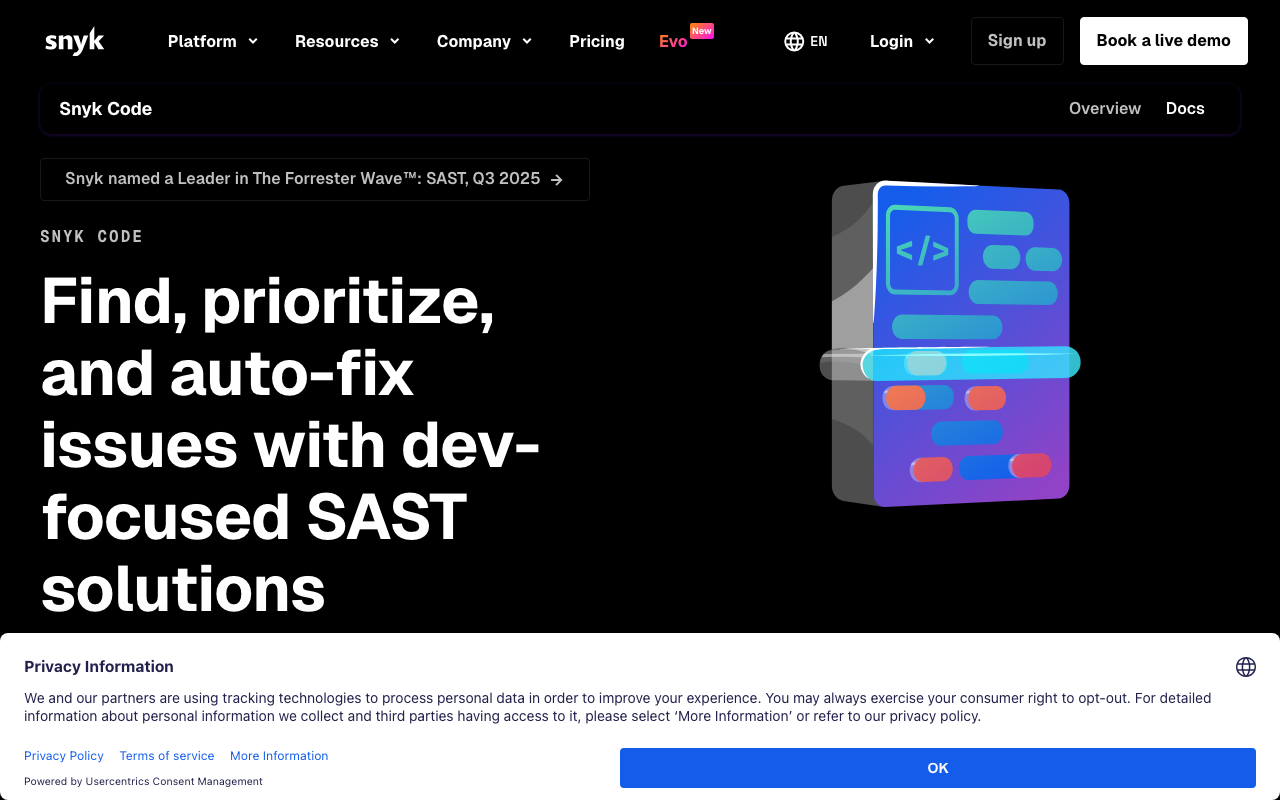
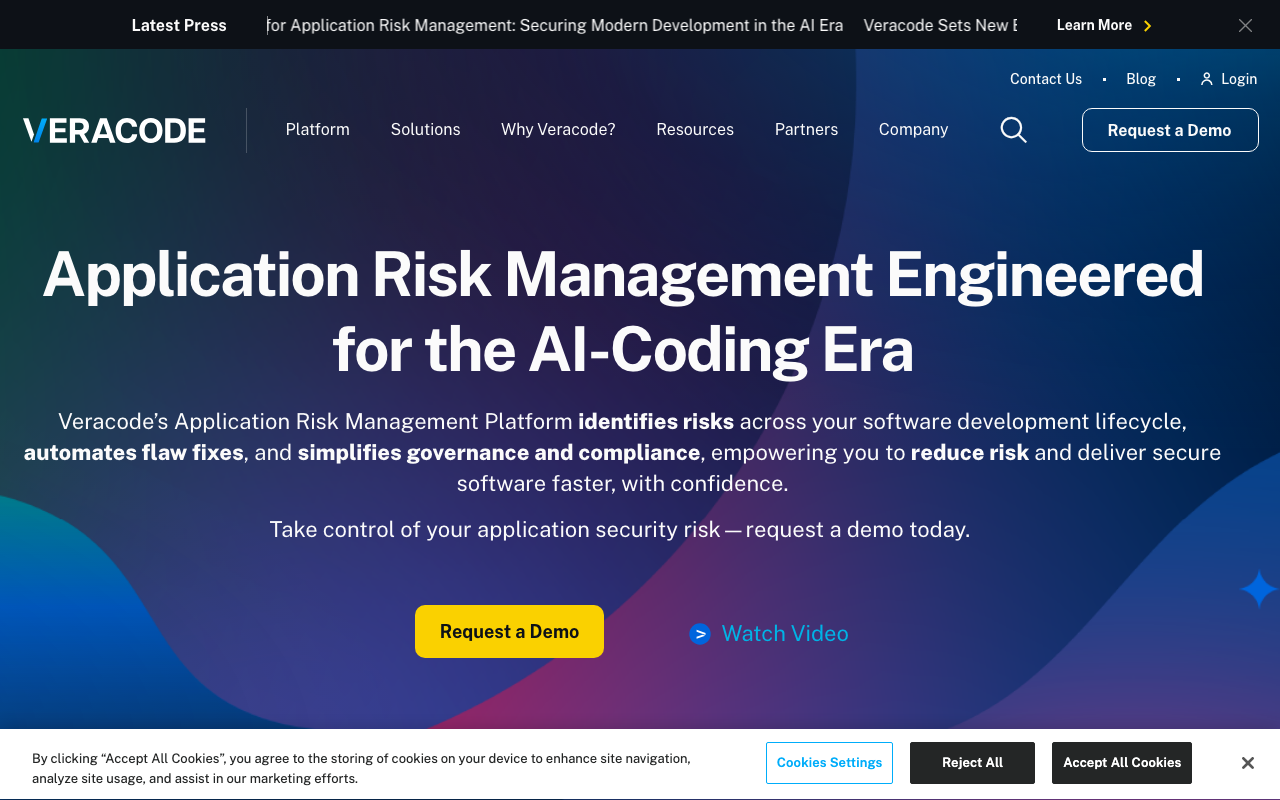
Snyk and Veracode represent two fundamentally different approaches to application security. Snyk is a developer-first platform built for speed, simplicity, and automated remediation - it embeds security into the developer workflow through fast scans, inline PR feedback, and AI-powered fix suggestions. Veracode is an enterprise-first platform built for comprehensive security coverage - it provides SAST, DAST, SCA, binary analysis, developer training, and compliance certification under one roof. Both are Gartner Magic Quadrant Leaders for Application Security Testing, but they serve very different buyers and solve different organizational problems.
If you can only pick one: Choose Snyk if developer adoption, scan speed, and SCA depth with reachability analysis are your top priorities. Snyk gets developers scanning in minutes and produces actionable results with fewer false positives. Choose Veracode if you need DAST, binary-level code analysis without source access, compliance certification (Verified by Veracode), developer security training (Security Labs), or FedRAMP authorization for government work.
The real answer: The choice hinges on your organization’s security operating model. If engineering teams own their security posture and you need a tool developers will actually use every day, Snyk fits naturally. If a dedicated AppSec team manages security centrally and you need the broadest possible coverage with compliance certification, Veracode is the stronger platform. Some large enterprises run both - Snyk for developer-facing workflows and Veracode for deep scanning, DAST, and audit evidence.
At-a-Glance Feature Comparison
| Category | Snyk | Veracode |
|---|---|---|
| Primary focus | Developer-first security | Enterprise AppSec platform |
| SAST | DeepCode AI engine (19+ languages, seconds) | Binary-level + source analysis (30+ languages, minutes-hours) |
| SCA | Core strength - reachability analysis, auto-fix PRs | Veracode SCA with Phylum behavioral analysis |
| DAST | No | Yes - AI-assisted authentication handling |
| Binary analysis | No - requires source code | Yes - scans compiled artifacts (JARs, DLLs, WARs) |
| Container scanning | Yes (Docker, ECR, GCR, ACR) | Yes |
| IaC scanning | Yes (Terraform, CloudFormation, K8s) | Yes |
| Supply chain security | Dependency monitoring + malicious package detection | Package Firewall with Phylum behavioral analysis |
| AI remediation | DeepCode AI auto-fix | Veracode Fix (AI-powered) |
| Developer training | No | Security Labs (hands-on interactive training) |
| Certification program | No | Verified by Veracode (auditor-recognized) |
| IDE integration | VS Code, JetBrains (real-time inline feedback) | VS Code, JetBrains, Eclipse, Visual Studio |
| Free tier | Yes - 100 SAST, 400 SCA, 300 IaC, 100 container tests/month | No free tier |
| Paid starting price | $25/dev/month (Team, min 5 devs) | ~$15,000/year (SAST only, single app) |
| Enterprise price | ~$67K-$90K/year (100 devs) | ~$50K-$250K+/year (varies by app count) |
| Deployment | Cloud only | Cloud (primary), on-premises available |
| FedRAMP authorized | No | Yes |
| Compliance reporting | Enterprise plan only (OWASP, CWE) | PCI DSS, HIPAA, SOC 2, FedRAMP, NIST, GDPR |
| Gartner MQ position | Leader (2025) | Leader - 11 consecutive years (2025) |
| Target buyer | Engineering teams, DevSecOps leads | CISOs, AppSec teams, compliance officers |
What Is Snyk?
Snyk (pronounced “sneak”) is a developer-first application security platform founded in 2015 by Guy Podjarny and Assaf Hefetz. The company started with open-source dependency scanning (SCA) and has since expanded into a comprehensive security platform covering SAST, SCA, container security, IaC security, and cloud security posture management. Snyk is used by over 4,500 organizations including Google, Salesforce, and Atlassian, and is positioned as a Gartner Magic Quadrant Leader for Application Security Testing.
Snyk’s core philosophy is that security only works when developers actually use the tools. Every product in the Snyk platform is designed for speed, simplicity, and tight integration into existing developer workflows - IDEs, pull requests, CI/CD pipelines, and package managers. This developer-first approach distinguishes Snyk from traditional enterprise security vendors like Veracode and Checkmarx, which historically built tools for security teams to scan code after it was written rather than for developers to catch issues as they code.
Snyk’s Core Products
Snyk Code (SAST) is the static analysis product powered by the DeepCode AI engine. Unlike traditional SAST tools that rely primarily on pattern matching, Snyk Code uses machine learning trained on over 25 million data flow cases from open-source projects. It performs interfile data flow analysis, tracing how tainted data moves through your application across multiple files and functions. When a vulnerability is found, DeepCode generates AI-powered fix suggestions trained on curated human remediation patterns. Snyk Code supports 19+ languages and completes scans in seconds rather than the minutes or hours that traditional SAST tools require.
Snyk Open Source (SCA) was the company’s original product and remains its deepest capability. The platform maintains one of the most rapidly updated vulnerability databases in the industry, typically incorporating new CVEs within 24 hours of public disclosure. The defining feature is reachability analysis - it determines whether vulnerable code paths in your dependencies are actually called by your application. This dramatically reduces noise, since most SCA tools flag every CVE in your dependency tree regardless of whether the vulnerable code is actually executed. Automatic PR generation for dependency upgrades means fixes can be merged with one click.
Snyk Container scans Docker images for vulnerabilities in base images and installed packages. It integrates with Docker Hub, Amazon ECR, Google Container Registry, and Azure Container Registry. Beyond flagging issues, Snyk Container recommends specific base image upgrades that fix the most vulnerabilities with the least disruption to your application.
Snyk IaC scans Terraform, CloudFormation, Kubernetes manifests, and ARM templates for security misconfigurations before they reach production. It catches issues like overly permissive IAM policies, unencrypted storage buckets, public-facing database ports, and missing network security rules.
Snyk’s Strengths
Developer adoption is unmatched in the security tool market. Snyk’s onboarding takes minutes - connect a repository, run a scan, see results. The IDE plugins provide real-time feedback as developers write code. PR checks post inline comments with vulnerability details and AI-generated fix suggestions. This frictionless experience means developers actually use the tool rather than treating it as a compliance checkbox they avoid. High adoption rates translate directly into more vulnerabilities caught and fixed.
SCA with reachability analysis is industry-leading. The combination of a rapidly updated vulnerability database, reachability analysis that filters out irrelevant alerts, and automatic remediation PRs creates a workflow that meaningfully reduces dependency risk with minimal developer effort. No other SCA tool - including Veracode SCA - matches this combination of depth and automation.
Scan speed enables shift-left in practice, not just in theory. Snyk Code scans complete in seconds. Container scans run in the CI/CD pipeline without meaningful build time impact. When security scanning is fast enough to run on every PR without annoying developers, it becomes part of the natural workflow rather than a bottleneck that teams route around.
The free tier provides genuine value. With 100 SAST tests, 400 SCA tests, 300 IaC tests, and 100 container tests per month, small teams and open-source projects can get real security coverage at zero cost. This is a decisive advantage over Veracode, which has no free tier and requires a sales conversation to get started. For more details, see our Snyk pricing breakdown.
Snyk’s Limitations
No DAST capabilities. Snyk only performs static analysis. It cannot test running applications for runtime vulnerabilities like authentication bypass, session fixation, server misconfiguration, or CORS issues. Teams that need DAST must add a separate tool alongside Snyk. This is a meaningful gap when compared to Veracode, which includes DAST with AI-assisted authentication handling as part of its unified platform.
No binary analysis. Snyk Code requires source code access to perform SAST scanning. It cannot analyze compiled artifacts, third-party binaries, or legacy applications where source code is unavailable. Organizations that need to scan acquired codebases, vendor-provided components, or legacy binaries without source must look elsewhere - and Veracode is effectively the only major vendor that provides binary-level analysis.
Cloud-only deployment. Snyk does not offer a self-hosted option. Organizations with strict data sovereignty requirements - particularly in government, defense, and certain financial sectors - may be unable to use Snyk if sending source code to a third-party cloud violates their policies.
Enterprise governance is lighter than Veracode’s. While Snyk’s Enterprise plan includes policy management, compliance reporting, and role-based access controls, these features are not as mature as Veracode’s centralized governance, certification program, and compliance framework mappings. Organizations where regulatory compliance drives security tooling decisions may find Snyk’s compliance features insufficient.
No developer training platform. Unlike Veracode Security Labs, Snyk does not offer a dedicated developer security education product. Teams using Snyk must source training separately.
What Is Veracode?
Veracode is an enterprise application security platform founded in 2006 in Burlington, Massachusetts. The company was one of the first to offer SAST as a cloud service and has built a comprehensive security platform covering SAST, DAST, SCA, container security, IaC scanning, and developer training. Veracode has been a Gartner Magic Quadrant Leader for Application Security Testing for 11 consecutive years - the longest streak of any vendor in the category. The company serves over 2,500 customers globally and has scanned over 37 trillion lines of code.
Veracode’s defining technical differentiator is binary-level SAST analysis - the ability to scan compiled artifacts (JARs, DLLs, WARs, native executables) without requiring access to the original source code. This approach analyzes the actual compiled representation of the application, catching certain classes of vulnerabilities that source-code-only tools may miss while also enabling scanning of third-party components, acquired codebases, and legacy applications where source code may be lost or inaccessible.
Veracode’s Core Products
Veracode SAST performs both binary-level and source-code static analysis across 30+ programming languages. The binary analysis approach works by uploading compiled application artifacts to the Veracode cloud platform, where they are analyzed using proprietary scanning technology. Pipeline Scan is a lightweight CLI-based scanning mode designed for CI/CD integration that provides faster results than full platform scans - completing in minutes rather than hours for most applications.
Veracode DAST tests running web applications and APIs for runtime vulnerabilities. The standout feature is AI-assisted authentication handling - Veracode DAST can navigate complex login flows including multi-factor authentication, CAPTCHA, and custom authentication mechanisms with less manual configuration than competing DAST tools. This reduces one of the biggest pain points in DAST deployment: configuring the scanner to authenticate with the target application.
Veracode SCA scans open-source dependencies for known vulnerabilities and license compliance. It incorporates Phylum behavioral analysis technology (acquired in 2024) that goes beyond vulnerability database lookups to detect malicious packages through runtime behavioral analysis - identifying packages that exfiltrate data, establish reverse shells, or perform other suspicious actions regardless of whether they match a known CVE.
Veracode Fix is the AI-powered remediation engine that generates code fix suggestions for identified vulnerabilities. It provides language-specific fix recommendations directly within the developer workflow, reducing the time from vulnerability discovery to remediation.
Veracode Security Labs is a developer training platform that provides interactive, hands-on security education. Developers work through real-world vulnerability scenarios in containerized lab environments, learning to identify and fix security issues in actual code. This training capability is unique among enterprise AppSec platforms and addresses the root cause of many vulnerabilities - developer security knowledge gaps.
Package Firewall blocks malicious or vulnerable packages from entering your software supply chain at the repository level. Combined with Phylum’s behavioral analysis, it provides proactive supply chain protection rather than reactive vulnerability scanning.
Veracode’s Strengths
Binary analysis is a unique capability in the enterprise SAST market. No other major SAST vendor provides the same depth of compiled artifact scanning. This matters in several real-world scenarios: scanning third-party vendor code when source is not provided under contract, analyzing acquired company codebases during M&A due diligence, scanning legacy applications where build environments no longer exist, and verifying that compiled artifacts match expected security profiles. For organizations with these requirements, Veracode is effectively the only viable enterprise choice.
DAST fills a critical gap that Snyk cannot address. Dynamic testing catches vulnerabilities that only appear when the application is running - authentication bypass, session management flaws, CORS misconfiguration, server-side request forgery, and insecure cookie handling. Many compliance frameworks require both SAST and DAST. Veracode covers both in a single platform; Snyk covers only SAST and SCA.
Security Labs fills a gap that no other AppSec platform addresses. Most security tools find problems and expect developers to fix them. Veracode Security Labs trains developers to stop creating the problems in the first place. At enterprise scale, reducing the rate at which vulnerabilities are introduced is more cost-effective than finding and fixing them after the fact.
Verified by Veracode certification is recognized by auditors. The certification program provides third-party attestation that an application meets defined security standards. Auditors in regulated industries recognize this certification as evidence of a mature application security program. No other AppSec vendor - including Snyk - offers an equivalent certification that carries the same auditor recognition.
FedRAMP authorization opens the government market. Veracode is FedRAMP authorized, meeting the security requirements mandated by the U.S. federal government for cloud services. Government agencies, defense contractors, and organizations doing federal business can adopt Veracode without additional compliance concerns. Snyk does not have FedRAMP authorization.
Phylum behavioral analysis provides supply chain protection beyond CVE matching. Traditional SCA tools check dependency versions against vulnerability databases. Veracode’s behavioral analysis executes packages in sandboxed environments to detect malicious behavior - data exfiltration, cryptocurrency mining, reverse shells, and credential theft - that would not be detected by CVE lookups alone. For more on Veracode’s pricing and capabilities, see our Veracode pricing guide.
Veracode’s Limitations
Binary analysis introduces upload and scan time overhead. Applications must be compiled and packaged before scanning, and the upload-scan-result cycle for full platform scans can take hours for large applications. Pipeline Scan mitigates this for CI/CD workflows, but full binary analysis remains slow compared to Snyk’s seconds-to-minutes approach. This overhead pushes full scans to scheduled intervals rather than on-demand developer workflows.
No free tier or self-service option. Veracode requires a sales conversation to get started. There is no free tier, no self-service trial that developers can spin up on their own, and no transparent pricing on the website. This is a significant barrier for smaller teams, startups, and individual developers who want to evaluate the tool before committing to a procurement process.
Developer experience trails Snyk significantly. While Veracode has invested in Pipeline Scan, IDE plugins, and Veracode Fix, the core platform was built for security teams first. Developers who have used Snyk will immediately notice the difference in scan speed, workflow integration, and result actionability. Veracode’s developer training (Security Labs) is excellent, but the scanning experience itself is not as frictionless.
SCA lacks Snyk’s reachability analysis. Veracode SCA flags all known vulnerabilities in your dependency tree but does not determine whether vulnerable code paths are actually called by your application. This means more alerts that may not be actionable, increasing triage burden compared to Snyk’s reachability-based prioritization.
Pricing is among the highest in the AppSec market. Veracode SAST alone starts around $15,000-$25,000 per year for a single application. Full-platform pricing can push to $50,000-$250,000+ annually depending on application count and scope. For enterprises with hundreds of applications, the per-application pricing model can make Veracode significantly more expensive than developer-based pricing models.
Cloud-first deployment limits air-gapped options. While Veracode offers on-premises deployment for specific enterprise requirements, the platform is primarily cloud SaaS. For binary analysis, compiled artifacts must be uploaded to Veracode’s cloud, which some organizations with strict data sovereignty requirements find problematic.
Feature-by-Feature Breakdown
SAST: AI-Driven Speed vs. Binary-Level Depth
This is where the philosophical divide between Snyk and Veracode is most visible. Snyk Code analyzes source code using AI trained on millions of real-world code patterns, completing scans in seconds with high-confidence findings. Veracode SAST analyzes compiled artifacts at the binary level, providing deeper analysis of compiled code behavior at the cost of significantly longer scan times.
Snyk Code uses the DeepCode AI engine to perform interfile and interprocedural analysis. It detects complex vulnerability patterns including second-order SQL injection, prototype pollution, path traversal, and deserialization attacks across multiple files. Scans complete in seconds, and results include AI-generated fix suggestions that developers can apply directly from their IDE or PR. The engine supports 19+ languages and is optimized for the developer workflow - fast enough to run on every commit without slowing down development.
Veracode SAST analyzes the compiled form of your application. This binary-level approach catches vulnerability classes that source-code tools may miss - compiler-introduced issues, runtime behavior patterns visible in bytecode, and vulnerabilities in the interaction between compiled modules. The critical differentiator is scanning without source code: third-party libraries, acquired codebases, legacy applications, and vendor-provided components can all be analyzed. Pipeline Scan provides a faster CI/CD mode completing in minutes, while full platform scans provide the deepest analysis at the cost of hours of processing time.
The practical difference: Snyk catches vulnerabilities faster and with less noise, making it more likely that developers will fix issues before merging. Veracode catches a broader range of vulnerabilities - particularly in compiled artifacts and binary interactions - with deeper analysis, but the longer scan times push findings to security analyst review rather than developer self-service remediation. If your primary goal is developer-driven vulnerability prevention (catch common issues fast), Snyk wins. If your primary goal is comprehensive vulnerability discovery (find everything, including issues in compiled code), Veracode wins.
Software Composition Analysis (SCA)
Snyk’s SCA is the market benchmark, and the gap over Veracode SCA is significant. Snyk Open Source was the company’s first product, and it remains the deepest SCA capability available. The vulnerability database is updated within 24 hours of CVE disclosure. Reachability analysis determines whether your application actually calls the vulnerable code paths in your dependencies, reducing false alerts by 30-70% in typical projects. Automatic remediation PRs suggest the minimum version upgrade that fixes the vulnerability while minimizing breaking changes. Continuous monitoring alerts you when new CVEs affect packages already deployed to production. License compliance checking ensures your open-source usage complies with corporate policy.
Veracode SCA is solid, with a unique supply chain angle. Dependency scanning covers all major package ecosystems for known vulnerabilities and license risks. The Phylum behavioral analysis integration is a genuine differentiator for supply chain protection - it sandbox-executes packages to detect malicious behavior like data exfiltration and credential theft that standard CVE matching would miss. Package Firewall blocks malicious packages at the repository level before they enter your dependency tree. However, Veracode SCA lacks reachability analysis, which means every vulnerability in the dependency tree is flagged regardless of whether the vulnerable code path is actually invoked by your application.
If SCA is your top priority, Snyk is the clear winner. The combination of faster CVE updates, reachability-based prioritization, and automatic remediation PRs means developers spend less time triaging alerts and more time applying real fixes. Veracode’s Phylum behavioral analysis provides stronger zero-day supply chain attack protection, but for the core SCA workflow of identifying and fixing known dependency vulnerabilities, Snyk is materially better. For a deeper look at Snyk’s pricing tiers for SCA, see our Snyk pricing guide.
DAST: Veracode’s Exclusive Domain
This is where Veracode has a capability Snyk simply does not offer. Dynamic Application Security Testing runs against your live application, sending crafted HTTP requests to discover vulnerabilities that static analysis cannot detect. Authentication bypass, session fixation, insecure cookie handling, CORS misconfiguration, server-side request forgery, and many injection vulnerabilities only manifest at runtime.
Veracode DAST includes AI-assisted authentication handling that automatically navigates complex login flows - multi-step authentication, OAuth redirects, CAPTCHA challenges, and custom login forms. Authentication is the number one barrier to effective DAST scanning. If the scanner cannot authenticate, it only tests the unauthenticated attack surface, missing the vast majority of an application’s functionality. Veracode’s approach means more of your application gets scanned with less manual configuration.
Snyk has no DAST product. Teams using Snyk that need dynamic testing must add a separate tool - OWASP ZAP (free, open-source), Burp Suite (popular with penetration testers), or a commercial DAST product like Invicti. This means managing a separate tool, separate dashboard, and separate findings that are not correlated with Snyk’s static analysis results.
Why this matters: Many enterprise security programs and compliance frameworks require both SAST and DAST. PCI DSS requires dynamic testing of web applications. NIST SP 800-53 recommends both static and dynamic analysis. FedRAMP assessments expect both. Organizations that need to demonstrate compliance with these frameworks can check both boxes with Veracode alone, while Snyk users need a separate DAST vendor. For a comparison of how Veracode’s DAST stacks up against other enterprise platforms, see our Checkmarx vs Veracode analysis.
Binary Analysis: Veracode’s Unique Differentiator
Binary analysis is the single most significant technical difference between Snyk and Veracode. Veracode can scan compiled artifacts - Java bytecode, .NET MSIL, native binaries, and other compiled formats - without requiring the original source code. No other major enterprise SAST vendor, including Snyk, Checkmarx, or Semgrep, provides this capability.
Real-world scenarios where binary analysis is essential:
Third-party vendor code. When your organization uses commercial software components from vendors who do not provide source code under contract, Veracode can still assess the security of those compiled components. Snyk cannot scan code it does not have source access to.
M&A due diligence. During acquisitions, the acquiring company often needs to assess the security posture of the target’s codebase before the deal closes - when full source code access may not yet be available. Veracode can analyze the compiled applications. Snyk requires source access.
Legacy applications. Organizations with legacy applications where the original build environment, source control, or development team no longer exists can still perform security analysis on the compiled artifacts using Veracode. These legacy systems often run critical business functions and carry significant security risk.
Compiled artifact verification. Binary analysis can detect certain classes of vulnerabilities that manifest only in the compiled form - compiler optimization issues, runtime behavior patterns, and interactions between compiled modules that are invisible in source code.
If you do not need binary analysis, this differentiator is irrelevant. For teams that only scan code they write and maintain - where source is always available - Snyk’s faster, more developer-friendly source-code SAST provides a better experience.
Container Security
Both tools offer container scanning, but Snyk’s approach is more mature and developer-friendly.
Snyk Container scans Docker images for vulnerabilities in base images and installed packages. It integrates directly with container registries - Docker Hub, Amazon ECR, Google Container Registry, and Azure Container Registry. The standout feature is specific base image upgrade recommendations: instead of just flagging a vulnerability, Snyk Container recommends the exact base image version that fixes the most vulnerabilities with the least disruption. Continuous monitoring alerts you when new CVEs affect images already deployed to production. The experience feels native to the container workflow - scan, see recommendations, apply the upgrade.
Veracode Container Security provides container scanning as part of the unified platform. It scans container images for vulnerabilities in OS packages and application dependencies. Findings integrate with the broader Veracode dashboard alongside SAST, DAST, and SCA results. The container scanning is solid but not as deeply integrated into the developer container workflow as Snyk’s purpose-built solution.
For teams where container security is a primary concern, Snyk Container provides a more actionable, developer-friendly experience with better base image upgrade guidance.
Developer Experience
This is Snyk’s decisive advantage and the primary reason many teams choose it over Veracode.
Snyk’s developer experience is purpose-built for the developer workflow. The VS Code and JetBrains plugins highlight vulnerabilities inline as developers write code, with real-time scanning that provides immediate feedback. Fix suggestions appear directly in the IDE. PR checks post inline comments with vulnerability details and AI-generated remediation. The Snyk CLI runs in seconds - snyk test for SCA, snyk code test for SAST, snyk container test for containers, snyk iac test for infrastructure. The total pipeline impact is typically under 2 minutes for all scan types combined. Onboarding takes minutes: connect a repo, run a scan, see results.
Veracode has improved developer experience but still trails significantly. Pipeline Scan provides faster CI/CD scanning than full platform scans. Veracode Fix generates AI-powered code fix suggestions. IDE plugins for VS Code, JetBrains, Eclipse, and Visual Studio allow developers to view findings in their editor. Security Labs provides excellent developer training. But the core scanning workflow - compile your code, upload the artifact, wait for results - is fundamentally slower and more friction-laden than Snyk’s approach. Full platform SAST scans that take hours cannot integrate into a fast PR review cycle. Pipeline Scan is faster but still not as fast as Snyk Code.
The compounding effect of developer experience: Tools that developers find easy and fast get used on every PR. Tools that developers find slow and cumbersome get used only when enforced - and developers route around enforcement. Snyk’s speed and simplicity create a virtuous cycle: high adoption leads to more vulnerabilities caught early, which leads to developer trust, which leads to even higher adoption. Veracode’s scan time overhead creates the opposite dynamic for full scans, though Pipeline Scan partially mitigates this.
Compliance and Governance
Veracode has a decisive advantage in compliance-driven environments.
Veracode’s compliance capabilities are enterprise-grade and auditor-recognized. The platform maps findings to PCI DSS, HIPAA, SOC 2, NIST 800-53, FedRAMP, and GDPR. The Verified by Veracode certification program provides third-party attestation that an application meets defined security standards - auditors in regulated industries specifically recognize this certification. FedRAMP authorization means government agencies can adopt Veracode without additional compliance hurdles. Veracode includes both SAST and DAST, which many compliance frameworks require. The combination of certification, DAST coverage, and framework mapping makes Veracode the more complete compliance solution.
Snyk’s compliance capabilities exist but are less mature. The Enterprise plan includes compliance reporting, security policies, and SBOM generation. Findings map to OWASP and CWE categories. But Snyk does not offer an auditor-recognized certification program, is not FedRAMP authorized, does not include DAST (which many compliance frameworks require alongside SAST), and provides fewer compliance framework mappings than Veracode.
When this matters: If your organization operates in financial services, healthcare, government, or defense and undergoes regular security audits, Veracode generates the reports and certifications that auditors expect. If compliance is important but not the primary driver - if your team needs to meet OWASP Top 10 requirements without deep regulatory mapping - Snyk’s compliance features may be sufficient. For organizations evaluating other compliance-focused alternatives, see our Veracode alternatives guide.
Developer Training: Veracode’s eLearning Advantage
Veracode Security Labs is a unique differentiator that no other AppSec platform replicates. The platform provides interactive, hands-on training modules where developers learn to identify and fix vulnerabilities in real code within containerized lab environments. Training covers OWASP Top 10, language-specific security patterns, secure coding practices, and real-world vulnerability scenarios.
Why developer training matters at the platform level: Security scanning tools are reactive - they find problems that already exist. Developer training is proactive - it reduces the rate at which new vulnerabilities are introduced. At enterprise scale, training 500 developers to avoid common security mistakes has a higher return on investment than scanning for and remediating those same mistakes after the code is written. Veracode’s integration of training into the security platform creates a closed loop: a developer finds a vulnerability through Veracode scanning, then completes a Security Labs module on that specific vulnerability class, reducing the probability of creating the same issue in the future.
Snyk does not offer a comparable training product. Organizations using Snyk that need developer security training must source it from a separate vendor - platforms like Secure Code Warrior, HackEDU, or SANS. This adds another tool, another vendor relationship, and another cost to the security program. The lack of training integration means there is no automatic connection between the vulnerabilities Snyk finds and the training developers receive.
Pricing Comparison
Snyk Pricing
| Plan | Price | What You Get |
|---|---|---|
| Free | $0 | 100 SAST tests/month, 400 SCA tests, 300 IaC tests, 100 container tests |
| Team | $25/dev/month (min 5, max 10 devs) | Unlimited scans, AI auto-fix, PR checks, Jira integration |
| Enterprise | Custom (~$670-$900/dev/year) | SSO, custom policies, compliance reporting, premium support |
Veracode Pricing
| Configuration | Estimated Annual Cost |
|---|---|
| SAST only (single application) | ~$15,000-$25,000 |
| SAST + DAST (single application) | ~$25,000-$45,000 |
| Full platform - SAST, DAST, SCA (10 applications) | ~$75,000-$150,000 |
| Full platform (25 applications) | ~$125,000-$200,000 |
| Full platform (50+ applications) | ~$200,000-$250,000+ |
| Security Labs (developer training) | Typically bundled with enterprise contracts |
Veracode does not publish transparent pricing. These estimates are based on industry reports and procurement data. Veracode’s pricing model is often application-based rather than developer-based, which can make it significantly more expensive for organizations with many applications.
Side-by-Side Pricing at Scale
| Team Size | Snyk Cost (Annual) | Veracode Cost (Annual) | Notes |
|---|---|---|---|
| 5 devs (startup) | $1,500 (Team) or $0 (Free) | Not practical (no SMB plan) | Snyk wins by default |
| 25 devs, 10 apps | ~$16,750-$22,500 (Enterprise) | ~$75,000-$150,000 | Veracode includes DAST and binary analysis |
| 50 devs, 25 apps | ~$33,500-$45,000 (Enterprise) | ~$125,000-$200,000 | Snyk + separate DAST tool still cheaper |
| 100 devs, 50 apps | ~$67,000-$90,000 (Enterprise) | ~$200,000-$250,000+ | Veracode premium reflects DAST, binary, training |
Key pricing observations:
Snyk is cheaper at every team size - significantly so. The price gap between Snyk and Veracode is much larger than the Snyk vs. Checkmarx gap. Veracode’s per-application pricing model is expensive for organizations with many applications, while Snyk’s per-developer model scales more predictably.
But the comparison is not apples to apples. Snyk does not include DAST, binary analysis, or developer training. Adding a commercial DAST tool ($15,000-$40,000/year) and a developer training platform ($10,000-$30,000/year) to Snyk narrows the gap - but typically does not eliminate it. Even with additions, Snyk’s total cost of ownership is usually lower than Veracode’s full platform.
Snyk’s free tier enables bottom-up adoption. Developers can start using Snyk before any procurement process begins. By the time the team decides to purchase, Snyk is already integrated and providing value. Veracode requires a top-down purchase decision before anyone can scan their first application.
Veracode’s total cost of ownership includes triage overhead. Without reachability analysis in SCA, Veracode generates more dependency alerts that require manual triage. If a security engineer spends additional hours per week triaging Veracode SCA findings versus Snyk SCA findings, the labor cost difference is real over a year. Factor this in alongside license fees when comparing total cost.
Negotiation is expected with both vendors at enterprise scale. Snyk typically offers 20-45% discounts on multi-year commitments. Veracode pricing is always negotiated, and multi-year deals yield 15-30% discounts. Both vendors will discount against each other during competitive evaluations. For detailed pricing breakdowns, see our Snyk pricing and Veracode pricing guides.
Language and Framework Support
Snyk Code Language Support
Snyk Code supports 19+ languages through the DeepCode AI engine: Java, JavaScript, TypeScript, Python, C#, Go, Ruby, PHP, C/C++, Kotlin, Swift, Scala, Apex (Salesforce), and additional languages added regularly. The AI-driven analysis model means adding new languages primarily requires training data rather than manually writing language-specific rules, which allows Snyk to expand coverage faster than traditional SAST tools.
Framework-specific support includes popular frameworks like Spring (Java), Express/Next.js (JavaScript), Django/Flask (Python), ASP.NET (C#), and Ruby on Rails. The interfile analysis understands framework-specific patterns, so a vulnerability that flows through a Spring controller to a JPA repository is correctly traced across the framework’s conventions.
Veracode SAST Language Support
Veracode SAST supports 30+ languages with particular strength in compiled languages through binary analysis: Java, JavaScript, TypeScript, Python, C#, C/C++, Go, Ruby, PHP, Kotlin, Swift, Scala, Objective-C, Groovy, Perl, COBOL, VB.NET, Apex, Android (Java/Kotlin), iOS (Swift/Objective-C), and additional languages. The binary analysis approach gives Veracode unique coverage for compiled language artifacts - it can analyze JVM bytecode, .NET MSIL, native binaries, and other compiled formats without source code.
The Practical Difference
If your stack uses mainstream languages - Java, JavaScript/TypeScript, Python, Go, C# - both tools provide excellent coverage. If your organization maintains legacy systems in COBOL or enterprise languages like VB.NET and Groovy, Veracode’s broader language coverage may matter. The decisive language-related advantage for Veracode is binary analysis of compiled artifacts in any supported language, not the raw number of languages supported.
Use Cases: When to Choose Each Tool
Choose Snyk When
Your engineering team drives security decisions. If developers own the security posture of their code - scanning in their IDEs, fixing vulnerabilities in their PRs, managing dependency upgrades - Snyk is built for this model. The developer experience is the product’s core advantage, and high developer adoption is the single most important factor in a security tool’s effectiveness.
SCA and dependency security are your highest priority. If your applications rely heavily on open-source packages (and most modern applications do), Snyk’s SCA with reachability analysis provides the most actionable dependency vulnerability management available. Automatic remediation PRs turn SCA from a reporting tool into an automated fix workflow. For teams evaluating other options, see our Snyk alternatives guide.
You are a startup or mid-market company. Snyk’s free tier, self-service onboarding, and transparent pricing make it accessible to teams of any size. You can start scanning in minutes without a procurement process, sales meeting, or security team involvement.
Speed matters more than analysis depth. If catching the most common vulnerabilities as quickly as possible and fixing them before code merges is the priority, Snyk’s seconds-to-minutes scan time and inline PR feedback is more effective than Veracode’s deeper but slower analysis.
You are building cloud-native applications. If your stack includes containers (Docker, Kubernetes) and infrastructure-as-code (Terraform, CloudFormation), Snyk provides mature, unified scanning across application code, dependencies, container images, and infrastructure configuration with continuous monitoring for production containers.
You need a tool that developers will actually use. The most sophisticated security tool provides zero value if developers route around it. Snyk’s fast scans, low false positives, inline fix suggestions, and simple onboarding maximize the probability of active developer usage.
Choose Veracode When
A dedicated security team manages AppSec centrally. If your organization has a security team that defines scanning policies, triages results, manages remediation tracking, and reports to the CISO, Veracode is built for this operating model. The governance, compliance certification, and executive dashboards support centralized security management at scale.
You need DAST as part of your security program. If your compliance framework or security standards require dynamic application testing alongside static analysis, Veracode includes DAST with AI-assisted authentication handling in a single platform. Using Snyk for SAST/SCA and a separate DAST tool creates integration challenges and finding correlation gaps.
Binary analysis is a requirement. If you need to scan third-party vendor code, acquired codebases, legacy applications without source access, or compiled artifacts for security assurance, Veracode is effectively the only major enterprise option.
Compliance drives your security tool selection. If your organization operates in financial services, healthcare, government, or defense where audit evidence is regularly required, Veracode’s compliance framework mappings, FedRAMP authorization, and Verified by Veracode certification provide direct audit evidence that simplifies the compliance process.
Developer training at scale is a priority. If your security strategy includes reducing vulnerability introduction rates through developer education, Veracode Security Labs provides the most comprehensive hands-on training platform in the AppSec market.
Track record and vendor stability are procurement factors. For risk-averse procurement teams, Veracode’s 11 consecutive years as a Gartner MQ Leader provides a strong narrative for vendor selection justification. For organizations evaluating other enterprise options alongside Veracode, see our Checkmarx vs Veracode comparison.
Head-to-Head on Specific Scenarios
| Scenario | Better Choice | Why |
|---|---|---|
| Developer fixing a vulnerability in a PR | Snyk | Seconds-fast scan, inline fix suggestions, AI auto-fix |
| Security team auditing 50 applications | Veracode | Centralized dashboard, compliance certification, executive reporting |
| Scanning npm dependencies for CVEs | Snyk | Reachability analysis + auto-fix PRs |
| PCI DSS compliance evidence | Veracode | Compliance framework mapping, Verified by Veracode certification |
| Scanning a running web application | Veracode | DAST with AI-assisted authentication (Snyk has no DAST) |
| Scanning third-party vendor code (no source) | Veracode | Binary analysis works without source code |
| Container image scanning in CI/CD | Snyk | More mature container scanning with base image upgrade guidance |
| Startup with 5 developers | Snyk | Free tier, self-service onboarding, transparent pricing |
| FedRAMP compliance | Veracode | FedRAMP authorized; Snyk is not |
| Developer security training | Veracode | Security Labs provides hands-on interactive training |
| M&A due diligence code scanning | Veracode | Binary analysis for acquired codebases without source |
| IaC scanning (Terraform, K8s) | Snyk | More mature, tightly integrated IaC scanning |
| Minimizing false positives in SCA | Snyk | Reachability analysis filters out 30-70% of irrelevant alerts |
| Supply chain attack protection (zero-day) | Veracode | Phylum behavioral analysis detects novel malicious packages |
| Fastest time-to-first-scan | Snyk | Minutes to first scan vs. days/weeks for Veracode setup |
| Enterprise with 500 devs and CISO oversight | Veracode | Governance, certification, training, DAST in one platform |
Alternatives to Consider
Before finalizing a decision between Snyk and Veracode, evaluate these alternatives that may fit your specific needs better.
Checkmarx
Checkmarx is the enterprise AppSec platform most directly comparable to Veracode. Like Veracode, it offers SAST, DAST, SCA, container scanning, and deep compliance reporting. Checkmarx’s differentiators over Veracode include the CxQL custom query language for writing organization-specific SAST rules, dedicated API security scanning, the open-source KICS IaC scanner, and more flexible self-hosted deployment options. Checkmarx does not offer binary analysis or developer training. Consider Checkmarx if you want Veracode-class enterprise coverage with more SAST customization and deployment flexibility. See our Checkmarx vs Veracode comparison and Checkmarx pricing guide for details.
Semgrep
Semgrep is an open-source, fast, and lightweight static analysis tool that supports custom rules using a simple YAML-based syntax. Semgrep scans in milliseconds and is designed for developers to write and maintain their own rules. The commercial Semgrep AppSec Platform adds managed rules, CI/CD integration, and a dashboard. Semgrep does not offer SCA with reachability analysis, DAST, container scanning, or binary analysis - its strength is customizable, blazing-fast SAST. Consider Semgrep as a complement to either Snyk or Veracode for fast, developer-authored custom rules, or as a standalone solution for teams that want maximum control over their analysis engine.
SonarQube
SonarQube is a code quality platform that includes basic SAST capabilities. It is not a direct competitor to either Snyk or Veracode for security, but it complements both by providing code quality gates, technical debt tracking, and coding standards enforcement. Many teams use SonarQube for quality alongside Snyk or Veracode for security. If code quality is as important as security for your organization, pairing SonarQube with your chosen security platform creates a comprehensive quality-and-security workflow. See our SonarQube vs Veracode comparison for more on how the two tools complement each other.
Using Snyk and Veracode Together
While choosing between Snyk and Veracode is the most common decision, some large enterprises run both. This dual-tool approach is more justifiable than running two similar enterprise platforms (like Checkmarx and Veracode) because Snyk and Veracode have very different strengths with limited overlap.
A Typical Dual-Tool Workflow
- Developer writes code. Snyk IDE plugin provides real-time security feedback as code is written.
- Developer opens a PR. Snyk Code runs SAST in seconds. Snyk Open Source scans dependencies with reachability analysis. Results post inline to the PR with AI-generated fix suggestions.
- PR merges to main. Veracode runs a full SAST scan with binary analysis (deeper analysis of compiled artifacts). Veracode SCA provides a second layer of dependency scanning with Phylum behavioral analysis for supply chain protection.
- Release branch is cut. Veracode DAST scans the staging environment with AI-assisted authentication. Runtime vulnerabilities are flagged before production deployment.
- Security team reviews the Veracode dashboard for portfolio-wide security posture, compliance status, and vulnerability trends. Verified by Veracode certification is maintained for audit purposes.
- Developers complete Veracode Security Labs modules based on the vulnerability types found in their code, reducing future vulnerability introduction rates.
- Audit time arrives. Compliance reports and certification are generated from Veracode. Snyk SBOM exports supplement the audit evidence.
When the Dual Approach Does Not Make Sense
For most organizations, one tool is sufficient. Running two security platforms doubles vendor management overhead, creates duplicate findings that need deduplication, increases total cost, and adds CI/CD pipeline complexity. Unless you have a specific requirement that one tool cannot meet - binary analysis, DAST coverage, developer training, compliance certification, or defense-in-depth for high-risk applications - choosing one platform and investing deeply in it delivers better results than spreading investment across two.
Final Recommendation
Snyk and Veracode occupy opposite ends of the application security spectrum in 2026. Snyk optimizes for the developer - speed, simplicity, low friction, reachability-based SCA, and automated remediation. Veracode optimizes for the enterprise - scanning breadth, binary analysis, DAST, compliance certification, and developer training. The right choice depends not just on technical requirements but on how your organization operates and who drives security decisions.
For developer-led security (teams of 5-100): Choose Snyk. The free tier gets you started immediately. The developer experience maximizes adoption and actual vulnerability remediation. The SCA with reachability analysis is best-in-class. If you later need DAST, add it as a separate tool. If you later need compliance certification, evaluate adding Veracode specifically for that purpose.
For security-team-led programs (100+ developers, dedicated AppSec team): Evaluate Veracode. The unified SAST/DAST/SCA platform with binary analysis simplifies vendor management for comprehensive coverage. The Verified by Veracode certification satisfies auditors. Security Labs builds developer security competency over time. Supplement with Snyk if developers find Veracode too heavy for their daily PR workflow.
For compliance-driven organizations (financial services, healthcare, government): Start with Veracode. The FedRAMP authorization, compliance framework mappings, certification program, and DAST coverage align directly with regulatory requirements. Add Snyk for developer-facing SCA if dependency management is a pain point that Veracode SCA does not adequately address.
For startups and budget-conscious teams: Start with Snyk Free. It is the fastest path to real application security at zero cost. Veracode does not have an equivalent on-ramp. When you reach the scale where enterprise governance, DAST, binary analysis, or compliance certification becomes necessary, evaluate whether to add Veracode or supplement Snyk with specialized tools.
The uncomfortable truth about both platforms: Snyk misses DAST, binary analysis, and developer training. Veracode’s scan times and developer experience cause adoption problems that leave vulnerabilities unfixed in the development inner loop. The ideal security stack combines developer-friendly tools for the inner loop (writing and reviewing code) with enterprise tools for the outer loop (compliance, governance, deep scanning, and runtime testing). Whether that means Snyk alone, Veracode alone, both together, or one of them combined with SonarQube for code quality and Semgrep for custom rules depends on your team, your compliance requirements, and your budget.
Choose the tool your developers will actually use for day-to-day scanning, and supplement it with whatever your compliance program demands. A tool that catches vulnerabilities that get fixed is more valuable than a tool with the most comprehensive feature list that developers avoid using.
Frequently Asked Questions
Is Snyk better than Veracode?
Snyk is better for developer-centric teams that prioritize fast scan times, SCA with reachability analysis, and seamless IDE and PR integration. Veracode is better for large enterprises that need DAST, binary-level SAST analysis, developer security training, compliance certification, and centralized governance. Snyk wins on developer experience, speed, and SCA depth. Veracode wins on scanning breadth (DAST, binary analysis), compliance certification, and developer training. Neither is universally better - the right choice depends on whether developer adoption or enterprise security coverage is your top priority.
Does Veracode have SCA like Snyk?
Yes, Veracode offers SCA (Software Composition Analysis) that scans open-source dependencies for known vulnerabilities and license compliance risks. Veracode SCA also incorporates Phylum behavioral analysis technology to detect malicious packages through sandboxed runtime analysis. However, Snyk's SCA is generally considered more mature due to its reachability analysis, which determines whether vulnerable code paths in your dependencies are actually called by your application. Snyk also generates automatic remediation PRs with one-click fixes and updates its vulnerability database faster - typically within 24 hours of CVE disclosure.
Does Snyk offer DAST scanning?
No, Snyk does not offer DAST (Dynamic Application Security Testing). Snyk only performs static analysis through Snyk Code (SAST), Snyk Open Source (SCA), Snyk Container, and Snyk IaC. It cannot test running applications for runtime vulnerabilities like authentication bypass, session management flaws, or server misconfiguration. Teams using Snyk that need DAST must add a separate tool such as OWASP ZAP, Burp Suite, or a commercial DAST product. Veracode, by contrast, includes DAST as part of its unified platform, along with AI-assisted authentication handling for complex login flows.
Can Veracode scan compiled code without source access?
Yes, this is Veracode's defining technical differentiator. Veracode performs binary-level SAST analysis, meaning it can scan compiled artifacts - JARs, DLLs, WARs, native executables - without needing access to the original source code. This is critical for scanning third-party vendor components, acquired codebases during M&A due diligence, and legacy applications where the build environment no longer exists. No other major enterprise SAST vendor, including Snyk, provides this capability. Snyk Code requires source code access to perform static analysis.
How much does Snyk cost compared to Veracode?
Snyk offers a free tier (100 SAST tests, 400 SCA tests, 300 IaC tests, 100 container tests per month), a Team plan at $25 per developer per month (minimum 5 developers), and custom Enterprise pricing estimated at $670-$900 per developer per year. Veracode has no free tier and prices are enterprise-only - SAST alone starts around $15,000-$25,000 per year per application, while full platform pricing with DAST and SCA ranges from $50,000-$250,000+ annually depending on application count and scan volume. Snyk is significantly cheaper at every team size, but Veracode includes DAST and binary analysis that Snyk does not offer.
Which tool is better for compliance - Snyk or Veracode?
Veracode is generally better for compliance-heavy organizations. It is FedRAMP authorized, provides compliance reporting mapped to PCI DSS, HIPAA, SOC 2, NIST 800-53, and GDPR, and offers the Verified by Veracode certification program that auditors in regulated industries recognize as evidence of a secure development lifecycle. Veracode also includes DAST, which many compliance frameworks require alongside SAST. Snyk's Enterprise plan includes compliance features and SBOM generation, but the compliance reporting is less mature and there is no equivalent certification program.
Can I use Snyk and Veracode together?
Yes, some large enterprises run both tools. In this model, Snyk handles developer-facing workflows - fast SCA scanning in PRs, IDE-integrated vulnerability detection, container scanning, and automatic dependency remediation. Veracode handles security team workflows - deep SAST with binary analysis, DAST scanning on staging environments, compliance reporting, and the Verified by Veracode certification for audits. This approach provides the best developer experience (Snyk) alongside the broadest security coverage and compliance (Veracode), though it increases total cost and requires managing two platforms.
What is the false positive rate for Snyk vs Veracode?
Snyk generally produces fewer false positives than Veracode. Snyk Code uses the DeepCode AI engine trained on over 25 million data flow cases, which produces higher-confidence findings. For SCA, Snyk's reachability analysis filters out vulnerabilities in dependency code paths your application does not call, reducing alerts by 30-70%. Veracode's binary analysis can produce false positives related to compiled code paths, and its SCA lacks reachability analysis, meaning every CVE in the dependency tree is flagged regardless of actual exposure. Both tools provide triage workflows for marking false positives.
How long does a Veracode scan take compared to Snyk?
Snyk scans are significantly faster. Snyk Code (SAST) completes in seconds to a few minutes, even for large codebases. Veracode's full SAST scans - which involve uploading compiled artifacts for binary analysis - can take 30 minutes to several hours depending on application size. Veracode Pipeline Scan provides faster CI/CD-oriented results in minutes, but still does not match Snyk's speed. This scan time difference is one of the primary reasons Snyk achieves higher developer adoption - fast tools get used on every PR, while slow tools get pushed to nightly builds.
Does Veracode offer developer training?
Yes, Veracode Security Labs is a hands-on developer training platform that teaches developers to identify and fix security vulnerabilities through interactive, containerized lab environments. Modules cover OWASP Top 10, language-specific security patterns, and real-world vulnerability scenarios. This training capability is unique among AppSec platforms and addresses the root cause of vulnerabilities - developer security knowledge gaps. Snyk does not offer a comparable developer training product. Organizations using Snyk must source developer security education separately.
Which is better for a startup - Snyk or Veracode?
Snyk is almost always the better choice for startups. It offers a free tier with meaningful capabilities, self-service onboarding that takes minutes, transparent pricing, and a Team plan at $25 per developer per month. Veracode has no free tier, requires a sales conversation to get started, and is priced for enterprise budgets starting at $15,000+ per year. Unless a startup is in a heavily regulated industry that mandates specific compliance certifications from day one, Snyk provides far better value and faster time-to-security for small teams.
Is Veracode FedRAMP authorized?
Yes, Veracode is FedRAMP authorized, which means it meets the stringent security requirements mandated by the U.S. federal government for cloud services. This authorization is significant for government agencies, defense contractors, and any organization that does business with the federal government. Snyk is not FedRAMP authorized. For government and defense sector organizations, Veracode's FedRAMP status can be a deciding factor, as using non-FedRAMP-authorized tools for processing government data may violate compliance requirements.
Explore More
 Snyk Code Review
 Veracode Review
 Checkmarx Review
 Semgrep Review
 SonarQube Review
Related Articles
- Codacy vs Checkmarx: Developer Code Quality vs Enterprise AppSec in 2026
- Snyk vs Checkmarx: Developer Security vs Enterprise AppSec in 2026
- SonarQube vs Checkmarx: Code Quality vs Enterprise Security in 2026
- SonarQube vs Veracode: Code Quality vs Application Security in 2026
- I Reviewed 32 SAST Tools - Here Are the Ones Actually Worth Using (2026)
Free Newsletter
Stay ahead with AI dev tools
Weekly insights on AI code review, static analysis, and developer productivity. No spam, unsubscribe anytime.
Join developers getting weekly AI tool insights.
Related Articles
Checkmarx vs Veracode: Enterprise SAST Platforms Compared in 2026
Checkmarx vs Veracode - enterprise SAST, DAST, SCA, Gartner positioning, pricing ($40K-250K+), compliance, and when to choose each AppSec platform.
March 13, 2026
comparisonCodacy Free vs Pro: Which Plan Do You Need in 2026?
Codacy Free vs Pro compared - features, limits, pricing, and when to upgrade. Find the right Codacy plan for your team size and workflow.
March 13, 2026
comparisonCodacy vs Checkmarx: Developer Code Quality vs Enterprise AppSec in 2026
Codacy vs Checkmarx - developer code quality vs enterprise AppSec, pricing ($15/user vs $40K+), SAST, DAST, SCA, compliance, and when to choose each.
March 13, 2026