Codacy vs Checkmarx: Developer Code Quality vs Enterprise AppSec in 2026
Codacy vs Checkmarx - developer code quality vs enterprise AppSec, pricing ($15/user vs $40K+), SAST, DAST, SCA, compliance, and when to choose each.
Published:
Last Updated:
Quick Verdict
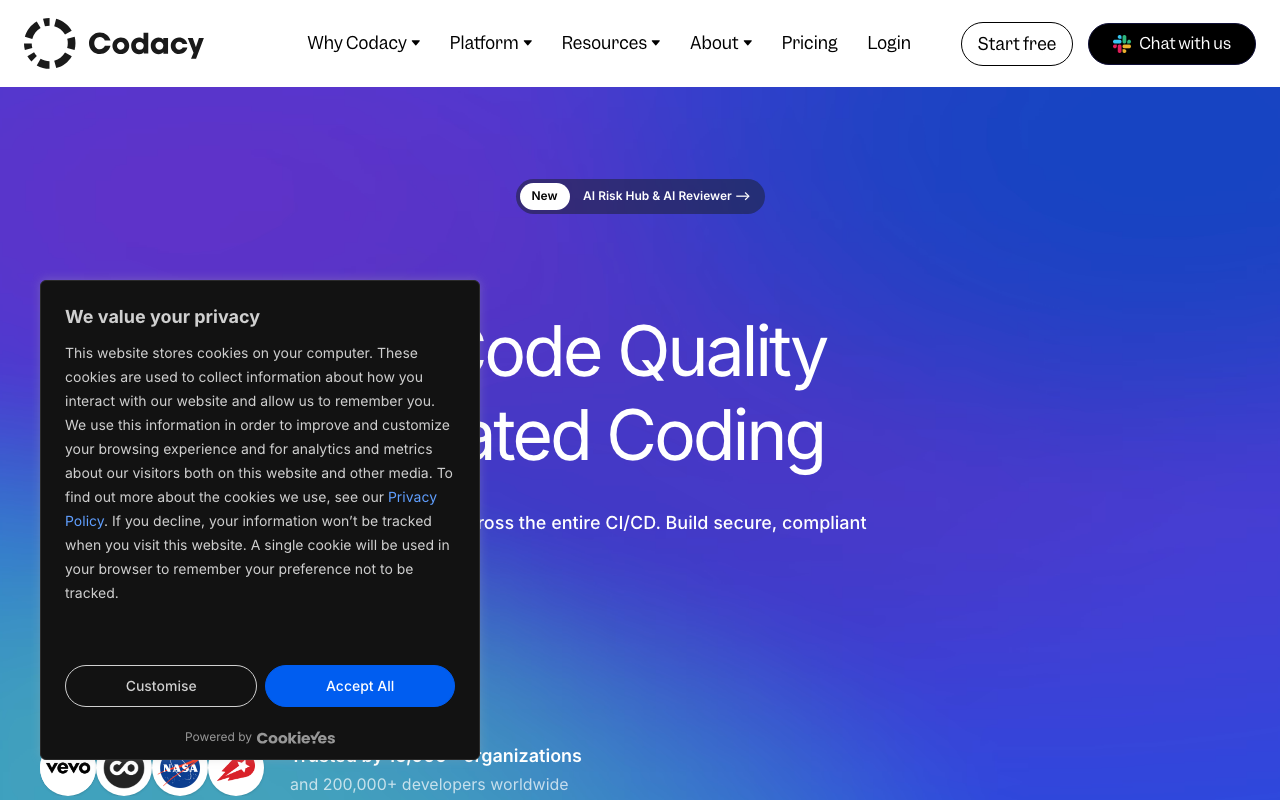
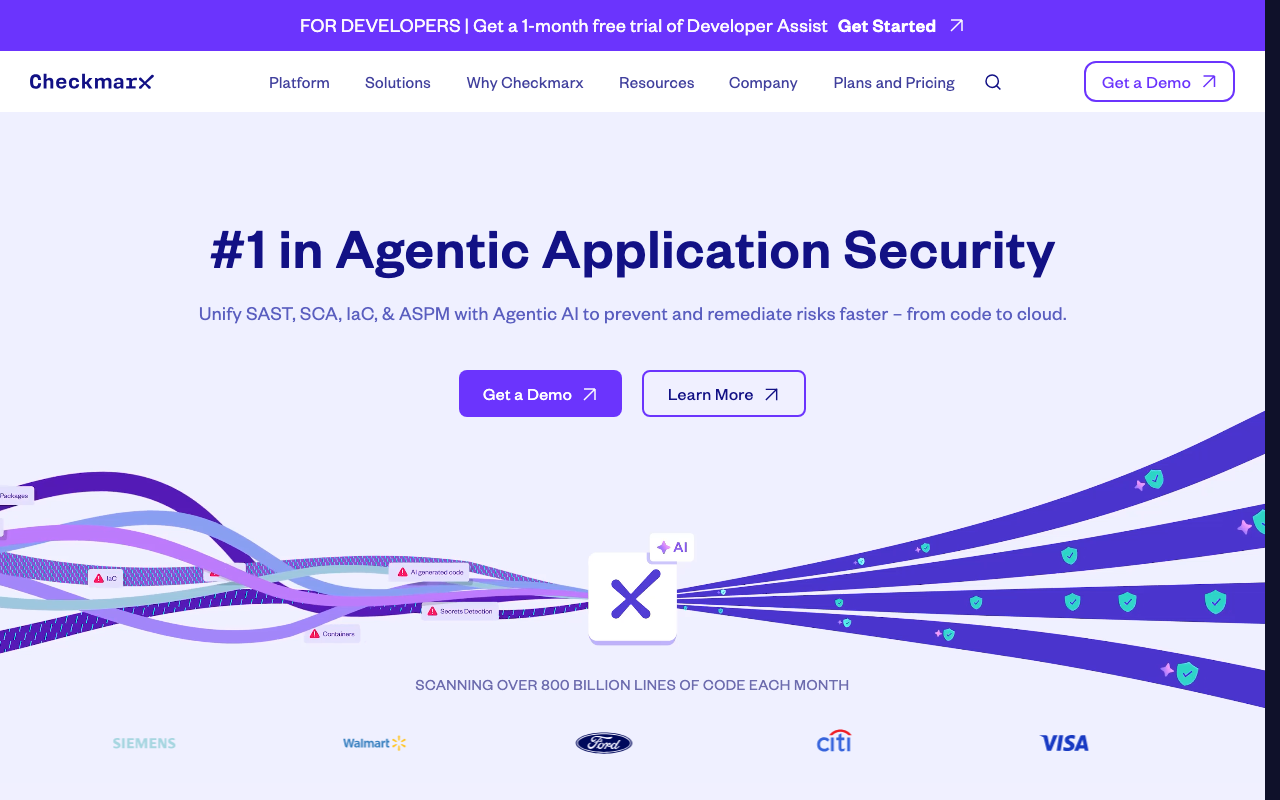
Codacy and Checkmarx are not competitors. They occupy entirely different positions in the software development toolchain. Codacy is a developer-first code quality and security platform - built for engineering teams that want fast setup, predictable pricing at $15/user/month, code quality enforcement alongside basic security scanning, and AI-powered code review that works on every PR. Checkmarx is an enterprise application security platform - built for CISOs and AppSec teams that need the deepest possible SAST with custom rules, DAST, SCA, API security, IaC scanning, supply chain security, and compliance reporting, at a price point starting around $40,000/year and scaling to $150,000+.
Comparing Codacy to Checkmarx is like comparing a Swiss Army knife to a professional power tool set. Codacy gives developers a fast, affordable, multi-purpose tool that handles code quality and catches common security issues. Checkmarx gives security teams a comprehensive, deeply configurable arsenal that addresses every corner of application security - but does not touch code quality at all.
Choose Codacy if: your team needs code quality enforcement - pattern detection, coverage tracking, duplication analysis, complexity monitoring, quality gates - alongside basic security scanning. You want setup in under 10 minutes, no pipeline configuration, predictable per-user pricing, and AI-powered review. Your security requirements are satisfied by OWASP Top 10 coverage from embedded analyzers across 49 languages. You are an SMB, mid-market team, or startup that does not have a dedicated AppSec team and does not need enterprise compliance reporting.
Choose Checkmarx if: your organization requires enterprise-grade application security - deep SAST with CxQL custom query authoring, DAST for runtime vulnerability testing, dedicated API security scanning, IaC and container scanning, supply chain security, and compliance mapping to PCI DSS, HIPAA, SOC 2, OWASP, CWE, and NIST. You have a dedicated security team that will manage and tune the platform. Your budget supports six-figure annual security investments. Code quality enforcement is handled by a separate tool.
The real answer: Most organizations choosing between these two need to understand that they solve different problems. If you need both code quality and enterprise security, you need both tools - or you pair one of them with a complementary solution. Codacy with Snyk gives you quality plus developer-friendly security. Checkmarx with SonarQube gives you enterprise security plus code quality. The choice depends on which problem is your primary concern and what your budget allows.
At-a-Glance Feature Comparison
| Category | Codacy | Checkmarx |
|---|---|---|
| Primary focus | Code quality + basic security | Enterprise application security |
| Target buyer | Engineering teams, dev leads, CTOs | CISOs, AppSec teams, security directors |
| Target market | SMB, mid-market, startups | Enterprise, regulated industries |
| SAST approach | Embedded third-party analyzers (pattern matching) | Proprietary engine with CxQL custom queries (data flow + control flow) |
| SAST language coverage | 49 languages | 30+ languages |
| SCA | Yes (Pro plan) - basic dependency scanning | Checkmarx SCA - dependency, license, SBOM, malicious package detection |
| DAST | ZAP-powered (Business plan only) | Purpose-built DAST with SAST correlation |
| API security | No dedicated product | Dedicated API discovery and testing |
| Container scanning | No | Yes |
| IaC scanning | No | KICS (open-source) |
| Supply chain security | No | Package reputation scoring, malicious package detection |
| Code quality analysis | Core strength - patterns, smells, anti-patterns | None |
| Coverage tracking | Yes | No |
| Duplication detection | Yes | No |
| Complexity analysis | Yes | No |
| Quality gates | Yes - customizable thresholds | Security policy gates only |
| AI code review | AI Reviewer (hybrid rule + AI) | AI Guided Remediation |
| AI code governance | AI Guardrails (free IDE extension) | No |
| Custom SAST rules | No | CxQL custom query language |
| Finding correlation | No cross-scan correlation | SAST-DAST-SCA finding correlation |
| Compliance reporting | Basic audit logs (Business plan) | PCI DSS, HIPAA, SOC 2, OWASP, CWE, NIST |
| Free tier | AI Guardrails IDE extension | No (KICS is free for IaC only) |
| Starting price | $15/user/month (Pro) | Contact sales (~$40,000+/year) |
| Setup time | Under 10 minutes | 2-6 weeks (enterprise deployment) |
| Self-hosted option | Business plan only | Cloud, self-hosted, or hybrid |
| Git platforms | GitHub, GitLab, Bitbucket | GitHub, GitLab, Bitbucket, Azure DevOps |
| Gartner recognition | G2 Leader for Static Code Analysis | Gartner MQ Leader for AST |
What Is Codacy?
Codacy is an automated code quality and security platform used by over 15,000 organizations. Founded as a code quality tool, Codacy has expanded over the years to include SAST, SCA, secrets detection, DAST (on the Business plan), and AI-powered code review - all unified under a single dashboard with predictable per-user pricing.
Codacy’s core value proposition is developer productivity and code health. The platform embeds multiple third-party analysis engines - ESLint, Pylint, PMD, SpotBugs, Bandit, Brakeman, Gosec, and dozens of others - and wraps them in a unified interface covering 49 programming languages. Teams get code quality enforcement, basic security scanning, coverage tracking, and AI-powered review without configuring, deploying, or maintaining multiple tools.
Code Quality Capabilities
Pattern detection and coding standards enforcement is where Codacy delivers the most value. The platform identifies code smells, anti-patterns, complexity hotspots, naming convention violations, and other quality issues across every PR. Teams configure which patterns matter for their codebase, and Codacy flags violations inline on the PR with severity ratings and remediation guidance.
Test coverage tracking is built into the Pro plan. Codacy integrates with standard coverage report formats and tracks coverage percentage over time. Minimum coverage thresholds can be enforced through quality gates, blocking PRs that drop coverage below the team’s standard.
Duplication detection identifies copy-paste code across the codebase. High duplication is one of the strongest predictors of future bugs. Codacy surfaces duplication metrics on the dashboard and can enforce duplication limits through quality gates.
Complexity analysis measures cyclomatic complexity and other metrics, flagging functions and classes that have grown too complex to test and maintain reliably. Tracking complexity trends over time helps teams identify areas that need refactoring before they become unmaintainable.
Quality gates tie all of these metrics together into automated pass/fail checks on every PR. Teams set thresholds for coverage, duplication, issue count, and complexity. When a PR fails the quality gate, it cannot merge until the developer addresses the problems.
Security Capabilities
Codacy Pro includes SAST across 49 languages, SCA for dependency vulnerability scanning, and secrets detection. The Business plan adds DAST powered by OWASP ZAP. The security scanning covers OWASP Top 10 vulnerability categories and detects injection flaws, authentication issues, cryptographic weaknesses, and insecure data handling patterns.
The embedded security analyzers (Bandit for Python, Brakeman for Ruby, Gosec for Go, and others) catch well-known vulnerability patterns effectively. However, security is an expansion of a quality-first platform - not Codacy’s primary focus. The analysis relies on pattern matching rather than the deep inter-procedural data flow analysis that enterprise security tools provide.
AI Features
AI Guardrails is a free IDE extension for VS Code, Cursor, and Windsurf that scans code - both human-written and AI-generated - in real time. It integrates with AI assistants via MCP to catch and auto-remediate security and quality issues before code is committed.
AI Reviewer combines deterministic rule-based analysis with context-aware AI reasoning on pull requests. It draws context from changed files, PR metadata, and optionally Jira tickets to produce feedback that goes beyond individual rule violations.
AI Risk Hub (Business plan) provides organizational visibility into AI code risk, helping engineering leaders track how safely their teams use AI coding assistants.
For pricing details, see our Codacy pricing breakdown. For alternatives, see Codacy alternatives.
What Is Checkmarx?
Checkmarx is an enterprise application security platform founded in 2006 in Tel Aviv, Israel. The company pioneered commercial SAST technology and has expanded over nearly two decades into a comprehensive AppSec suite covering SAST, SCA, DAST, API security, IaC scanning, container security, and software supply chain security. Checkmarx serves over 1,800 enterprise customers, including many Fortune 500 companies, and is positioned as a Leader in the Gartner Magic Quadrant for Application Security Testing - ranked furthest in Completeness of Vision among 16 evaluated vendors in the 2025 report.
The cornerstone of the modern Checkmarx offering is Checkmarx One - a cloud-native unified platform that consolidates all scanning engines into a single dashboard with correlated findings, unified risk scoring, and centralized policy management.
Core Security Capabilities
Checkmarx SAST performs source-code-level static analysis supporting 30+ programming languages. The analysis engine uses data flow analysis, control flow analysis, and pattern matching refined over nearly 20 years. The defining technical differentiator is CxQL (Checkmarx Query Language) - a custom query language that allows security teams to write organization-specific SAST rules. This extensibility is critical for enterprises with proprietary frameworks, industry-specific vulnerability patterns, or unique coding conventions that generic SAST rules miss.
Checkmarx SCA scans open-source dependencies for known vulnerabilities, license compliance risks, and malicious packages. It generates SBOMs in CycloneDX and SPDX formats and integrates with supply chain security capabilities for broader open-source risk visibility.
Checkmarx DAST tests running web applications and APIs by sending crafted HTTP requests to discover runtime vulnerabilities. Within Checkmarx One, DAST findings correlate with SAST findings, mapping runtime issues back to specific source code locations.
Checkmarx API Security provides dedicated API discovery and testing - identifying shadow APIs, undocumented endpoints, and API-specific vulnerabilities beyond what standard DAST covers.
KICS (Keeping Infrastructure as Code Secure) is Checkmarx’s open-source IaC scanner covering Terraform, CloudFormation, Kubernetes, Docker, Ansible, Helm, and other infrastructure-as-code formats. KICS can be used independently of the Checkmarx platform at zero cost.
Enterprise Features
Finding correlation across scan types is one of Checkmarx One’s strongest capabilities. When a SAST finding, SCA vulnerability, and DAST discovery all relate to the same application risk, the platform correlates them into a unified view. This reduces duplicate triage effort and helps security teams understand true risk posture.
Compliance reporting maps findings to PCI DSS, HIPAA, SOC 2, OWASP, CWE, NIST, and other frameworks. Granular policy management allows security teams to define compliance requirements per application, per team, or across the entire portfolio.
Deployment flexibility accommodates data sovereignty requirements. Checkmarx One is available as cloud-native SaaS, fully self-hosted, or in hybrid models where source code stays on-premises while analysis leverages cloud infrastructure.
For pricing details, see our Checkmarx pricing breakdown. For alternatives, see Checkmarx alternatives.
Feature-by-Feature Breakdown
SAST: Pattern Matching vs. Deep Data Flow Analysis
This is the most significant technical difference between the two platforms when it comes to security scanning, and it illustrates the fundamental gap in their approaches.
Codacy’s SAST runs across 49 languages using embedded third-party analyzers. Each language has one or more dedicated analyzers - Bandit for Python security, Brakeman for Ruby, Gosec for Go, ESLint security plugins for JavaScript, SpotBugs for Java, and similar tools for other languages. These analyzers detect common vulnerability patterns defined by OWASP Top 10 categories. Findings appear as inline PR comments alongside code quality issues with severity ratings and remediation guidance.
The approach is effective for catching well-known patterns - hardcoded credentials, SQL injection in simple data flows, XSS in template rendering, insecure cryptographic configurations. However, the analysis relies primarily on pattern matching within individual files. Complex vulnerabilities that span multiple files and functions - second-order SQL injection, deserialization attacks that cross service boundaries, prototype pollution through indirect data paths - are harder for pattern-matching analyzers to detect consistently.
Checkmarx SAST uses a proprietary analysis engine with inter-procedural data flow analysis and control flow analysis refined over nearly two decades. The engine traces how data moves through the entire application - from input sources (HTTP requests, file reads, environment variables) through processing functions across multiple files and classes to dangerous sinks (database queries, system commands, response outputs). The CxQL custom query language allows security teams to extend this analysis with organization-specific detection rules.
The depth of Checkmarx’s analysis means it catches vulnerability classes that pattern-matching tools often miss. When tainted user input enters through a web controller, passes through a validation service that fails to sanitize properly, gets stored in a database, and is later retrieved and rendered in a different part of the application, Checkmarx traces this entire flow. The tradeoff is slower scan times - full Checkmarx SAST scans can take 30 minutes to several hours for large codebases, compared to Codacy’s results that typically arrive within minutes.
The practical question is: How deep does your SAST need to be? If your team writes standard web applications in mainstream frameworks and follows reasonable security practices, Codacy’s embedded analyzers catch the majority of common vulnerabilities at a fraction of the cost and complexity. If your organization handles sensitive data in complex architectures, faces sophisticated threat actors, operates in regulated industries, or has proprietary frameworks that require custom detection rules, Checkmarx’s deep analysis is worth the investment in time, money, and expertise.
SCA: Basic Scanning vs. Enterprise Supply Chain Security
Both tools include SCA, but the depth and scope differ substantially.
Codacy’s SCA (Pro plan, $15/user/month) scans dependency manifests - package.json, requirements.txt, pom.xml, go.mod, and others - to identify known vulnerabilities in open-source packages. It tracks CVEs across the dependency tree and surfaces findings in the dashboard and PR checks. For teams that want basic dependency vulnerability awareness without adding another vendor, Codacy’s included SCA provides genuine value at no additional cost beyond the Pro subscription.
Checkmarx SCA provides deeper dependency analysis with vulnerability detection, license compliance scanning, SBOM generation (CycloneDX and SPDX formats), and malicious package detection through package reputation scoring. The integration with Checkmarx One means SCA findings correlate with SAST and DAST results for a unified risk view. Checkmarx SCA also feeds into the platform’s supply chain security capabilities, providing broader visibility into open-source risk across the entire application portfolio.
Neither tool matches Snyk’s SCA depth in terms of reachability analysis (filtering out vulnerabilities in code paths your application does not actually call) and automatic remediation PR generation. If SCA is your highest priority, Snyk provides the strongest developer-friendly SCA available. See Codacy vs Snyk for a detailed comparison of their SCA capabilities.
For most SMB and mid-market teams, Codacy’s included SCA covers the fundamentals - you know which dependencies have known CVEs, and you can act on that information. For enterprise teams managing hundreds of applications with strict supply chain security requirements, Checkmarx SCA provides the depth, SBOM generation, license compliance, and portfolio-level visibility that enterprise governance demands.
DAST and IAST: Lightweight vs. Correlated
Dynamic application security testing is where the gap between the two platforms becomes particularly wide.
Codacy’s DAST is available only on the Business plan (custom pricing) and is powered by OWASP ZAP - the most widely used open-source DAST scanner. It provides solid coverage for common runtime vulnerabilities including injection flaws, authentication bypass, session management issues, and server misconfigurations. The ZAP-based approach is effective for basic dynamic testing but does not correlate findings with static analysis results.
Checkmarx DAST is a purpose-built enterprise product that integrates tightly with the rest of the Checkmarx One platform. The standout capability is SAST-DAST correlation - when a DAST scan discovers a runtime vulnerability, the platform maps it back to the specific source code identified by SAST analysis. Instead of managing two disconnected lists of findings, security teams see correlated findings that connect runtime behavior to source code. Checkmarx DAST also extends to REST and GraphQL API testing through integration with the API security module.
Checkmarx also offers IAST (Interactive Application Security Testing) capabilities that combine elements of static and dynamic analysis by instrumenting running applications. This fills the gap between SAST (which finds theoretical vulnerabilities) and DAST (which finds exploitable ones) by confirming which static findings are actually reachable at runtime.
The practical implication: If your DAST needs are satisfied by basic web application scanning, Codacy’s ZAP-powered approach works. If you need DAST that correlates with SAST, tests APIs, and integrates into a broader enterprise security workflow, Checkmarx is in a different league entirely. For teams that do not use either tool’s DAST today, this capability alone rarely drives the vendor decision - but for security-mature organizations that have moved beyond SAST-only programs, Checkmarx’s correlated approach provides meaningful value.
Developer Workflow and Time-to-Value
This is arguably the most important practical comparison for teams evaluating these two tools. The difference in setup time, developer experience, and operational overhead is dramatic.
Codacy is designed for developers to adopt without security expertise. Connect your GitHub, GitLab, or Bitbucket repository and Codacy begins analyzing on the next PR. No CI/CD pipeline configuration. No scanner installation. No infrastructure provisioning. No security analyst to tune rules. Total time from signup to first results: under 10 minutes.
The PR integration is developer-native. Inline comments appear on the specific lines of code affected, covering both quality and security findings with severity ratings and remediation guidance. Quality gates post pass/fail status based on coverage, duplication, and issue thresholds. The AI Reviewer adds context-aware feedback. Developers interact with Codacy as part of their normal PR workflow without context-switching to a separate security dashboard.
Checkmarx is designed for security teams to deploy and manage. Checkmarx One deployment typically takes 2-6 weeks for enterprise environments. This includes infrastructure setup, CI/CD integration (configuring scanning triggers, artifact uploads, result retrieval), initial full scans across the application portfolio, rule tuning to reduce false positive rates to manageable levels, policy definition (which applications get which scans, at what frequency, with what severity thresholds), user provisioning with role-based access, and training for both security analysts and developers.
Checkmarx provides IDE plugins for VS Code and JetBrains, and results can be pushed to PR comments. However, the core experience prioritizes the security analyst workflow - triaging findings in the Checkmarx dashboard, managing policies across application portfolios, generating compliance reports, and writing CxQL custom queries. Developers who have used developer-first tools like Codacy, Snyk, or Semgrep will notice the difference in speed and simplicity.
SAST scan time is another practical difference. Codacy’s embedded analyzers return results within minutes - fast enough to scan every PR without blocking developer workflows. Full Checkmarx SAST scans can take 30 minutes to several hours for large codebases. Incremental scans are faster, but the initial full scan and subsequent deep scans push Checkmarx toward nightly builds or merge-to-main triggers rather than per-PR scanning. Some teams address this by running Checkmarx’s quick scans on PRs and full scans on scheduled intervals, but this requires additional configuration and results in delayed feedback for deep findings.
The fundamental tradeoff is time-to-value vs. analysis depth. Codacy delivers meaningful value in minutes with zero expertise required. Checkmarx delivers deeper security value after weeks of deployment effort and ongoing security analyst involvement. Both approaches are valid - they serve different organizational needs and maturity levels.
Compliance and Governance
Checkmarx provides enterprise-grade compliance capabilities that Codacy does not match. This is one of the clearest differentiators between the two platforms.
Checkmarx maps findings to major regulatory frameworks - PCI DSS, HIPAA, SOC 2, OWASP, CWE, NIST 800-53, and others. Security teams define granular policies per application, per team, or across the entire portfolio - specifying required scan types, minimum scan frequencies, maximum allowed vulnerability severities, and remediation SLAs. The platform generates audit-ready reports that align with auditor expectations in regulated industries. Policy enforcement is centralized, allowing CISOs and security directors to govern security standards across hundreds of applications from a single dashboard.
Codacy provides basic compliance features on its Business plan - audit logs, SSO/SAML, and some governance controls. However, Codacy does not offer compliance mapping to regulatory frameworks, audit-ready security reports, or the depth of policy management that regulated enterprises require. Codacy’s quality gates enforce code quality standards effectively, but these are developer-facing quality controls, not the compliance and governance mechanisms that auditors in financial services, healthcare, and government expect.
If compliance reporting is a hard requirement - if your organization undergoes PCI DSS, HIPAA, SOC 2, or FedRAMP audits that require documented evidence of application security testing - Checkmarx (or an equivalent enterprise platform like Veracode) is necessary. Codacy does not serve this use case.
Language and Framework Support
Codacy supports 49 programming languages through embedded third-party analyzers. This breadth covers mainstream languages (JavaScript, TypeScript, Python, Java, C#, Go, PHP, Ruby, Kotlin, Swift, Rust), niche languages (Scala, Elixir, Dart, Shell, Crystal), and infrastructure languages (Terraform, Dockerfile). The broad coverage comes from wrapping existing open-source analyzers, each tuned for its target language.
Checkmarx SAST supports 30+ languages with deep proprietary analysis engines built over nearly two decades. The supported languages include Java, JavaScript, TypeScript, Python, C#, C/C++, Go, PHP, Ruby, Kotlin, Swift, Scala, Groovy, Objective-C, Perl, COBOL, ABAP, Apex (Salesforce), VB.NET, PL/SQL, RPG, and additional enterprise languages. KICS adds IaC language support for Terraform, CloudFormation, Kubernetes, Docker, Ansible, and Helm.
Codacy wins on breadth - Checkmarx wins on depth. For each language Checkmarx supports, the analysis engine traces data flows and control flows through language-specific constructs with decades of rule refinement. CxQL allows extending coverage to partially address unsupported languages through pattern-matching rules. For mainstream languages that both tools support, Checkmarx’s security analysis per language is substantially deeper. For organizations with diverse or niche language portfolios, Codacy’s broader coverage means more of the codebase gets at least basic analysis.
For most organizations, the languages that matter - Java, JavaScript/TypeScript, Python, C#, Go - are well-covered by both tools. The language support comparison only becomes decisive for organizations with significant legacy (COBOL, ABAP) or niche language portfolios where one tool covers a critical language the other does not.
Pricing Comparison
Codacy Pricing
| Plan | Price | What You Get |
|---|---|---|
| Developer (Free) | $0 | AI Guardrails IDE extension for VS Code, Cursor, Windsurf |
| Pro | $15/user/month | Code quality analysis, SAST, SCA, secrets detection, coverage tracking, duplication detection, quality gates, AI Guardrails, AI Reviewer |
| Business | Custom | Everything in Pro + DAST (ZAP-powered), AI Risk Hub, self-hosted deployment, SSO/SAML, audit logs |
Checkmarx Pricing
Checkmarx does not publish transparent pricing. All contracts are custom-negotiated based on developer count, scanning volume, and product bundle. Industry estimates based on procurement data suggest the following ranges:
| Configuration | Estimated Annual Cost |
|---|---|
| SAST only (50 developers) | ~$40,000-$65,000 |
| SAST + SCA (50 developers) | ~$55,000-$85,000 |
| Full platform - SAST, SCA, DAST, API security (50 developers) | ~$75,000-$120,000 |
| Full platform (100 developers) | ~$100,000-$150,000+ |
| Full platform (200+ developers) | Custom negotiation (significant volume discounts) |
KICS (IaC scanning) is free and open-source, usable independently of any Checkmarx license.
Side-by-Side Cost at Scale
| Team Size | Codacy Cost (Annual) | Checkmarx Cost (Annual) | Ratio |
|---|---|---|---|
| 10 devs | $1,800 (Pro) | ~$40,000-$65,000 | Checkmarx is 22-36x more expensive |
| 20 devs | $3,600 (Pro) | ~$40,000-$65,000 | Checkmarx is 11-18x more expensive |
| 50 devs | $9,000 (Pro) | ~$75,000-$120,000 | Checkmarx is 8-13x more expensive |
| 100 devs | $18,000 (Pro) | ~$100,000-$150,000+ | Checkmarx is 6-8x more expensive |
| 200 devs | $36,000 (Pro) | Custom negotiation | Varies based on volume discounts |
Key Pricing Observations
The price difference is enormous, but so is the capability difference. Comparing Codacy Pro at $15/user/month to Checkmarx at $40,000+/year is misleading without acknowledging that these tools cover fundamentally different ground. Codacy’s price buys code quality analysis with basic security scanning. Checkmarx’s price buys deep enterprise security with custom SAST rules, DAST, API security, IaC scanning, container security, supply chain protection, and compliance reporting. You are not paying 10x more for the same thing - you are paying 10x more for enterprise-grade security capabilities that Codacy does not provide.
Codacy’s pricing is transparent and predictable. $15/user/month, unlimited scans, unlimited lines of code. Costs scale linearly with team size. There is no sales conversation required for the Pro plan.
Checkmarx’s pricing requires a sales conversation and multi-year commitments. No self-service pricing is available. Enterprise contracts typically span 1-3 years with 15-30% discounts on multi-year commitments. The total cost depends on developer count, application count, scan volume, and which product modules are included.
A cost-effective middle ground exists. For teams that need more security than Codacy provides but cannot justify Checkmarx’s enterprise pricing, pairing Codacy Pro with Snyk Team gives you quality analysis plus deep security for $40/developer/month combined - roughly $9,600/year for a 20-developer team. That is a fraction of Checkmarx pricing while covering both quality and security. See our Codacy vs Snyk comparison for details on this combination.
Factor in operational costs. Codacy’s total cost of ownership is close to its license fee - setup takes 10 minutes, and there is no ongoing tuning required beyond initial quality gate configuration. Checkmarx’s total cost includes the license fee plus 2-6 weeks of deployment effort, dedicated security analyst time for initial tuning, ongoing false positive management, CxQL rule development (if custom rules are needed), and training for both security and development teams. For organizations without existing AppSec staff, hiring or contracting security expertise to manage Checkmarx adds $100,000-$200,000+/year in labor costs.
For detailed pricing analysis, see Codacy pricing and Checkmarx pricing.
Use Cases: When to Choose Each Tool
Choose Codacy When
Code quality is your primary concern. If your codebase is growing harder to maintain - increasing complexity, spreading duplication, declining coverage, inconsistent coding standards - Codacy addresses these problems directly with quality gates, coverage tracking, duplication detection, and complexity monitoring. No security tool, including Checkmarx, provides any of these capabilities.
You want fast time-to-value. Codacy delivers meaningful results in under 10 minutes with zero pipeline configuration. If your team cannot afford a multi-week deployment project and does not have dedicated security staff to manage an enterprise platform, Codacy’s immediate-value approach is the right fit.
Your security needs are standard. For applications that follow mainstream frameworks, handle non-sensitive data, and face typical web application threats, Codacy’s embedded SAST analyzers across 49 languages catch the majority of common OWASP Top 10 vulnerabilities. Not every application needs deep inter-procedural data flow analysis.
Your team uses AI coding assistants heavily. Codacy’s AI Guardrails scans AI-generated code in real time in VS Code, Cursor, and Windsurf. AI Reviewer provides context-aware PR feedback. AI Risk Hub provides organizational visibility. If a significant percentage of your code is AI-generated - increasingly common in 2026 - Codacy’s AI governance features are specifically designed for this workflow.
Your budget is limited. Codacy Pro at $15/user/month covers quality analysis, SAST, SCA, secrets detection, and coverage tracking. For a 50-developer team, that is $9,000/year - roughly what a single month of some enterprise security contracts costs.
You are a startup or SMB. Codacy is designed for teams that need quality and security without the overhead of enterprise tools. Fast setup, no security expertise required, predictable pricing, and same-day value make it the right tool for organizations that do not yet have dedicated AppSec teams.
For more context on how Codacy compares with quality-focused tools, see Codacy vs SonarQube and Codacy vs CodeClimate.
Choose Checkmarx When
Enterprise application security is a board-level priority. If your CISO reports application security posture to the board, if your organization has dedicated AppSec teams, and if security budget is measured in six figures, Checkmarx provides the depth and governance that enterprise security programs require.
Custom SAST rules are necessary. If your organization uses proprietary frameworks, has industry-specific vulnerability patterns, or needs detection logic tailored to your specific coding patterns, CxQL provides rule customization that no other tool in this comparison - including Codacy - can match. See Semgrep vs Checkmarx for a comparison of custom rule approaches.
Compliance reporting is a hard requirement. If your organization undergoes PCI DSS, HIPAA, SOC 2, or similar audits that require documented evidence of application security testing with mapping to regulatory frameworks, Checkmarx generates the audit-ready reports that compliance officers and external auditors expect. Codacy does not serve this use case.
API security is a top priority. If your applications expose APIs to external consumers, partners, or the public internet, Checkmarx’s dedicated API discovery and security testing goes beyond basic DAST scanning. Shadow API detection and dedicated API vulnerability testing address the growing API attack surface. Codacy has no equivalent capability.
You need DAST with SAST correlation. If your security workflow benefits from correlating static and dynamic findings - mapping runtime vulnerabilities back to specific source code - Checkmarx One’s unified platform provides this natively. Codacy’s ZAP-powered DAST (Business plan only) operates independently from its SAST analysis.
Self-hosted or air-gapped deployment is required. If data sovereignty, ITAR compliance, or air-gapped deployment requirements prevent sending source code to third-party clouds, Checkmarx’s self-hosted and hybrid deployment models provide the necessary flexibility. While Codacy offers self-hosted on its Business plan, Checkmarx’s deployment options are more mature for strict enterprise requirements.
Your application portfolio is large and diverse. If you manage 50-500+ applications across multiple teams, business units, and technology stacks, Checkmarx’s centralized policy management, portfolio-level dashboards, and role-based access controls are designed for this scale. Codacy works well for individual repositories and small portfolios but does not provide the same depth of portfolio-level governance.
For more context on Checkmarx’s position against other enterprise tools, see Checkmarx vs Veracode and Semgrep vs Checkmarx.
Migration Considerations
Moving from Codacy to Checkmarx
This migration typically happens when organizations outgrow Codacy’s security capabilities - moving from startup/SMB to enterprise scale, entering regulated industries, or adopting formal AppSec programs with dedicated security staff.
-
Recognize that Checkmarx does not replace Codacy. Checkmarx provides zero code quality analysis. If you rely on Codacy for pattern detection, coverage tracking, duplication analysis, complexity monitoring, and quality gates, you need to keep Codacy (or adopt an alternative like SonarQube) alongside Checkmarx. This is an addition, not a replacement.
-
Plan for a multi-week deployment. Checkmarx One deployment requires infrastructure setup, CI/CD integration, initial scans, rule tuning, policy definition, and team training. Budget 2-6 weeks and allocate a security engineer or consultant to lead the implementation.
-
Establish a false positive baseline. Checkmarx’s initial scans will generate a high volume of findings, including many false positives. Allocate 2-4 weeks of focused triage effort to review results, mark false positives, and tune rules to establish a clean baseline. This upfront investment pays dividends in ongoing triage efficiency.
-
Define your CxQL strategy. If custom SAST rules are a motivation for the move, invest in CxQL training for your security team during the implementation phase. Writing effective custom queries requires understanding both the CxQL syntax and your organization’s specific vulnerability patterns.
-
Disable Codacy’s security scanning if it creates duplicate noise. Once Checkmarx is operational, you may want to disable or deprioritize Codacy’s SAST and SCA findings to avoid duplicate alerts from both tools. Keep Codacy focused on code quality, coverage, and AI review - the areas where Checkmarx adds no value.
Moving from Checkmarx to Codacy
This migration is uncommon and rarely advisable as a direct replacement. Codacy cannot match Checkmarx’s security depth. However, some organizations consider it when downsizing their security toolchain - moving from enterprise to leaner operations, or deciding that enterprise AppSec is overkill for their actual risk profile.
-
Honestly assess your security requirements. If you are in a regulated industry, handle sensitive data, or face compliance requirements, downgrading from Checkmarx to Codacy creates significant security gaps. Codacy’s SAST does not provide the depth, custom rules, DAST correlation, API security, or compliance reporting that Checkmarx offers. Consider whether a mid-tier tool like Snyk or Semgrep better bridges the gap.
-
Map your critical Checkmarx findings to Codacy’s coverage. Review the vulnerability types Checkmarx has found in your codebases. Determine which of those findings Codacy’s embedded analyzers would also detect. Complex inter-procedural vulnerabilities found by deep data flow analysis are unlikely to be caught by Codacy’s pattern-matching approach.
-
Enjoy the immediate benefits. Codacy’s setup is near-instant, its pricing is dramatically lower, and you gain code quality capabilities that Checkmarx never provided - coverage tracking, duplication detection, complexity analysis, quality gates, and AI-powered review.
-
Supplement with a mid-tier security tool if needed. Pairing Codacy with Snyk ($25/developer/month) provides deep SAST with interfile analysis, SCA with reachability analysis, container scanning, and IaC scanning - covering most of the security ground lost by removing Checkmarx at a fraction of the cost. See Codacy vs Snyk for details on this combination.
Alternatives to Consider
Before committing to either Codacy or Checkmarx, consider whether a different tool or combination better fits your needs.
Snyk
Snyk is the leading developer-first security platform. It provides SAST (Snyk Code with DeepCode AI engine), SCA with reachability analysis, container scanning, and IaC scanning. Snyk is significantly deeper than Codacy for security and significantly more developer-friendly than Checkmarx. It does not provide code quality analysis, coverage tracking, or quality gates - pair it with Codacy for that. Snyk Team costs $25/developer/month. For teams that need both quality and security at reasonable cost, Codacy + Snyk is one of the most cost-effective combinations available. See Codacy vs Snyk for a detailed comparison.
Veracode
Veracode is Checkmarx’s most direct competitor - an enterprise AppSec platform with SAST (including unique binary analysis), DAST, SCA, developer training (Security Labs), and compliance certification (Verified by Veracode). If you are evaluating Checkmarx, you should also evaluate Veracode. The two compete for the same enterprise buyers with similar capabilities at similar price points. See Checkmarx vs Veracode for a head-to-head comparison.
SonarQube
SonarQube is the most established code quality platform with 6,500+ deterministic rules and the most mature quality gate enforcement in the market. SonarQube provides deeper per-language analysis than Codacy, a self-hosted option (free Community Build), and SonarLint IDE integration. For teams that pair an enterprise security tool (Checkmarx or Veracode) with a code quality tool, SonarQube is a common choice alongside Codacy. See Codacy vs SonarQube for a detailed comparison.
Semgrep
Semgrep is an open-source static analysis engine with a commercial AppSec Platform. Semgrep’s strength is custom rule authoring using simple YAML-based syntax that developers can write and maintain. It scans in milliseconds, supports 10,000+ community rules, and provides cross-file data flow analysis in the Pro plan. Semgrep can serve as a lightweight alternative to Checkmarx for teams that want custom SAST rules without enterprise-platform complexity and cost. See Semgrep vs Checkmarx for a detailed comparison.
Combined Approaches
Many organizations find that no single tool covers all their needs optimally. Common combinations include:
Codacy + Snyk - Code quality plus developer-friendly security. Best for SMB and mid-market teams that need both quality and security without enterprise complexity. Combined cost: ~$40/developer/month.
Checkmarx + SonarQube - Enterprise security plus deep code quality. Best for large enterprises with dedicated security teams and quality engineering practices. Combined cost: Checkmarx enterprise pricing plus SonarQube (free Community Build or $150+/year for Developer Edition).
Checkmarx + Semgrep - Enterprise security plus fast developer-facing custom rules. Best for enterprises that want Checkmarx’s governance and compliance alongside Semgrep’s speed for per-PR scanning with custom rules.
Head-to-Head on Specific Scenarios
| Scenario | Better Choice | Why |
|---|---|---|
| Code quality enforcement (patterns, duplication, complexity) | Codacy | Checkmarx has zero code quality capabilities |
| Test coverage tracking and enforcement | Codacy | Checkmarx does not track coverage |
| AI-generated code governance | Codacy | AI Guardrails and AI Risk Hub are purpose-built |
| Enterprise SAST with custom rules | Checkmarx | CxQL is unmatched for custom detection |
| DAST with SAST correlation | Checkmarx | Checkmarx One natively correlates findings |
| API discovery and security testing | Checkmarx | Dedicated API security product |
| Compliance reporting (PCI, HIPAA, SOC 2) | Checkmarx | Enterprise-grade compliance mapping |
| IaC and container security | Checkmarx | KICS + container scanning (Codacy has neither) |
| Supply chain security | Checkmarx | Package reputation and malicious package detection |
| Setup speed and time-to-value | Codacy | 10 minutes vs. 2-6 weeks |
| Developer experience and adoption | Codacy | Built for developers, not security analysts |
| Predictable, transparent pricing | Codacy | $15/user/month vs. sales conversation |
| Startup or SMB suitability | Codacy | Checkmarx is enterprise-only |
| Portfolio-level governance (100+ apps) | Checkmarx | Centralized policy and RBAC at enterprise scale |
| Self-hosted air-gapped deployment | Checkmarx | More mature self-hosted deployment options |
| Budget under $20,000/year | Codacy | Checkmarx starts at ~$40,000/year |
| Regulated industry with audit requirements | Checkmarx | Audit-ready reports and compliance framework mapping |
Final Recommendation
Codacy and Checkmarx are not an either/or decision - they serve different purposes, different markets, and different organizational maturity levels. Codacy is a developer-first code quality platform with basic security scanning, built for teams that want fast setup, affordable pricing, and code health enforcement. Checkmarx is an enterprise application security platform built for organizations with dedicated security teams, complex compliance requirements, and six-figure security budgets. Choosing between them requires understanding which problem you are primarily trying to solve.
Choose Codacy if: your organization is a startup, SMB, or mid-market team where code quality enforcement is the primary need, your security requirements are satisfied by standard OWASP Top 10 coverage, your budget is measured in thousands (not tens of thousands), and you need a tool that developers can adopt in minutes without security expertise. Codacy Pro at $15/user/month provides code quality analysis, basic SAST and SCA, coverage tracking, quality gates, and AI-powered review in a single, easy-to-adopt platform.
Choose Checkmarx if: your organization is an enterprise with dedicated AppSec staff, your security requirements include deep SAST with custom rules, DAST, API security, IaC scanning, container security, and supply chain protection, you operate in a regulated industry that requires compliance mapping to PCI DSS, HIPAA, SOC 2, or NIST, and your budget supports $40,000-$150,000+/year in security tooling. Checkmarx One provides the comprehensive enterprise AppSec platform that scales to hundreds of applications with centralized governance.
For teams that need both quality and security: The most cost-effective approach depends on your security depth requirements. If you need enterprise-grade security, pair Checkmarx with Codacy (or SonarQube) for code quality. If developer-friendly security is sufficient, pair Codacy with Snyk for a combined $40/developer/month that covers code quality, deep SAST, SCA with reachability, container scanning, and IaC scanning.
The bottom line: Do not compare Codacy to Checkmarx as if they are interchangeable options. They are not. Codacy is a quality-first tool that includes basic security. Checkmarx is a security-first tool that includes no quality analysis. The right choice depends on whether your most pressing problem is code maintainability or application security - and most organizations eventually need to address both. Start with the tool that solves your most urgent problem today, and plan to add the complementary capability as your engineering practices mature.
For the best SAST tools across all categories and price points, see our best SAST tools guide.
Frequently Asked Questions
Is Codacy a replacement for Checkmarx?
No. Codacy and Checkmarx serve fundamentally different markets and purposes. Codacy is a developer-first code quality platform that includes basic security scanning (SAST, SCA, secrets detection, DAST on the Business plan) alongside code quality analysis, coverage tracking, and quality gates. Checkmarx is an enterprise application security platform built for security teams, providing deep SAST with custom CxQL queries, DAST, SCA, API security, IaC scanning, container security, and compliance reporting. Codacy's security scanning catches common vulnerability patterns but does not match Checkmarx's depth in SAST rule customization, finding correlation across scan types, or enterprise compliance reporting. Organizations that need enterprise-grade AppSec will not find Codacy sufficient, while organizations that need code quality enforcement will not find Checkmarx helpful at all.
How much does Codacy cost compared to Checkmarx?
Codacy Pro costs $15/user/month with unlimited scans, covering code quality analysis, SAST, SCA, secrets detection, and coverage tracking. For a 50-developer team, Codacy costs approximately $9,000/year. Checkmarx does not publish pricing and requires a sales conversation - industry estimates place Checkmarx One at $40,000-$150,000+ per year depending on team size, scanning volume, and which modules are included (SAST, SCA, DAST, API security). Codacy is roughly 5-15x cheaper than Checkmarx, but the tools cover different domains - Codacy provides code quality plus basic security, while Checkmarx provides deep enterprise security without any code quality features.
Does Checkmarx do code quality analysis like Codacy?
No. Checkmarx is exclusively a security platform. It does not detect code smells, measure code complexity, track duplication, enforce naming conventions, monitor test coverage, or provide quality gates. Checkmarx finds security vulnerabilities - injection flaws, authentication weaknesses, cryptographic issues, and other OWASP categories. If your codebase is growing unmaintainable but has no security vulnerabilities, Checkmarx will not flag any problems. Organizations that need code quality enforcement should pair Checkmarx with a quality tool like Codacy, SonarQube, or DeepSource.
Does Codacy have DAST like Checkmarx?
Codacy offers DAST on its Business plan (custom pricing), powered by OWASP ZAP. This provides basic dynamic application security testing for web applications. Checkmarx DAST is a purpose-built enterprise product that integrates tightly with Checkmarx SAST for cross-scan finding correlation, supports API testing, and provides deeper coverage of authenticated application surfaces. Codacy's DAST is adequate for basic runtime vulnerability detection, but Checkmarx's DAST is significantly more mature and better integrated into enterprise security workflows.
Can I use Codacy and Checkmarx together?
Yes, and this combination is practical for organizations that need both code quality enforcement and enterprise security. Codacy handles code quality - patterns, duplication, complexity, coverage, quality gates, and AI-powered code review. Checkmarx handles deep security analysis - SAST with custom rules, DAST, SCA, API security, IaC scanning, and compliance reporting. The overlap is limited to basic SAST findings that both tools detect. The combined cost would be Codacy Pro at $15/user/month plus Checkmarx at $40,000-$150,000+/year. This is expensive, but organizations that need both enterprise security and code quality enforcement may find the combination justified. A more cost-effective alternative would be pairing Codacy with a lighter security tool like Snyk or Semgrep.
Which tool has better SAST - Codacy or Checkmarx?
Checkmarx has significantly deeper SAST capabilities. Checkmarx SAST supports 30+ languages with data flow analysis, control flow analysis, and the CxQL custom query language for writing organization-specific detection rules. It traces complex vulnerability paths across multiple files and functions with nearly two decades of rule refinement. Codacy's SAST embeds multiple third-party analyzers (Bandit, Brakeman, Gosec, ESLint security plugins, and others) across 49 languages, detecting common vulnerability patterns effectively but relying on pattern matching rather than deep inter-procedural data flow analysis. For basic OWASP Top 10 vulnerabilities, Codacy's SAST is adequate. For complex multi-file vulnerabilities, custom detection rules, and enterprise-grade SAST depth, Checkmarx is substantially stronger.
Which is better for a startup - Codacy or Checkmarx?
Codacy is overwhelmingly the better choice for startups. Codacy Pro at $15/user/month provides code quality analysis, SAST, SCA, secrets detection, coverage tracking, quality gates, and AI-powered code review with setup that takes under 10 minutes and no pipeline configuration required. Checkmarx requires a sales conversation, costs $40,000+/year minimum, takes weeks to deploy, and requires security expertise to tune and manage. Startups need fast time-to-value, predictable costs, and tools that developers can adopt without dedicated security staff. Codacy delivers all three. Checkmarx is designed for enterprises with existing security teams and six-figure security budgets.
Does Codacy support API security scanning like Checkmarx?
No. Codacy does not provide dedicated API security scanning. Codacy's DAST (Business plan only) can test web application endpoints including APIs, but it does not offer API discovery, shadow API detection, or dedicated API-specific vulnerability testing. Checkmarx provides a dedicated API security product within Checkmarx One that discovers undocumented APIs, analyzes API contracts, and tests for API-specific vulnerability classes. For organizations where API security is a top priority, Checkmarx's dedicated capabilities are significantly more comprehensive than what Codacy provides.
How long does it take to set up Codacy vs Checkmarx?
Codacy can be set up in under 10 minutes. Connect your GitHub, GitLab, or Bitbucket repository and Codacy begins analyzing on the next PR with no pipeline configuration, no infrastructure provisioning, and no scanner installation required. Checkmarx One deployment typically takes 2-6 weeks for enterprise environments, including infrastructure setup, CI/CD integration, initial scan configuration, rule tuning to reduce false positives, policy definition, user provisioning, and training for both security teams and developers. The difference in time-to-value is dramatic - Codacy delivers results on day one, while Checkmarx requires a multi-week implementation project with dedicated security expertise.
Does Checkmarx offer a free tier like Codacy?
Checkmarx does not offer a free tier for its commercial platform. The only free component is KICS (Keeping Infrastructure as Code Secure), an open-source IaC scanner that can be used independently without any Checkmarx license. Codacy offers a free AI Guardrails IDE extension for VS Code, Cursor, and Windsurf that scans code for quality and security issues in real time. For teams that want to evaluate before purchasing, Codacy's free tier provides immediate value, while Checkmarx requires a sales conversation and formal proof-of-concept process.
Which has better compliance reporting - Codacy or Checkmarx?
Checkmarx provides significantly deeper compliance reporting. Checkmarx maps findings to PCI DSS, HIPAA, SOC 2, OWASP, CWE, NIST, and other regulatory frameworks with granular policy management that allows security teams to define compliance requirements per application. Checkmarx generates audit-ready reports suitable for regulated industries. Codacy provides basic audit logs and compliance features on its Business plan, but it does not offer the depth of compliance mapping, policy management, or audit-ready reporting that enterprise security platforms provide. For organizations in financial services, healthcare, government, or other regulated industries where compliance reporting is a critical requirement, Checkmarx is the clear choice.
Is Checkmarx overkill for a team of 20 developers?
In most cases, yes. Checkmarx is designed for enterprises with dedicated security teams, complex compliance requirements, and large application portfolios. For a 20-developer team, Checkmarx's $40,000-$100,000+ annual cost, multi-week deployment, and ongoing tuning requirements represent significant overhead. A 20-developer team would typically get better value from Codacy Pro ($3,600/year) for code quality plus Snyk Team ($6,000/year) for security - a combined $9,600/year covering both quality and security with same-day setup. Checkmarx becomes justified when the organization has dedicated AppSec staff, regulatory compliance requirements that demand enterprise-grade reporting, or specific needs like custom SAST rules (CxQL) or API security scanning that lighter tools do not provide.
Explore More
Tool Reviews
 Codacy Review
 Checkmarx Review
 Snyk Code Review
 Semgrep Review
 SonarQube Review
 Veracode Review
Related Articles
- I Reviewed 32 SAST Tools - Here Are the Ones Actually Worth Using (2026)
- AI Code Review for Enterprise Teams: Security, Compliance, and Scale in 2026
- 11 Best SAST Tools in 2026 - Static Application Security Testing Compared
- 7 Best Semgrep Alternatives for Code Security Scanning in 2026
- 8 Best Snyk Alternatives for Developer Security in 2026
Free Newsletter
Stay ahead with AI dev tools
Weekly insights on AI code review, static analysis, and developer productivity. No spam, unsubscribe anytime.
Join developers getting weekly AI tool insights.
Related Articles
Checkmarx vs Veracode: Enterprise SAST Platforms Compared in 2026
Checkmarx vs Veracode - enterprise SAST, DAST, SCA, Gartner positioning, pricing ($40K-250K+), compliance, and when to choose each AppSec platform.
March 13, 2026
comparisonCodacy Free vs Pro: Which Plan Do You Need in 2026?
Codacy Free vs Pro compared - features, limits, pricing, and when to upgrade. Find the right Codacy plan for your team size and workflow.
March 13, 2026
comparisonCodacy vs Code Climate: Code Quality Platforms Compared (2026)
Codacy vs Code Climate - code quality analysis, security scanning, coverage reporting, PR integration, pricing, and AI features compared.
March 13, 2026