SonarQube Pricing: Community, Developer, and Cloud
SonarQube pricing in 2026 - Community free, Developer ~$2,500/year, Enterprise ~$16,000/year, Data Center ~$100,000/year, with hidden cost analysis.
Published:
Last Updated:
Understanding SonarQube Pricing in 2026
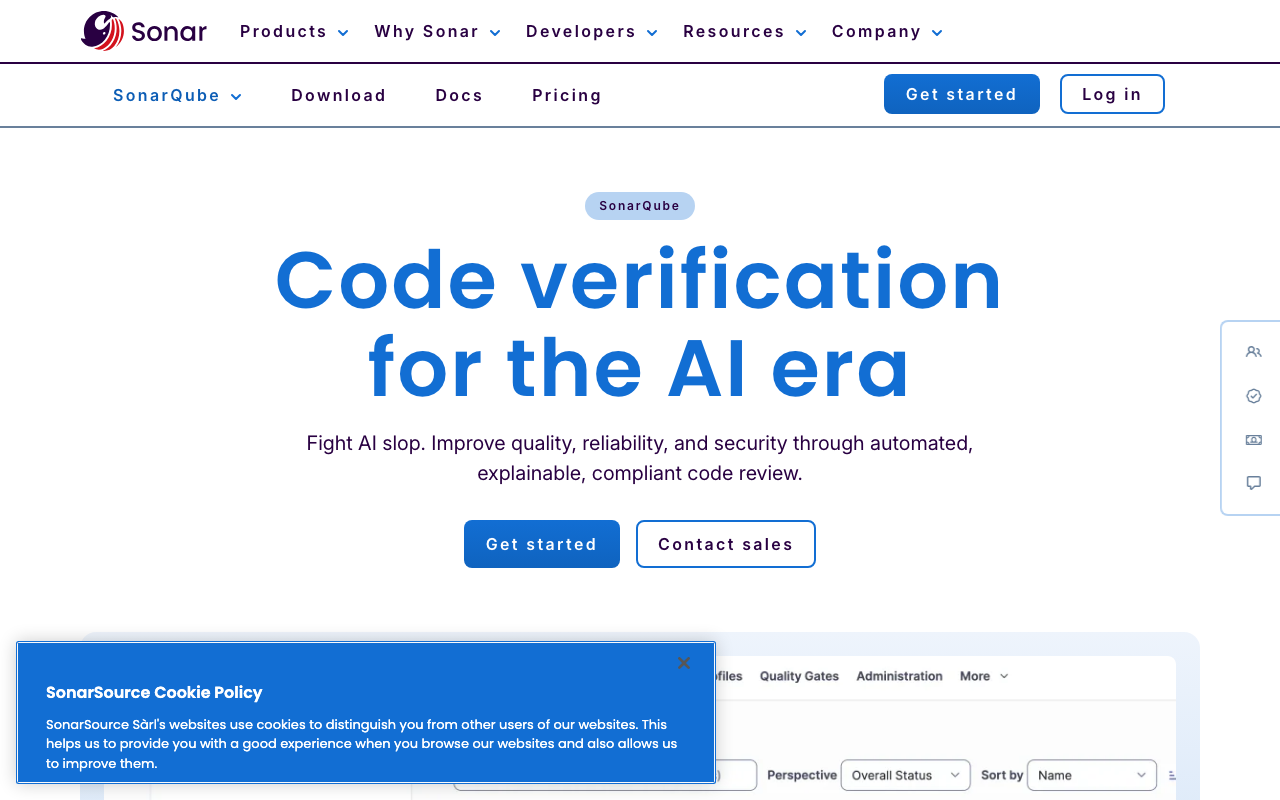
SonarQube is the most widely deployed static code analysis platform in the industry, used by over 7 million developers and adopted across organizations from early-stage startups to Fortune 500 enterprises. Its position as the default code quality tool in many engineering organizations means that understanding its pricing model is not just a purchasing decision - it is a budgeting exercise that affects how teams think about code quality infrastructure.
But SonarQube pricing is not straightforward. Unlike most developer tools that charge per user per month, SonarQube uses a per-lines-of-code model for its commercial self-hosted editions, offers a completely separate cloud product with its own pricing tiers, and maintains a free Community Build that - while genuinely useful - has limitations that catch many teams off guard. The gap between the free tier and the first paid tier is significant, and the jump from Developer to Enterprise Edition involves a 6x price increase that requires careful justification.
This guide covers every SonarQube pricing tier in detail - from the free Community Build through the six-figure Data Center Edition, plus the full SonarQube Cloud lineup. It breaks down the per-LOC pricing model, calculates the true cost of self-hosting (including infrastructure and admin time), compares SonarQube against every major competitor, and provides a framework for determining which edition delivers the best ROI for your specific situation.
SonarQube Self-Hosted Editions: Complete Pricing Breakdown
SonarQube self-hosted comes in four editions, each targeting a different organizational profile. The pricing model for all commercial editions is based on the maximum number of lines of code analyzed across all projects on a single instance.
Community Build - Free and Open Source
The Community Build (formerly called Community Edition) is SonarQube’s open-source offering. It is free to download, install, and run on your own infrastructure with no license key required.
What you get for free:
- 20+ language analyzers including Java, JavaScript, TypeScript, Python, C#, Go, Kotlin, Ruby, PHP, HTML, CSS, and infrastructure-as-code languages
- 5,000+ code quality and reliability rules
- Basic security analysis (but no taint analysis or advanced vulnerability detection)
- Quality gates that pass or fail based on configurable thresholds
- CI/CD integration with Jenkins, Azure Pipelines, CircleCI, GitHub Actions, GitLab CI, and Bitbucket Pipelines
- SonarLint IDE integration for real-time feedback in VS Code, IntelliJ, Eclipse, and Visual Studio
- Community forum support
Critical limitations that drive upgrade decisions:
No branch analysis. This is the single most impactful limitation. Community Build can only analyze one branch - your main branch. You cannot analyze feature branches, pull request branches, or release branches. This means developers do not receive feedback on new code quality issues until after they merge to main, which defeats the purpose of shifting quality checks left in the development workflow.
No pull request decoration. Without branch analysis, there is no ability to post inline comments on pull requests. Developers must manually check the SonarQube dashboard to see if their code introduced new issues. In practice, this friction means most developers on Community Build only discover issues after they have merged - or never discover them at all because they do not check the dashboard.
No taint analysis. Taint analysis traces data flow from user inputs through your application to identify injection vulnerabilities (SQL injection, XSS, command injection). This is one of the most valuable security analysis capabilities in SonarQube, and it is entirely absent from the Community Build. Basic pattern-matching security rules are included, but they miss the data-flow-based vulnerabilities that represent the most critical security risks.
Fewer language analyzers. Languages like C, C++, Objective-C, PL/SQL, ABAP, T-SQL, Swift, COBOL, and RPG are only available in paid editions. If your codebase includes any of these languages, the Community Build cannot analyze them.
No regulatory reporting. Compliance reports for OWASP Top 10, CWE Top 25, PCI DSS, and other regulatory frameworks are not available in the Community Build.
Community-only support. There is no SonarSource support channel. You rely on community forums, documentation, and Stack Overflow for troubleshooting.
Developer Edition - Starting at ~$2,500/Year
The Developer Edition is the first commercial tier and is the most common upgrade path from the Community Build. It addresses the two most painful Community limitations - branch analysis and pull request decoration - while adding significant security capabilities.
Pricing by lines of code (approximate annual costs):
| LOC Tier | Approximate Annual Cost |
|---|---|
| Up to 100K LOC | ~$2,500 |
| Up to 250K LOC | ~$6,500 |
| Up to 500K LOC | ~$13,000 |
| Up to 1M LOC | ~$20,000 |
| Up to 2M LOC | ~$30,000 |
| Up to 5M LOC | ~$50,000 |
Everything in Community Build, plus:
Branch analysis. Analyze every branch in your repository - feature branches, release branches, hotfix branches. Each branch gets its own quality gate status, and developers can see the quality impact of their changes before merging. This alone justifies the upgrade for most teams, as it transforms SonarQube from a post-merge reporting tool into a pre-merge quality gate.
Pull request decoration. SonarQube posts inline comments directly on pull requests in GitHub, GitLab, Bitbucket, and Azure DevOps. When a developer opens a PR, SonarQube analyzes the changed code and decorates the PR with comments highlighting new bugs, vulnerabilities, code smells, and coverage gaps. This is how most developers interact with SonarQube in practice - through PR feedback rather than the dashboard.
Taint analysis for security. Full data-flow-based security analysis that traces user inputs through your application to identify injection vulnerabilities. This is a significant security upgrade over Community Build’s pattern-matching approach.
Additional language support. C, C++, Objective-C, PL/SQL, ABAP, T-SQL, and Swift analyzers are included. If your codebase uses any of these languages, Developer Edition is the minimum viable tier.
SonarSource support. Direct access to SonarSource’s support team for configuration, troubleshooting, and best practices guidance. Response time SLAs vary by edition.
Enterprise Edition - Starting at ~$16,000/Year
Enterprise Edition targets organizations managing multiple projects, business units, or product lines that need centralized governance and advanced compliance capabilities.
Pricing by lines of code (approximate annual costs):
| LOC Tier | Approximate Annual Cost |
|---|---|
| Up to 1M LOC | ~$16,000 |
| Up to 2M LOC | ~$25,000 |
| Up to 5M LOC | ~$45,000 |
| Up to 10M LOC | ~$65,000 |
| Up to 20M LOC | ~$100,000 |
Everything in Developer Edition, plus:
Portfolio and application management. Group projects into portfolios that represent business units, product lines, or applications. Get aggregated quality metrics across portfolios - overall reliability rating, security rating, maintainability rating, and coverage percentage. This is essential for engineering leaders who need to report code quality status across dozens or hundreds of projects without checking each one individually.
Regulatory compliance reporting. Generate reports against OWASP Top 10, CWE Top 25, PCI DSS, and other regulatory frameworks. For organizations in regulated industries - finance, healthcare, government, defense - these reports are not optional but a compliance requirement. Enterprise Edition produces them automatically based on analysis results.
Project transfer between instances. Move projects between SonarQube instances without losing history. This is valuable for organizations running multiple SonarQube instances (for example, separate instances for different business units or geographic regions) that need to consolidate or reorganize.
Parallel processing of report analysis. Enterprise Edition processes analysis reports in parallel, which significantly reduces the time to analyze large codebases. For organizations with millions of lines of code across hundreds of projects, this means analysis results are available faster.
Extended language support. COBOL, RPG, and Apex analyzers are Enterprise-only. Organizations with legacy mainframe codebases (COBOL, RPG) or Salesforce development (Apex) must use Enterprise Edition.
Executive reporting dashboards. Higher-level dashboards designed for non-technical stakeholders who need visibility into code quality trends without understanding the technical details.
Data Center Edition - Starting at ~$100,000/Year
Data Center Edition is designed for organizations that need high availability, horizontal scalability, and zero-downtime operation for their SonarQube deployment.
Pricing by lines of code (approximate annual costs):
| LOC Tier | Approximate Annual Cost |
|---|---|
| Up to 10M LOC | ~$100,000 |
| Up to 20M LOC | ~$150,000 |
| Up to 50M LOC | ~$250,000 |
| Up to 100M+ LOC | Custom pricing |
Everything in Enterprise Edition, plus:
High availability clustering. Run multiple SonarQube application nodes behind a load balancer with a shared database. If one node fails, traffic routes to surviving nodes with no service interruption. This is critical for organizations where SonarQube is embedded in CI/CD pipelines and any downtime blocks deployments.
Horizontal scalability. Add application nodes to handle increased load as your organization grows. Unlike single-node editions where performance degrades as projects multiply, Data Center Edition scales horizontally.
Zero-downtime upgrades. Upgrade SonarQube without taking the service offline. Rolling upgrades allow you to update one node at a time while others continue serving requests.
Component redundancy. Database clustering, search engine clustering, and compute node redundancy ensure that no single point of failure can take down the analysis platform.
Premium support SLA. Fastest response time guarantees and direct access to SonarSource engineering for critical issues.
Who needs Data Center Edition? Organizations with 1,000+ developers, 100+ projects, SonarQube embedded in mission-critical CI/CD pipelines, and a requirement for 99.9%+ uptime. If a SonarQube outage would block your entire engineering organization from deploying, Data Center Edition eliminates that risk. For everyone else, Enterprise Edition with a well-configured single-node deployment provides sufficient reliability.
SonarQube Cloud Pricing: The Hosted Alternative
SonarQube Cloud (formerly SonarCloud) is SonarSource’s managed cloud offering that eliminates the need to self-host. It runs on SonarSource’s infrastructure, handles all updates and maintenance, and provides the same analysis engine as the self-hosted product.
Cloud Free Plan
Cost: $0/month
What is included:
- Up to 50,000 lines of code analyzed
- 30 language analyzers
- Public and private repository support
- GitHub, GitLab, Bitbucket, and Azure DevOps integration
- Branch analysis and pull request decoration
- Basic quality gates
- SonarLint connected mode
Key advantage over self-hosted Community Build: The Cloud Free plan includes branch analysis and pull request decoration, which are missing from the self-hosted Community Build. This makes the Cloud Free plan significantly more useful for actual development workflows. A small team with a codebase under 50K LOC gets a meaningfully better experience on Cloud Free than on the self-hosted Community Build.
The 50K LOC limit in practice. 50,000 lines of code is enough for a small project or a handful of microservices, but it is not much. A typical mid-size web application with frontend and backend code can easily exceed 50K LOC. Once you cross this threshold, you must upgrade to a paid tier.
Cloud Team Plan
Cost: Starting at EUR 30/month, scaling with lines of code
The Cloud Team plan scales based on the number of lines of code analyzed. Unlike the self-hosted per-LOC tiers that have discrete pricing steps, Cloud Team pricing increases more gradually as your codebase grows.
Approximate Cloud Team pricing by LOC:
| LOC Range | Approximate Monthly Cost |
|---|---|
| 50K - 100K LOC | EUR 30 - 50/month |
| 100K - 250K LOC | EUR 50 - 120/month |
| 250K - 500K LOC | EUR 120 - 230/month |
| 500K - 1M LOC | EUR 230 - 450/month |
What Cloud Team adds over Free:
- Higher LOC limits
- Advanced quality gate configuration
- Priority analysis processing
- Team management features
- SonarSource support
Cloud Enterprise Plan
Cost: Custom pricing (contact sales)
Cloud Enterprise is for organizations that need the full SonarQube feature set without managing infrastructure. It includes everything in the Cloud Team plan plus advanced security analysis (SAST and SCA), AI-generated fix suggestions, custom quality gates with more granular configuration, regulatory compliance reporting, SSO/SAML authentication, and dedicated support.
When to choose Cloud Enterprise over self-hosted Enterprise: If your organization does not have a hard requirement for on-premises deployment and you want to eliminate infrastructure management overhead, Cloud Enterprise provides equivalent analysis capabilities with zero operational burden. The tradeoff is that you cannot customize the deployment, you depend on SonarSource’s uptime, and your source code is processed on third-party infrastructure.
Understanding the Per-LOC Pricing Model
SonarQube’s per-lines-of-code pricing model is one of the most misunderstood aspects of its commercial offerings. Getting this right is critical for accurate budgeting.
How Lines of Code Are Counted
SonarQube counts the maximum number of lines of code across all projects on a single instance. Specifically:
- Only the largest branch of each project is counted. If your main branch has 100K LOC and a feature branch has 100.5K LOC, the feature branch count (100.5K) is used.
- Blank lines and comments are excluded. Only executable code, declarations, and structural code count toward LOC.
- All projects on the instance are summed. If you have 10 projects with 50K LOC each, your total is 500K LOC.
- Generated code counts. Auto-generated files (protobuf, OpenAPI, etc.) that are included in analysis count toward your LOC total.
Why Per-LOC Pricing Catches Teams Off Guard
Problem 1: Codebase growth is hard to predict. When you purchase a Developer Edition license for 100K LOC, you are betting that your codebase will not grow beyond that tier during the license period. If a new project pushes you from 95K to 110K LOC, you need to upgrade to the 250K LOC tier - which may cost 2-3x more. This creates budgeting uncertainty that per-user pricing models do not have.
Problem 2: Monorepos amplify the cost. Organizations using monorepo architectures concentrate all their code in a single project. A monorepo with 2M LOC is counted as 2M LOC even if most of that code is stable libraries and frameworks that rarely change. With per-user pricing, a 20-developer team pays the same regardless of codebase size. With per-LOC pricing, the size of your codebase directly impacts your bill.
Problem 3: Adding projects increases cost. Every new microservice, library, or application you add to SonarQube increases your LOC count. In a microservices architecture where teams frequently spin up new services, this creates a marginal cost for each new project that does not exist with per-user tools.
Problem 4: LOC tiers create cliff effects. If you are at 98K LOC and expect to add a 5K LOC project, you jump from the 100K tier to the 250K tier - a 2-3x cost increase for a 5% increase in codebase size. Planning around these cliffs requires monitoring your LOC count and making deliberate decisions about which projects to analyze.
Strategies to Manage Per-LOC Costs
Exclude generated code from analysis. Configure SonarQube to exclude auto-generated files, test fixtures, vendor directories, and other non-essential code from analysis. This reduces your LOC count without sacrificing analysis quality.
Be selective about which projects you analyze. Not every repository needs to be in SonarQube. Internal tools, prototype projects, and archived codebases may not justify the LOC impact on your license tier. Focus SonarQube on production-critical codebases.
Monitor LOC trends proactively. Set up tracking for your total LOC count so you know when you are approaching a tier boundary. This gives you time to either optimize (by removing dead code or excluding non-essential projects) or budget for the upgrade.
Negotiate multi-year contracts. SonarSource may offer better per-LOC rates on multi-year license agreements. If your codebase is growing predictably, locking in a higher LOC tier for multiple years at a negotiated rate can be more economical than year-to-year renewals.
Self-Hosted Hidden Costs: The True Price of Running SonarQube
The license fee is only part of the cost. Teams that choose self-hosted SonarQube often underestimate the total cost of ownership because infrastructure, maintenance, and admin time add up significantly. Here is a realistic breakdown of the hidden costs.
Infrastructure Costs
SonarQube requires a server with adequate CPU, RAM, and storage, plus a separate database instance.
Minimum requirements for a production SonarQube instance:
| Component | Minimum Spec | Recommended Spec | Enterprise Spec |
|---|---|---|---|
| CPU | 2 cores | 4-8 cores | 8-16 cores |
| RAM | 4 GB | 8-16 GB | 16-32 GB |
| Storage | 50 GB SSD | 100-200 GB SSD | 500 GB+ SSD |
| Database | PostgreSQL 13+ | PostgreSQL 15+ (dedicated) | PostgreSQL with HA |
| Elasticsearch | Embedded | Embedded or external | External cluster |
Estimated monthly infrastructure costs by deployment size:
| Deployment Size | Server Cost | Database Cost | Total Monthly |
|---|---|---|---|
| Small (< 500K LOC, < 50 devs) | $50 - $150 | $30 - $80 | $80 - $230 |
| Medium (500K - 2M LOC, 50-200 devs) | $150 - $400 | $80 - $200 | $230 - $600 |
| Large (2M - 10M LOC, 200-1000 devs) | $400 - $1,500 | $200 - $500 | $600 - $2,000 |
| Data Center (HA cluster) | $2,000 - $5,000 | $500 - $2,000 | $2,500 - $7,000 |
These costs assume cloud hosting (AWS, GCP, or Azure). On-premises hardware costs are higher upfront but may be lower over a 3-5 year period.
Administration and Maintenance Time
Ongoing admin tasks for a self-hosted SonarQube instance:
- Version upgrades. SonarSource releases new versions regularly. Each upgrade requires testing in a staging environment, backing up the database, performing the upgrade, and validating that all quality profiles and project configurations are intact. Estimated time: 2-4 hours per upgrade, with major upgrades taking longer.
- Quality profile management. Maintaining custom quality profiles, activating and deactivating rules, and tuning thresholds as your team’s standards evolve. Estimated time: 2-4 hours per month.
- User and permission management. Onboarding new developers, managing group permissions, configuring project-level access, and handling SSO integration. Estimated time: 1-2 hours per month for mid-size teams.
- Plugin management. Installing, updating, and troubleshooting third-party plugins. Some plugins break with SonarQube version upgrades. Estimated time: 1-2 hours per month.
- Monitoring and troubleshooting. Watching for performance degradation, analyzing slow scans, resolving out-of-memory errors, and debugging failed analysis runs. Estimated time: 2-4 hours per month.
- Backup management. Configuring and verifying database backups, testing restore procedures, and managing backup storage. Estimated time: 1-2 hours per month.
Total estimated admin time: 10-20 hours per month. At an average DevOps engineer rate of $75-$100/hour, this translates to $750-$2,000/month in labor costs.
Total Cost of Ownership for Self-Hosted SonarQube
Here is the full annual cost picture for a mid-size team:
| Cost Component | Developer Edition (250K LOC) | Enterprise Edition (1M LOC) |
|---|---|---|
| License fee | ~$6,500/year | ~$16,000/year |
| Infrastructure | ~$3,600/year ($300/month) | ~$7,200/year ($600/month) |
| Admin labor | ~$12,000/year (15 hrs/month at $67/hr) | ~$18,000/year (20 hrs/month at $75/hr) |
| Total annual cost | ~$22,100/year | ~$41,200/year |
| True cost vs. license only | 3.4x the license fee | 2.6x the license fee |
The hidden costs are 1.5 to 2.5 times the license fee. This is the most critical insight for budget planning. When someone says “SonarQube Developer Edition costs $6,500/year,” the actual cost of running it is closer to $22,000/year when you include infrastructure and people time.
SonarQube Cloud vs. Self-Hosted: Cost Analysis
Choosing between Cloud and self-hosted is fundamentally a cost-versus-control tradeoff. Here is a detailed comparison to help you decide.
Direct Cost Comparison
| Codebase Size | Self-Hosted Developer (License + Infra + Admin) | Cloud Team | Difference |
|---|---|---|---|
| 100K LOC | ~$15,000/year | Self-hosted costs 2.3x more | |
| 250K LOC | ~$22,000/year | Self-hosted costs 1.9x more | |
| 500K LOC | ~$28,000/year | Self-hosted costs 1.3x more | |
| 1M LOC | ~$41,000/year (Enterprise) | Roughly equal | |
| 2M+ LOC | ~$55,000/year (Enterprise) | Custom pricing | Varies |
For codebases under 500K LOC, Cloud is almost always cheaper when you factor in hidden self-hosted costs. The crossover point where self-hosted becomes competitive is around 1M LOC, and only if your organization already has DevOps capacity with spare bandwidth.
When Cloud Makes More Sense
Your team is under 50 developers. Smaller teams rarely have dedicated DevOps capacity for SonarQube administration. Cloud eliminates this overhead entirely.
Your codebase is under 500K LOC. Cloud pricing at this scale is significantly cheaper than the true cost of self-hosting.
You want branch analysis and PR decoration for free. Cloud Free includes these features up to 50K LOC, while the self-hosted Community Build does not offer them at any codebase size.
Rapid setup matters. Cloud is ready to use in minutes. Self-hosted deployment, even with Docker, requires hours of initial setup and configuration.
You use GitHub, GitLab, Bitbucket, or Azure DevOps. Cloud integrates natively with all major Git platforms. Self-hosted requires configuring webhook connections and authentication.
When Self-Hosted Makes More Sense
Regulatory or security requirements mandate on-premises. If your organization’s security policy prohibits sending source code to third-party cloud services, self-hosted is the only option.
Your codebase exceeds 2M LOC. At very large scales, the annual infrastructure and license cost of self-hosted may be lower than Cloud Enterprise pricing, especially if you already have infrastructure capacity.
You need deep customization. Self-hosted allows custom plugins, custom database configurations, and network-level integration with internal tools that Cloud cannot provide.
You already have DevOps infrastructure and capacity. If your organization runs Kubernetes clusters with available capacity and has DevOps engineers with spare bandwidth, the marginal cost of adding a SonarQube instance is lower than the estimates above suggest.
What Each Edition Is Best For
Understanding the right edition for your situation prevents both overpaying and underbuying. Here is a practical guide based on team profile rather than feature checklist.
Community Build Is Best For
- Individual developers learning SonarQube or evaluating it for their team
- Open-source projects that do not need branch analysis
- Extremely budget-constrained teams willing to accept single-branch analysis
- Teams that use SonarLint in the IDE as the primary quality feedback mechanism and treat SonarQube as a secondary dashboard
- Proof-of-concept deployments to demonstrate value before requesting budget for a commercial license
Developer Edition Is Best For
- Engineering teams of 5-100 developers who need branch analysis and PR decoration
- Organizations with codebases between 100K and 1M LOC in mainstream languages (Java, JavaScript, Python, C#, Go, etc.)
- Teams that want security analysis beyond basic pattern matching (taint analysis)
- Organizations that need C, C++, Objective-C, or Swift analysis
- The majority of commercial SonarQube deployments - Developer Edition covers the needs of most teams
Enterprise Edition Is Best For
- Organizations managing 10+ projects across multiple teams or business units
- Regulated industries requiring OWASP, CWE, or PCI DSS compliance reports
- Large codebases (1M-20M LOC) requiring parallel report processing for acceptable scan times
- Organizations with legacy COBOL, RPG, or Apex codebases
- Engineering leadership that needs portfolio-level quality visibility across the organization
Data Center Edition Is Best For
- Organizations with 1,000+ developers where SonarQube downtime blocks all deployments
- Mission-critical CI/CD pipelines with 99.9%+ uptime requirements
- Very large codebases (10M+ LOC) requiring distributed processing
- Organizations that cannot tolerate any maintenance windows for SonarQube upgrades
Competitor Pricing Comparison
SonarQube competes with a range of code quality and static analysis tools. Here is how its pricing stacks up against the major alternatives.
Pricing Overview Table
| Tool | Free Tier | Paid Starting Price | Billing Model | Self-Hosted? |
|---|---|---|---|---|
| SonarQube | Community Build (self-hosted) / Cloud Free (50K LOC) | ~$2,500/year (Developer, 100K LOC) | Per LOC (self-hosted) / Per LOC (cloud) | Yes |
| Codacy | IDE extension only | $18/dev/month | Per developer | Business plan only |
| Code Climate | 14-day trial | ~$599/month (up to 20 seats) | Per seat with tiers | No |
| DeepSource | Individual devs | $30/user/month | Per committer | Enterprise only |
| Qodana | Community (limited) | $4.95/contributor/month (Starter) | Per active contributor | Enterprise only |
SonarQube vs. Codacy Pricing
Codacy is one of the closest competitors to SonarQube, offering a similar all-in-one code quality platform with SAST, SCA, secrets detection, AI code review, and coverage tracking across 49 languages.
How the pricing models differ fundamentally. Codacy charges per developer ($18/dev/month on annual billing), while SonarQube charges per lines of code. This creates very different cost dynamics depending on your team size and codebase size.
Scenario analysis - 20-developer team:
| Codebase Size | SonarQube Developer Edition | Codacy Team (annual) | Cheaper Option |
|---|---|---|---|
| 100K LOC | ~$2,500/year | $4,320/year | SonarQube |
| 250K LOC | ~$6,500/year | $4,320/year | Codacy |
| 500K LOC | ~$13,000/year | $4,320/year | Codacy |
| 1M LOC | ~$20,000/year | $4,320/year | Codacy |
Scenario analysis - 5-developer team:
| Codebase Size | SonarQube Developer Edition | Codacy Team (annual) | Cheaper Option |
|---|---|---|---|
| 100K LOC | ~$2,500/year | $1,080/year | Codacy |
| 250K LOC | ~$6,500/year | $1,080/year | Codacy |
| 500K LOC | ~$13,000/year | $1,080/year | Codacy |
The pattern is clear. Codacy’s per-developer pricing favors small teams regardless of codebase size. SonarQube’s per-LOC pricing favors large teams with small-to-moderate codebases. For a 100-developer team with a 100K LOC codebase, SonarQube Developer at ~$2,500/year is dramatically cheaper than Codacy at $21,600/year. But this scenario - large team, small codebase - is uncommon.
Beyond price - feature comparison. Codacy bundles more features into its base plan (AI code review, SCA, secrets detection, coverage tracking) compared to SonarQube Developer Edition (focused on SAST with quality gates). However, SonarQube’s static analysis depth - 6,000+ rules, mature taint analysis, decades of language-specific rule development - exceeds what Codacy provides. Teams that prioritize analysis depth choose SonarQube. Teams that want breadth across code quality, security, and review workflows in one tool lean toward Codacy.
Hidden cost factor. Remember that SonarQube self-hosted adds infrastructure and admin costs. When comparing SonarQube Developer at $6,500/year (license only) against Codacy at $4,320/year (fully managed SaaS), the true SonarQube cost is closer to $18,000-$22,000/year after infrastructure and admin time. SonarQube Cloud at comparable LOC levels is a fairer comparison - and at that level, pricing is often closer to Codacy or higher.
SonarQube vs. Code Climate Pricing
Code Climate focuses on code quality metrics, test coverage, and maintainability analysis. Its pricing model is seat-based with tiered packages rather than per-LOC.
Code Climate pricing (approximate):
- 14-day free trial
- Up to 20 seats: ~$599/month
- 21-100 seats: Custom pricing
- Enterprise: Custom pricing
For a 20-developer team:
| Tool | Annual Cost | What You Get |
|---|---|---|
| SonarQube Developer (250K LOC) | ~$6,500 (license only) | SAST, branch analysis, PR decoration, taint analysis |
| SonarQube Developer (250K LOC, true cost) | ~$22,000 | Above + infrastructure + admin |
| Code Climate (20 seats) | ~$7,188 | Maintainability, test coverage, duplication, quality metrics |
Code Climate serves a different niche. While SonarQube is primarily a static analysis and security tool, Code Climate focuses on maintainability metrics - complexity, duplication, test coverage, and code churn. Organizations that need security vulnerability detection should choose SonarQube. Organizations that want engineering metrics and quality dashboards may prefer Code Climate. Some teams run both tools for complementary coverage.
Code Climate’s limitations at scale. Code Climate’s pricing becomes expensive for larger teams, and its analysis depth does not match SonarQube’s 6,000+ rules. For enterprise organizations, SonarQube’s ecosystem maturity, regulatory compliance features, and self-hosted options make it the more practical choice despite the complexity of per-LOC pricing.
SonarQube vs. DeepSource Pricing
DeepSource is the most direct competitor to SonarQube in the static analysis space, with a focus on low false positive rates and a modern developer experience.
DeepSource pricing:
- Free: Individual developers (public and private repos, basic analysis)
- Open Source: Free (public repos, 1,000 analysis runs/month)
- Team: $30/user/month (all features, AI credits, committer-based billing)
- Enterprise: Custom (self-hosted, SSO/SCIM, priority support)
Cost comparison for different team sizes (assuming 250K LOC codebase):
| Team Size | SonarQube Developer (license only) | SonarQube Developer (true cost) | DeepSource Team |
|---|---|---|---|
| 5 devs | ~$6,500/year | ~$22,000/year | $1,800/year |
| 10 devs | ~$6,500/year | ~$22,000/year | $3,600/year |
| 20 devs | ~$6,500/year | ~$22,000/year | $7,200/year |
| 50 devs | ~$6,500/year | ~$22,000/year | $18,000/year |
| 100 devs | ~$6,500/year | ~$22,000/year | $36,000/year |
SonarQube’s LOC pricing advantage for large teams is dramatic. At 100 developers, SonarQube Developer costs roughly the same as it does for 5 developers (since the license is LOC-based, not per-user). DeepSource’s per-user model makes it dramatically cheaper for small teams but increasingly expensive as the team grows.
The crossover point for a 250K LOC codebase. DeepSource is cheaper than SonarQube’s true cost (including infrastructure and admin) for teams up to about 30 developers. Above that, SonarQube becomes more economical.
Quality considerations. DeepSource advertises a sub-5% false positive rate, which is significantly lower than SonarQube’s default quality profiles (which can produce 10-20% false positives until tuned). DeepSource also includes AI-powered Autofix suggestions and five-dimension PR report cards that SonarQube does not offer. However, SonarQube’s 6,000+ rules, mature taint analysis engine, and decades of language-specific rule development provide deeper analysis for complex codebases. The choice depends on whether you prioritize signal quality (DeepSource) or analysis depth (SonarQube).
SonarQube vs. Qodana Pricing
Qodana by JetBrains is a newer entrant in the static analysis market, with tight integration into the JetBrains IDE ecosystem.
Qodana pricing:
- Community: Free (limited languages - Java, Kotlin, Python, JavaScript, TypeScript, Go, PHP)
- Starter: $4.95/active contributor/month (all languages, quality gates, CI/CD integration)
- Ultimate: $15/active contributor/month (security analysis, license auditing, vulnerability detection, OWASP/CWE reporting)
- Enterprise: Custom (on-premises, SSO, dedicated support)
Cost comparison for a 20-developer team (250K LOC codebase):
| Tool | Annual Cost | Notes |
|---|---|---|
| SonarQube Developer (license only) | ~$6,500 | Per-LOC pricing |
| SonarQube Developer (true cost) | ~$22,000 | Includes infrastructure + admin |
| Qodana Starter | ~$1,188 | $4.95 x 20 x 12 |
| Qodana Ultimate | ~$3,600 | $15 x 20 x 12 |
Qodana is significantly cheaper across the board. Even Qodana Ultimate at $3,600/year undercuts SonarQube Developer’s license-only cost of $6,500/year. For JetBrains IDE users, Qodana also offers tighter integration with IntelliJ IDEA, WebStorm, and other JetBrains products.
Where SonarQube still wins. SonarQube has a far more mature rule set (6,000+ versus Qodana’s growing but smaller library), better CI/CD ecosystem support, stronger regulatory compliance features (Enterprise Edition), and a much larger user community with more documentation and third-party resources. Qodana is newer and still catching up in terms of analysis depth and enterprise features. Organizations with strict compliance requirements or complex multi-language codebases may find SonarQube’s maturity worth the premium.
For JetBrains shops. If your organization is heavily invested in the JetBrains ecosystem - IntelliJ for Java, WebStorm for JavaScript, PyCharm for Python - Qodana provides the most seamless experience at the lowest price point. The analysis results appear natively in your IDE, and the CI/CD integration leverages JetBrains’ container images.
Full Annual Cost Comparison for a 20-Developer Team (250K LOC)
| Tool | Plan | Annual Cost | Billing Model | Self-Hosted? |
|---|---|---|---|---|
| Qodana | Starter | ~$1,188 | Per contributor | Enterprise only |
| SonarQube | Developer (license) | ~$6,500 | Per LOC | Yes |
| DeepSource | Team | ~$7,200 | Per committer | Enterprise only |
| Qodana | Ultimate | ~$3,600 | Per contributor | Enterprise only |
| Codacy | Team (annual) | ~$4,320 | Per developer | Business only |
| Code Climate | 20 seats | ~$7,188 | Per seat | No |
| SonarQube | Developer (true cost) | ~$22,000 | Per LOC + infra | Yes |
| SonarQube | Cloud Team (~250K LOC) | ~$12,700 | Per LOC (cloud) | No |
Key takeaways from this comparison:
SonarQube is the most expensive option when self-hosted costs are included. At $22,000/year true cost for 20 developers and 250K LOC, it exceeds every cloud-based competitor. However, it also provides the deepest analysis with 6,000+ rules and the most mature security analysis engine.
SonarQube is the cheapest option for very large teams. The LOC-based pricing means a 200-developer team pays the same license fee as a 5-developer team for the same codebase. At 200 developers, the $6,500 license fee works out to $32.50 per developer per year - cheaper than any competitor by a wide margin.
Qodana offers the best price-to-feature ratio for most teams. At $4.95/contributor/month (Starter) or $15/contributor/month (Ultimate), Qodana undercuts all competitors while providing solid static analysis, especially for JetBrains users.
When the Free Tier Is Enough
Not every team needs to pay for SonarQube. The free options - Community Build and Cloud Free - serve specific scenarios well. Understanding when free is genuinely sufficient prevents unnecessary spending.
Community Build Is Enough When
You only need main-branch analysis. If your workflow does not depend on PR-level feedback - for example, if you use SonarLint in the IDE as your primary quality tool and SonarQube as a secondary dashboard - the lack of branch analysis may not matter.
Your languages are covered. Community Build supports 20+ languages including Java, JavaScript, TypeScript, Python, C#, Go, Kotlin, Ruby, and PHP. If your entire codebase uses these languages, the commercial editions do not add language coverage.
You do not need security taint analysis. If security scanning is handled by a dedicated tool (like Snyk, Semgrep, or Checkmarx), you may not need SonarQube’s taint analysis capabilities.
Your team can tolerate the admin overhead. Self-hosting the free edition still requires infrastructure and admin time. The “free” version has real costs - just not license costs.
Cloud Free Is Enough When
Your codebase is under 50K LOC. This is the hard limit. If you are under it, Cloud Free provides branch analysis, PR decoration, and 30 language analyzers at zero cost - a meaningfully better experience than the self-hosted Community Build.
You are evaluating SonarQube. Cloud Free lets you test SonarQube’s analysis on your actual codebase with no commitment. Run it for a few weeks, assess the quality and relevance of findings, and decide whether to upgrade.
You maintain a small open-source project. A single open-source project under 50K LOC gets full Cloud Free coverage including features that are typically paid on the self-hosted product.
Signs You Have Outgrown the Free Tier
You need PR feedback. The moment your team expects inline PR comments from SonarQube, you have outgrown Community Build. Cloud Free provides this up to 50K LOC; beyond that, you need a paid tier.
Developers are not checking the dashboard. If issues go unnoticed because developers do not visit the SonarQube UI, you need PR decoration to bring the feedback to where developers already work - the pull request interface.
Your codebase exceeds 50K LOC on Cloud. This is a binary threshold with no workaround. Once you cross it, you must pay.
You need security analysis beyond pattern matching. Taint analysis for injection vulnerabilities requires Developer Edition or higher. If your security team or compliance requirements demand data-flow-based vulnerability detection, the free tiers are insufficient.
Migration Cost Considerations
Moving to or from SonarQube involves costs that are rarely discussed during the sales process. Understanding these upfront prevents budget surprises.
Migrating to SonarQube
Initial setup. Self-hosted deployment takes 1-3 days for a DevOps engineer, including server provisioning, database setup, SonarQube installation, authentication configuration, and CI/CD pipeline integration. Cloud setup is faster (hours, not days) but still requires configuring project connections and quality profiles.
Quality profile customization. SonarQube’s default quality profiles activate a large number of rules, many of which may not align with your team’s standards. Expect to spend 1-2 weeks tuning profiles - activating rules that matter, deactivating noisy ones, and configuring severity levels. This is an ongoing process as your standards evolve.
Baseline technical debt. When you first analyze an existing codebase, SonarQube will report hundreds or thousands of pre-existing issues. Establishing a “quality gate on new code only” policy (SonarQube’s recommended approach) avoids being overwhelmed, but your team still needs to decide how to handle the existing debt over time. The initial emotional reaction to seeing thousands of issues can create organizational friction.
Developer onboarding. Training developers to understand SonarQube findings, interact with PR comments, configure SonarLint, and follow quality gate policies takes time. Plan for a 1-2 hour team session plus ongoing support during the first month.
Total migration cost estimate: 40-80 hours of engineering time (DevOps + team lead + developers), equivalent to $3,000-$8,000 in labor costs.
Migrating Away from SonarQube
Quality profile export. SonarQube quality profiles can be exported as XML, but they are not directly importable into other tools. Your custom rule configurations, severity settings, and exclusion patterns need to be manually recreated in the replacement tool.
CI/CD pipeline updates. Every pipeline that runs SonarQube analysis needs to be updated to remove the SonarQube scanner and add the replacement tool’s scanner. For organizations with dozens or hundreds of pipelines, this is a significant effort.
Historical data loss. SonarQube’s historical trend data - quality metrics over time, issue resolution rates, coverage trends - is locked in SonarQube’s database and is not portable. You lose this historical context when you switch tools.
Developer retraining. Your team needs to learn the replacement tool’s interface, findings format, and workflow integration. This is a softer cost but impacts productivity during the transition.
ROI Analysis: When Does SonarQube Pay for Itself?
Calculating SonarQube’s ROI requires quantifying the cost of bugs and security vulnerabilities that it prevents - which is inherently difficult because you are measuring things that did not happen.
The Cost of Bugs Found Late
Industry research consistently shows that the cost to fix a defect increases exponentially the later it is found:
| Stage Found | Relative Cost to Fix |
|---|---|
| During coding (IDE/SonarLint) | 1x |
| During code review/PR | 5x |
| During QA testing | 10x |
| In production | 30-100x |
A bug that costs 1 hour to fix during development costs 5-10 hours during QA testing and 30-100 hours in production (including diagnosis, hotfix development, testing, deployment, customer communication, and reputation damage).
ROI Calculation Framework
For a 20-developer team with SonarQube Developer Edition:
| Factor | Value |
|---|---|
| True annual cost (license + infra + admin) | ~$22,000 |
| Bugs found per month by SonarQube | 50-200 (varies by codebase quality) |
| Percentage that would have reached production | 5-15% |
| Average cost per production bug | $2,000-$10,000 |
| Production bugs prevented per year | 30-360 |
| Value of prevented production bugs | $60,000-$3,600,000 |
| ROI range | 2.7x to 163x |
Even at the most conservative end - 30 prevented production bugs worth $2,000 each - the $60,000 in prevented costs exceeds the $22,000 annual investment by nearly 3x.
Where ROI Is Strongest
Security vulnerability prevention. A single SQL injection or XSS vulnerability reaching production can cost $50,000-$500,000 in breach response, legal exposure, and reputation damage. SonarQube’s taint analysis (Developer Edition and above) specifically targets these high-value vulnerabilities. If it prevents even one significant security incident per year, the entire multi-year license cost is justified.
Large teams with high PR volume. The more code your team writes, the more issues SonarQube catches. A 50-developer team generating 200+ PRs per week creates far more opportunities for SonarQube to deliver value than a 5-developer team.
Codebases with high complexity. Complex, interconnected codebases with deep call chains and data flows benefit most from SonarQube’s analysis. Simple CRUD applications with straightforward logic generate fewer meaningful findings.
Regulated industries. For organizations subject to SOC 2, PCI DSS, HIPAA, or other compliance frameworks, SonarQube’s compliance reporting capabilities avoid the cost of manual compliance documentation - which can run $10,000-$50,000 per audit cycle.
Where ROI Is Weakest
Solo developers and very small teams. A 2-person team with a small codebase generates limited PR volume and can catch most issues through manual review. The infrastructure and admin overhead of self-hosted SonarQube may exceed the value delivered. Cloud Free or a simpler tool is more cost-effective.
Teams that do not act on findings. SonarQube delivers zero ROI if findings are ignored. If your quality gates are set to “pass everything” or developers routinely dismiss SonarQube comments without reviewing them, you are paying for analysis that produces no behavior change.
Codebases with existing comprehensive testing. If your team already has 90%+ test coverage with thorough integration and end-to-end tests, the marginal value of SonarQube’s static analysis is lower - though still positive, as static analysis catches categories of bugs that tests miss (like security vulnerabilities and maintainability issues).
Practical Recommendations by Team Profile
Solo Developer or Freelancer
Recommendation: SonarQube Cloud Free or Community Build.
Cloud Free gives you branch analysis and PR decoration for up to 50K LOC - which covers most individual projects. If your codebase exceeds 50K LOC or you prefer self-hosting, the Community Build provides main-branch analysis at zero cost beyond a minimal server. Pair either with SonarLint in your IDE for real-time feedback during development. There is no reason to pay for a commercial license at this scale.
Startup (3-15 Developers)
Recommendation: SonarQube Cloud Free or Cloud Team, depending on codebase size.
If your codebase is under 50K LOC, Cloud Free covers your needs completely - including branch analysis and PR decoration. Once you outgrow 50K LOC, Cloud Team starting at EUR 30/month is the logical upgrade. Avoid self-hosting at this team size unless you have a specific regulatory requirement. The infrastructure and admin overhead is not worth it when Cloud pricing is predictable and a managed service eliminates operational burden.
Mid-Size Team (15-50 Developers)
Recommendation: SonarQube Cloud Team or Developer Edition self-hosted.
At this scale, your codebase is likely 100K-500K LOC. Cloud Team pricing ranges from approximately EUR 50-230/month, which is competitive with self-hosted Developer Edition when you factor in infrastructure and admin costs. Choose Cloud unless you have a hard requirement for on-premises deployment or need deep customization.
If you choose self-hosted, Developer Edition at $6,500-$13,000/year (depending on LOC tier) provides the essential features - branch analysis, PR decoration, and taint analysis. Budget an additional $15,000-$20,000/year for infrastructure and administration.
Large Engineering Organization (50-200 Developers)
Recommendation: SonarQube Developer or Enterprise Edition self-hosted, or Cloud Enterprise.
At 50+ developers, SonarQube’s per-LOC pricing becomes increasingly favorable compared to per-user competitors. The license fee does not increase as you add developers, only as your codebase grows. Developer Edition covers most needs; upgrade to Enterprise only if you need portfolio management, regulatory compliance reporting, or enterprise language support (COBOL, RPG, Apex).
For this team size, the admin overhead of self-hosting is justified because the cost per developer is very low. A $22,000/year total cost for Developer Edition across 100 developers works out to $220 per developer per year - less than any per-user competitor.
Enterprise (200+ Developers)
Recommendation: Enterprise or Data Center Edition, negotiated directly with SonarSource.
At this scale, negotiate directly with SonarSource for volume pricing. Enterprise Edition provides the governance, compliance, and portfolio features that large organizations require. Data Center Edition adds high availability and horizontal scalability for organizations where SonarQube downtime blocks CI/CD pipelines.
Budget $50,000-$250,000/year for the full stack (license + infrastructure + admin), depending on codebase size and availability requirements. This investment is easily justified by the volume of bugs and vulnerabilities prevented across hundreds of developers and millions of lines of code.
Budgeting for SonarQube: Annual Cost Estimator
Use this table to estimate your total annual SonarQube cost based on your codebase size, team size, and deployment preference.
Self-Hosted Total Cost Estimator
| LOC Tier | Edition | License | Infra (est.) | Admin (est.) | Total Annual |
|---|---|---|---|---|---|
| 100K | Developer | ~$2,500 | ~$2,000 | ~$10,000 | ~$14,500 |
| 250K | Developer | ~$6,500 | ~$3,000 | ~$12,000 | ~$21,500 |
| 500K | Developer | ~$13,000 | ~$4,000 | ~$14,000 | ~$31,000 |
| 1M | Enterprise | ~$16,000 | ~$5,000 | ~$16,000 | ~$37,000 |
| 2M | Enterprise | ~$25,000 | ~$7,000 | ~$18,000 | ~$50,000 |
| 5M | Enterprise | ~$45,000 | ~$10,000 | ~$20,000 | ~$75,000 |
| 10M | Data Center | ~$100,000 | ~$40,000 | ~$30,000 | ~$170,000 |
Cloud Total Cost Estimator
| LOC Tier | Plan | Monthly Cost | Annual Cost | Includes |
|---|---|---|---|---|
| Up to 50K | Free | $0 | $0 | Branch analysis, PR decoration, 30 languages |
| 100K | Team | ~EUR 50 | ~EUR 600 | Above + priority processing + support |
| 250K | Team | ~EUR 120 | ~EUR 1,440 | Same |
| 500K | Team | ~EUR 230 | ~EUR 2,760 | Same |
| 1M+ | Enterprise | Custom | Custom | Full feature set, compliance, SSO |
Key Pricing Changes in 2026
SonarSource has made several pricing-relevant changes heading into 2026 that affect purchasing decisions.
Rebranding of Community Edition. The free self-hosted edition is now called “Community Build” rather than “Community Edition.” This is a naming change only - the features and limitations remain the same.
Cloud pricing adjustments. SonarQube Cloud (formerly SonarCloud) has introduced a more granular Team tier with pricing that scales more gradually with LOC, replacing the previous step-function pricing model.
AI-generated fix suggestions. Cloud Enterprise now includes AI-generated fix suggestions for certain issue categories. This is a new value-add that was not available in previous years and narrows the feature gap with tools like DeepSource and CodeRabbit that have offered AI-powered fixes for longer.
SCA integration. Software Composition Analysis for dependency vulnerability detection is now more tightly integrated into Cloud Enterprise, reducing the need for a separate SCA tool.
Conclusion
SonarQube pricing is more complex than it appears because the per-LOC model, multiple editions, cloud versus self-hosted decision, and hidden infrastructure costs create a multidimensional budgeting exercise. Here is what matters most.
The free options are genuinely useful. Community Build provides real static analysis for 20+ languages at zero license cost. Cloud Free adds branch analysis and PR decoration for codebases under 50K LOC. Do not pay for a commercial edition until you have hit a concrete limitation of the free tier.
Developer Edition is the sweet spot for most teams. At ~$2,500-$13,000/year depending on codebase size, it adds the two most important features missing from the free tier - branch analysis and PR decoration. These features transform SonarQube from a passive dashboard into an active participant in your code review workflow. For the majority of engineering teams, Developer Edition provides everything they need.
Enterprise Edition is justified only for organizations with portfolio management and compliance needs. The ~$16,000/year starting price (plus infrastructure and admin costs) is a significant jump from Developer Edition. Unless you need regulatory compliance reporting, portfolio-level quality dashboards, or enterprise languages like COBOL, Developer Edition covers your requirements.
Self-hosted costs are 2-3x the license fee. When budgeting for self-hosted SonarQube, multiply the license cost by 2.5-3.5x to account for infrastructure and administration. A $6,500/year Developer Edition license actually costs ~$22,000/year to run. SonarQube Cloud eliminates this overhead and is cheaper for codebases under 500K LOC.
Per-LOC pricing favors large teams. SonarQube becomes more cost-effective per developer as your team grows, because the license cost does not increase with headcount. A 100-developer team pays the same license fee as a 5-developer team for the same codebase. This is the opposite of per-user tools like Codacy, DeepSource, and Qodana, where cost scales linearly with team size.
Per-LOC pricing punishes growing codebases. Conversely, if your codebase grows significantly, you hit LOC tier boundaries that trigger substantial price increases. Monitor your LOC count, exclude generated code, and be strategic about which projects you analyze to manage this risk.
The right choice depends on your specific situation. For small teams with small codebases, Cloud Free or a competitor like Qodana Starter ($4.95/contributor/month) may offer better value. For large teams with moderate codebases, SonarQube’s per-LOC model is unbeatable. For teams that need the deepest static analysis engine on the market with decades of rule development behind it, SonarQube remains the industry standard regardless of price.
Start with the free tier - Cloud Free if you are under 50K LOC, Community Build if you need self-hosted. Evaluate for a few weeks, measure the quality and relevance of findings on your actual codebase, and upgrade to Developer Edition when branch analysis and PR decoration become necessary. That is the rational progression, and SonarQube’s pricing structure supports it.
Further Reading
- Codacy Pricing in 2026: Free, Team, and Business Plans Compared
- DeepSource Pricing in 2026: Free, Team, and Enterprise Plans Explained
- 13 Best Code Quality Tools in 2026 - Platforms, Linters, and Metrics
- Best Code Review Tools for JavaScript and TypeScript in 2026
- I Reviewed 32 SAST Tools - Here Are the Ones Actually Worth Using (2026)
 Gitar
GitarComments are not enough
Gitar applies the fix, validates it in CI, and clears the queue.
See it on your repo Read our independent Gitar reviewFrequently Asked Questions
How much does SonarQube cost in 2026?
SonarQube self-hosted pricing in 2026 starts at free for the Community Build (open source edition), approximately $2,500/year for Developer Edition (100K LOC), approximately $16,000/year for Enterprise Edition (1M LOC), and approximately $100,000/year for Data Center Edition (10M LOC). SonarQube Cloud starts free for up to 50K lines of code, EUR 30/month for the Team plan, and custom pricing for the Enterprise Cloud plan. All commercial self-hosted editions use a per-lines-of-code pricing model where cost scales with codebase size.
Is SonarQube free to use?
Yes, SonarQube offers two free options. The Community Build is a fully open-source self-hosted edition that supports 20+ languages, basic quality gates, and CI/CD integration - but it lacks branch analysis, taint analysis, and advanced security features. SonarQube Cloud Free provides cloud-hosted analysis for up to 50,000 lines of code across 30 languages with support for GitHub, GitLab, Bitbucket, and Azure DevOps. Both free tiers are suitable for small projects, personal use, and open-source development.
What are the limitations of SonarQube Community Edition?
SonarQube Community Edition (now called Community Build) has several significant limitations compared to paid editions. It does not support branch analysis - you can only analyze a single main branch. It lacks taint analysis and advanced security vulnerability detection. There is no support for pull request decoration (inline comments on PRs). It offers fewer language analyzers than paid editions. There are no portfolio management features, no regulatory reporting, and no project transfer capabilities. Community support through forums replaces direct SonarSource support.
How does SonarQube per-LOC pricing work?
SonarQube commercial editions are priced based on the maximum number of lines of code you analyze across all projects in a single instance. Lines of code are counted as the largest branch of each project, excluding blank lines and comments. The LOC tiers create pricing steps - for example, Developer Edition costs approximately $2,500/year for up to 100K LOC, $6,500/year for up to 250K LOC, and $13,000/year for up to 500K LOC. If your codebase grows beyond your current LOC tier, you must upgrade to the next tier. This model means cost scales with codebase size rather than team size.
What is the difference between SonarQube Developer and Enterprise editions?
SonarQube Developer Edition adds branch analysis, pull request decoration, taint analysis for security, and support for additional languages like C, C++, Objective-C, PL/SQL, ABAP, T-SQL, and Swift over the Community Build. Enterprise Edition adds everything in Developer plus portfolio and application management, regulatory reporting (OWASP, CWE, PCI DSS), project transfer between instances, parallel processing of reports, and support for even more languages including COBOL, RPG, and Apex. Enterprise is designed for organizations managing multiple projects across business units.
How much does SonarQube Cloud cost?
SonarQube Cloud (formerly SonarCloud) offers three tiers. The Free plan covers up to 50,000 lines of code with 30 language support, public and private repos, and connections to GitHub, GitLab, Bitbucket, and Azure DevOps. The Team plan starts at EUR 30/month and scales based on lines of code analyzed. The Enterprise plan has custom pricing and adds SAST, SCA, AI-generated fix suggestions, custom quality gates, branch analysis, and regulatory compliance reporting. SonarQube Cloud eliminates infrastructure management costs but has higher ongoing subscription costs for large codebases.
Is SonarQube cheaper than Codacy?
It depends on your team size and codebase size. SonarQube Community Build is free and cheaper than any Codacy plan. For small teams with small codebases, SonarQube Cloud Free or Team may be cheaper than Codacy's $18/dev/month Team plan. However, for larger teams, Codacy's per-developer pricing can become more economical than SonarQube's per-LOC pricing, which scales with codebase size regardless of team size. A 20-developer team with a 500K LOC codebase would pay approximately $13,000/year for SonarQube Developer versus $4,320/year for Codacy Team (annual billing).
What are the hidden costs of running SonarQube self-hosted?
Self-hosted SonarQube has significant hidden costs beyond the license fee. Infrastructure costs for a production server range from $100-$500/month for small instances to $1,000-$5,000/month for enterprise deployments with high availability. You need a dedicated database (PostgreSQL or Oracle), which adds $50-$300/month. Admin time for upgrades, configuration, user management, and troubleshooting typically requires 5-15 hours per month of a DevOps engineer's time, worth $500-$2,250/month. Plugin maintenance, backup systems, and monitoring add further costs. Total hidden costs can equal or exceed the license fee itself.
Should I use SonarQube Cloud or self-hosted?
Choose SonarQube Cloud if you want zero infrastructure management, predictable monthly costs, automatic updates, and your codebase is under 1 million lines of code. Choose self-hosted if you need complete data control, have regulatory requirements for on-premises deployment, want to avoid per-LOC recurring costs for very large codebases (where a one-time infrastructure investment may be cheaper long-term), or need to integrate with internal tools that require network-level access. For most small-to-mid-size teams, Cloud is simpler and cheaper when you factor in the true cost of self-hosting.
How does SonarQube pricing compare to DeepSource?
DeepSource Team costs $30/user/month (billed per committer) while SonarQube pricing varies by edition and codebase size. For a 10-developer team with 200K LOC, SonarQube Developer Edition costs approximately $6,500/year versus DeepSource Team at $3,600/year. However, SonarQube's cost stays fixed regardless of team size while DeepSource scales with each new developer. For a 50-developer team with the same codebase, SonarQube remains at $6,500/year while DeepSource reaches $18,000/year. SonarQube is more economical for large teams with moderate codebases; DeepSource is cheaper for small teams.
Is SonarQube Enterprise Edition worth the price?
SonarQube Enterprise Edition at approximately $16,000/year (1M LOC) is worth the price for organizations that need portfolio management across multiple projects, regulatory compliance reporting (OWASP, CWE, PCI DSS), project transfer between instances, support for enterprise languages like COBOL and RPG, and parallel report processing for faster analysis. If you only need branch analysis and pull request decoration, the Developer Edition at approximately $2,500/year provides these features at a fraction of the cost. Enterprise is justified when you manage 10+ projects across multiple teams and need centralized governance.
What is the cheapest way to use SonarQube for a small team?
The cheapest option is SonarQube Community Build, which is completely free. You can self-host it on a modest server (2 CPU, 4GB RAM minimum) costing as little as $20-$50/month on cloud providers. For teams that want branch analysis and PR decoration without self-hosting, SonarQube Cloud Free covers up to 50K LOC at no cost. If your codebase exceeds 50K LOC but you want cloud hosting, the SonarQube Cloud Team plan at EUR 30/month is the next step. The Community Build with a small cloud server is the absolute cheapest option for teams comfortable with self-hosting.
Does SonarQube offer discounts for startups or open source?
SonarQube Cloud Free plan is available to all users including open-source projects for up to 50K lines of code. The Community Build is open source and free for everyone. For commercial editions, SonarSource does not publicly advertise startup discount programs, but volume discounts may be available through direct negotiation for large deployments. SonarSource partners and resellers may offer promotional pricing. Organizations can also purchase through cloud marketplaces like AWS Marketplace, which may allow application of existing cloud credits.
How does SonarQube pricing compare to Qodana?
Qodana by JetBrains offers a Community tier (free, limited languages), a Starter plan at $4.95/active contributor/month, and an Ultimate plan at $15/active contributor/month. For a 20-developer team, Qodana Ultimate costs approximately $3,600/year versus SonarQube Developer Edition at approximately $2,500/year (100K LOC) to $13,000/year (500K LOC). Qodana's per-contributor pricing is more predictable, while SonarQube's LOC-based pricing favors large teams with moderate codebases. JetBrains IDE users benefit from deeper Qodana integration, while SonarQube has broader CI/CD and platform support.
Explore More
 SonarQube Review
 Codacy Review
 DeepSource Review
 JetBrains Qodana Review
Free Newsletter
Stay ahead with AI dev tools
Weekly insights on AI code review, static analysis, and developer productivity. No spam, unsubscribe anytime.
Join developers getting weekly AI tool insights.
Related Articles
CodeRabbit Pricing: Free, Pro, and Enterprise Plans
CodeRabbit pricing verified 2026-10-19 - Essentials $24, Team $48, Advanced $72 per dev, what the free tier no longer covers, and real cost at 5 to 200 devs.
February 19, 2026
reviewGitar Review 2026: The AI Code Review Platform Sonar Just Bought
In-depth Gitar review covering features, the Sonar acquisition, code migration automation, real production results from Uber, pricing, and how it compares to CodeRabbit and Qodo Merge in 2026.
June 20, 2026
reviewQodo AI Review 2026: Is It the Best AI Testing Tool?
In-depth Qodo AI review covering test generation, PR review, pricing, pros and cons, and how it compares to top alternatives in 2026.
March 4, 2026