Is SonarQube Free? Understanding the Community Edition in 2026
Is SonarQube free? Yes - the Community Build is free and open source. Learn what's included, what's missing, and when to upgrade.
Published:
The short answer: yes, SonarQube has a free version
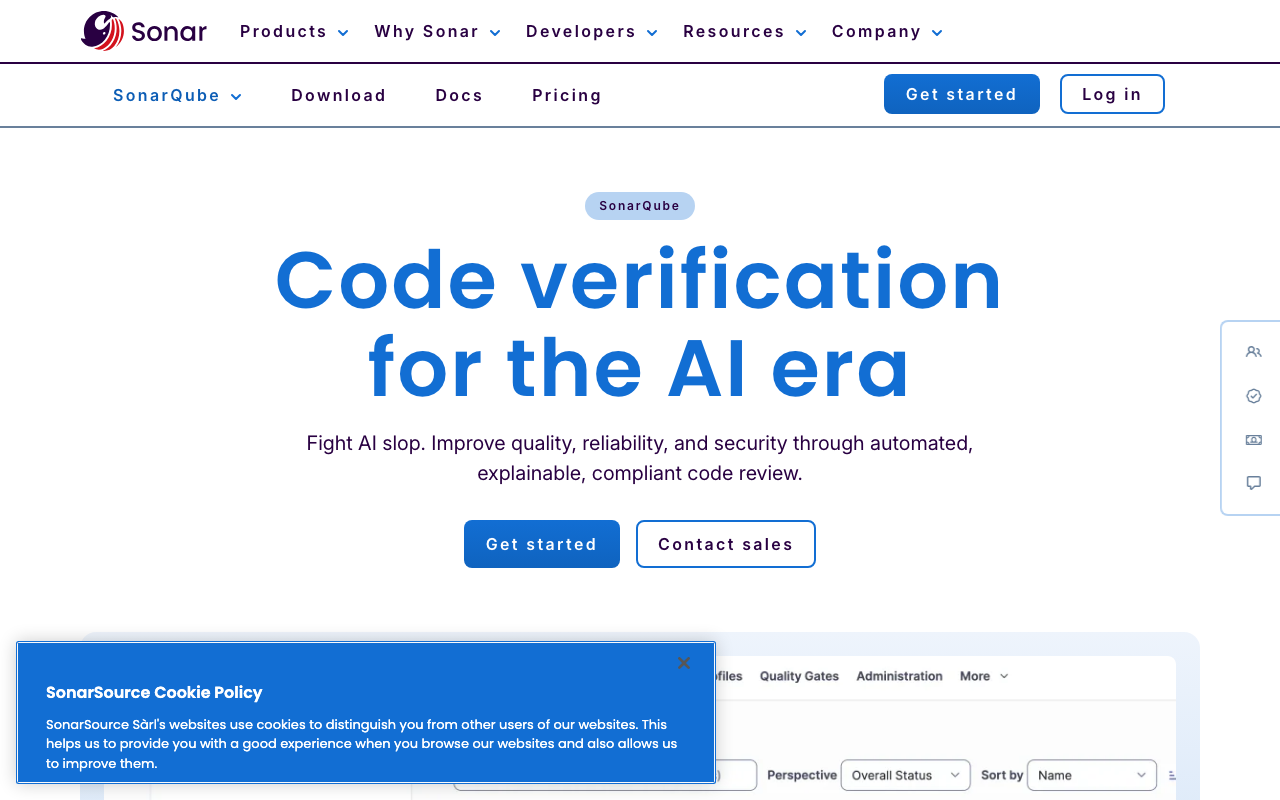
Yes, SonarQube is free. The platform offers a fully open-source edition called the Community Build (formerly known as Community Edition) that you can download, install, and run on your own infrastructure with no license fees, no user limits, and no restrictions on commercial use. It has been free since SonarQube’s inception, and SonarSource has shown no signs of changing that.
But “free” comes with important caveats. The Community Build lacks several features that most development teams consider essential for a modern code quality workflow - most notably branch analysis and pull request decoration. Understanding exactly what you get for free, what you do not get, and when those gaps become dealbreakers is the difference between a productive SonarQube deployment and a frustrating one.
This guide covers everything you need to know about SonarQube’s free offering in 2026 - what is included, what is excluded, how it compares to paid editions, and when you should consider alternatives that offer more at no cost.
What you get with SonarQube Community Build
The Community Build is not a stripped-down demo. It is a production-grade static analysis platform that thousands of organizations run in production. Here is what you get at zero cost.
Over 5,000 code quality and reliability rules. The Community Build includes SonarQube’s core rule engine with thousands of rules covering bugs, code smells, vulnerabilities, and maintainability issues. These are the same rules that run in the paid editions - there is no quality difference in the analysis itself.
20+ language analyzers. Java, JavaScript, TypeScript, Python, C#, Go, Kotlin, Ruby, PHP, Scala, HTML, CSS, XML, Terraform, CloudFormation, and more. For most modern development stacks, the Community Build covers every language in your codebase.
Quality gates. You can define pass/fail thresholds for new code - for example, requiring zero new bugs, zero new vulnerabilities, and at least 80% test coverage on changed code. Quality gates are the mechanism that prevents code quality from degrading over time, and they work fully in the Community Build.
CI/CD integration. The SonarQube scanner integrates with Jenkins, GitHub Actions, GitLab CI, Azure Pipelines, Bitbucket Pipelines, CircleCI, and any CI system that can run command-line tools. You can trigger analysis automatically on every commit to your main branch.
SonarLint IDE integration. SonarLint (now called SonarQube for IDE) provides real-time code analysis in VS Code, IntelliJ, Eclipse, and Visual Studio. It can connect to your Community Build instance to synchronize rule configurations, so developers see the same rules in their IDE as on the server.
Unlimited users and projects. There are no caps on how many developers can access the dashboard, how many projects you can analyze, or how many lines of code you can scan. The Community Build is genuinely unlimited for single-branch analysis.
Community forum support. While you do not get direct support from SonarSource, the community forums are active, well-moderated, and searchable. Most common configuration and troubleshooting questions have existing answers.
What is NOT included in the free version
The limitations of the Community Build are significant enough that they shape how your team interacts with SonarQube. Here are the features reserved for paid editions.
No branch analysis
This is the most impactful limitation. The Community Build can only analyze a single branch - typically your main or master branch. You cannot analyze feature branches, release branches, or any branch other than the one configured as the primary branch.
In practice, this means developers do not receive SonarQube feedback until after their code has been merged. Issues are discovered on main rather than during the pull request review process. For teams practicing trunk-based development with short-lived branches, this might be tolerable. For teams with longer-lived feature branches and formal PR review processes, it fundamentally undermines SonarQube’s value proposition of catching issues early.
No pull request decoration
Without branch analysis, there is no mechanism for SonarQube to post inline comments on pull requests. In paid editions, SonarQube decorates PRs with comments highlighting new bugs, vulnerabilities, and code smells directly in the GitHub, GitLab, Bitbucket, or Azure DevOps interface. This is how most developers interact with SonarQube in practice - through PR feedback rather than by visiting a separate dashboard.
The Community Build requires developers to manually check the SonarQube dashboard to see their analysis results. In reality, most developers do not do this consistently, which means issues go unnoticed.
No taint analysis
Taint analysis traces data flow from user inputs through your application to detect injection vulnerabilities like SQL injection, cross-site scripting (XSS), and command injection. This is one of SonarQube’s most valuable security capabilities, and it is entirely absent from the Community Build. The free version includes basic pattern-matching security rules, but it misses the data-flow-based vulnerabilities that represent the highest-risk security issues.
No security hotspot review
Security hotspots are code locations that require manual review to determine whether they represent actual vulnerabilities. The paid editions include a dedicated review workflow for security hotspots with accept/reject tracking. The Community Build does not include this workflow.
Limited language support
Languages like C, C++, Objective-C, Swift, PL/SQL, ABAP, T-SQL, COBOL, RPG, and Apex are only available in paid editions. If your codebase includes any of these languages, the Community Build cannot analyze them.
No regulatory compliance reporting
Reports for OWASP Top 10, CWE Top 25, PCI DSS, and other regulatory frameworks require the Enterprise Edition. Organizations in regulated industries cannot use the Community Build for compliance purposes.
SonarQube edition comparison
Here is how the four SonarQube editions compare across the features that matter most when deciding whether the free version is sufficient.
| Feature | Community Build (Free) | Developer (~$2,500/yr) | Enterprise (~$16,000/yr) | Data Center (~$100,000/yr) |
|---|---|---|---|---|
| Languages | 20+ | 25+ (adds C/C++, Swift) | 30+ (adds COBOL, RPG, Apex) | Same as Enterprise |
| Rules | 5,000+ | 5,000+ | 5,000+ | 5,000+ |
| Branch analysis | Main branch only | All branches | All branches | All branches |
| PR decoration | No | Yes | Yes | Yes |
| Taint analysis | No | Yes | Yes | Yes |
| Quality gates | Yes | Yes | Yes | Yes |
| Security hotspots | Limited | Full | Full | Full |
| Portfolio management | No | No | Yes | Yes |
| Compliance reporting | No | No | Yes | Yes |
| High availability | No | No | No | Yes |
| Support | Community forums | SonarSource support | SonarSource support | Premium support |
The Developer Edition at approximately $2,500/year for up to 100,000 lines of code is the most common upgrade path from the Community Build. It addresses the two most painful limitations - branch analysis and PR decoration - while adding taint analysis for security. For a detailed breakdown of all pricing tiers, see our SonarQube pricing guide.
When the free version is enough
The Community Build is genuinely sufficient for certain use cases. You do not need to upgrade if your situation matches one of these profiles.
You are evaluating SonarQube. The Community Build lets you test the analysis engine on your actual codebase, explore the rule library, and assess finding quality before committing budget. This is the intended first step for most SonarQube adoptions.
You use SonarLint as your primary feedback mechanism. If your developers rely on SonarLint in their IDEs for real-time quality feedback and treat the SonarQube server as a secondary reporting dashboard, the lack of branch analysis matters less. Developers catch issues in the IDE before they even commit.
You are a solo developer or small team comfortable with single-branch analysis. If you practice trunk-based development, commit directly to main, and do not rely on pull request workflows for quality checks, the Community Build provides meaningful value.
Your security scanning is handled by a separate tool. If you use Semgrep, Snyk, or another dedicated security scanner for vulnerability detection, you may not need SonarQube’s taint analysis. The Community Build’s code quality rules are still valuable even without the security features.
You are running an open-source project. Many open-source projects use the Community Build successfully. The SonarQube dashboard provides visibility into code quality trends, and contributors can use SonarLint for local feedback before submitting pull requests.
When you need to upgrade
Several signals indicate you have outgrown the free version.
Your team expects PR-level feedback. The moment developers ask “why isn’t SonarQube commenting on my pull requests?”, you have outgrown the Community Build. PR decoration is the most requested feature by teams using the free version, and it requires at least the Developer Edition.
Issues are being discovered too late. If bugs and code quality problems are only found after merging to main - and fixing them requires additional commits, reviews, and deployments - the lack of branch analysis is costing your team real time and money.
You need security vulnerability detection beyond pattern matching. When your security team, compliance requirements, or risk posture demand data-flow-based taint analysis for injection vulnerabilities, the Community Build is insufficient. Developer Edition is the minimum viable option.
Your codebase includes C, C++, Swift, or other paid-only languages. If the Community Build cannot analyze parts of your codebase, you are getting an incomplete picture of code quality and must upgrade for full coverage.
Free alternatives worth considering
If the Community Build’s limitations are dealbreakers but you are not ready to pay for SonarQube’s commercial editions, several alternatives offer more at no cost - or at a lower price point.
SonarQube Cloud free tier
SonarQube Cloud (formerly SonarCloud) offers a free tier for projects under 50,000 lines of code that includes branch analysis and PR decoration - features missing from the self-hosted Community Build. If your codebase fits under this threshold, Cloud Free provides a meaningfully better experience. The catch is the 50,000 LOC limit, which many projects exceed quickly. For more on this comparison, see our SonarQube vs SonarCloud guide.
Semgrep
Semgrep offers a free tier for up to 10 contributors that includes full SAST scanning, cross-file analysis, SCA with reachability analysis, and secrets detection. It runs in CI/CD pipelines and posts PR comments - capabilities that SonarQube restricts to paid editions. Semgrep’s rule-authoring syntax is also more accessible than writing custom SonarQube rules. For teams focused on security scanning, Semgrep’s free tier may cover your needs without SonarQube at all.
CodeAnt AI
CodeAnt AI takes a different approach by combining AI-powered code review with static analysis, SAST, secrets detection, and infrastructure-as-code scanning in a single platform. Pricing starts at $24/user/month for the Basic plan and $40/user/month for the Premium plan that includes SAST, SCA, and compliance dashboards. While not free, CodeAnt AI’s per-user pricing is more predictable than SonarQube’s per-LOC model, and the AI-powered PR reviews provide a level of feedback that SonarQube does not offer at any price tier. For teams that want code quality, security, and AI review in one tool, CodeAnt AI is worth evaluating.
CodeRabbit
CodeRabbit offers unlimited free AI-powered pull request reviews on both public and private repositories with no contributor limits. While it does not replace SonarQube’s rule-based static analysis, it provides intelligent PR feedback that catches issues SonarQube’s rule engine would miss - architectural problems, logic errors, and performance concerns. Many teams pair CodeRabbit’s free tier with SonarQube Community Build to get both rule-based and AI-powered review at zero cost.
For a comprehensive comparison of free options, see our guides on free SonarQube alternatives and the broader SonarQube alternatives landscape.
The bottom line
SonarQube is free - and the free version is a legitimate, production-grade static analysis tool with 5,000+ rules across 20+ languages. It is not a trial, not a demo, and not time-limited. Thousands of organizations run the Community Build in production, and it delivers real value for code quality.
But the Community Build’s lack of branch analysis and PR decoration means it operates as a post-merge reporting tool rather than a pre-merge quality gate. For teams that rely on pull request workflows - which is most teams in 2026 - this is a significant gap. The Developer Edition at approximately $2,500/year closes this gap, and for many teams, that investment pays for itself by catching issues earlier in the development cycle.
If you are exploring your options, start with the Community Build to evaluate the analysis quality on your codebase. If the findings are valuable but you need PR-level feedback, consider SonarQube Cloud’s free tier (under 50,000 LOC), upgrading to Developer Edition, or pairing the Community Build with a free AI review tool like CodeRabbit. The right choice depends on your codebase size, team workflow, and budget - but the good news is that the free starting point is strong enough to make an informed decision.
Frequently Asked Questions
Is SonarQube completely free?
SonarQube offers a free, open-source edition called the Community Build (formerly Community Edition). You can download, install, and run it on your own server with no license fees. However, it lacks branch analysis, pull request decoration, taint analysis, and advanced security features that are only available in the paid Developer, Enterprise, and Data Center editions. SonarQube Cloud also offers a free tier for projects under 50,000 lines of code.
What is the difference between SonarQube Community Build and Community Edition?
They are the same product with a new name. SonarSource rebranded the Community Edition as Community Build in recent releases. The features, limitations, and open-source license remain unchanged. If you see either name referenced in documentation or tutorials, they refer to the same free self-hosted edition of SonarQube.
What languages does SonarQube Community Build support?
SonarQube Community Build supports over 20 languages including Java, JavaScript, TypeScript, Python, C#, Go, Kotlin, Ruby, PHP, Scala, HTML, CSS, XML, and infrastructure-as-code languages like Terraform and CloudFormation. Languages like C, C++, Objective-C, Swift, PL/SQL, ABAP, T-SQL, COBOL, and RPG are only available in paid editions.
Can I use SonarQube free version for commercial projects?
Yes. The SonarQube Community Build is licensed under the GNU Lesser General Public License (LGPL). You can use it for commercial, proprietary software development without any licensing restrictions. There are no limits on the number of users, projects, or lines of code you can analyze with the Community Build.
Does SonarQube free version support pull request comments?
No. Pull request decoration - where SonarQube posts inline comments on PRs in GitHub, GitLab, Bitbucket, or Azure DevOps - requires the paid Developer Edition or higher. The Community Build can only analyze a single main branch and does not integrate with pull request workflows. SonarQube Cloud's free tier does include PR decoration for projects under 50,000 lines of code.
Is SonarQube Cloud free?
SonarQube Cloud (formerly SonarCloud) offers a free tier for projects with up to 50,000 lines of code. The Cloud free tier includes branch analysis and pull request decoration, which are not available in the self-hosted Community Build. Once your codebase exceeds 50,000 lines of code, you need to upgrade to the Cloud Team plan starting at EUR 30/month.
What is missing from the free version of SonarQube?
The free SonarQube Community Build lacks branch analysis (only the main branch can be scanned), pull request decoration, taint analysis for security vulnerabilities, security hotspot review workflows, regulatory compliance reporting (OWASP, CWE, PCI DSS), portfolio management, and support for certain languages including C, C++, Swift, and COBOL. You also do not get direct support from SonarSource - only community forums.
Should I use SonarQube Community Build or SonarQube Cloud free tier?
If your codebase is under 50,000 lines of code, SonarQube Cloud's free tier is the better choice because it includes branch analysis and pull request decoration at no cost. If your codebase exceeds 50,000 LOC, or you need to keep source code on your own infrastructure for security reasons, the Community Build is your only free option - but you lose PR-level feedback.
How much does SonarQube cost if I need more than the free version?
SonarQube Developer Edition starts at approximately $2,500/year for up to 100,000 lines of code. Enterprise Edition starts at approximately $16,000/year for up to 1 million lines of code. Data Center Edition starts at approximately $100,000/year. All commercial self-hosted editions use per-lines-of-code pricing. SonarQube Cloud Team starts at EUR 30/month, scaling with codebase size.
Is there a free alternative to SonarQube with pull request support?
Yes. Semgrep offers a free tier for up to 10 contributors that includes PR comments and CI/CD integration. CodeAnt AI provides AI-powered PR reviews starting at $24/user/month. CodeRabbit offers unlimited free AI-powered PR reviews on both public and private repositories. SonarQube Cloud's free tier also includes PR decoration for codebases under 50,000 lines of code.
Can I self-host SonarQube for free?
Yes. The SonarQube Community Build is a fully self-hosted product that requires no license key or payment. You need to provide your own server (minimum 2 CPU cores, 4 GB RAM) and a PostgreSQL database. While the software itself is free, running it costs $50-$200/month in cloud infrastructure plus engineering time for maintenance, upgrades, and troubleshooting.
Is SonarQube free for open source projects?
SonarQube Community Build is free for everyone, including open-source projects. SonarQube Cloud's free tier also supports open-source projects with up to 50,000 lines of code. For larger open-source projects, SonarQube Cloud Team pricing applies. Notably, some competitors offer more generous open-source programs - DeepSource is free for open-source projects regardless of team size, and Semgrep offers free access for open-source projects as well.
Explore More
Tool Reviews
 SonarQube Review
 CodeAnt AI Review
Related Articles
- I Reviewed 32 SAST Tools - Here Are the Ones Actually Worth Using (2026)
- AI Code Review Tool - CodeAnt AI Replaced Me And I Like It
- Free SonarQube Alternatives: Best Open Source Code Quality Tools in 2026
- Snyk vs CodeQL: Free SAST Tools Compared (2026)
- SonarQube Community vs Developer Edition: What's the Difference?
Free Newsletter
Stay ahead with AI dev tools
Weekly insights on AI code review, static analysis, and developer productivity. No spam, unsubscribe anytime.
Join developers getting weekly AI tool insights.
Related Articles
DeepSource Autofix: How Automatic Code Fixes Work in 2026
Learn how DeepSource Autofix detects and fixes code issues automatically - how it works, supported languages, accuracy, limitations, and alternatives.
March 13, 2026
guideDeepSource for Python: Static Analysis and Autofix Setup Guide
Set up DeepSource for Python projects. Covers .deepsource.toml config, Python rules, autofix, type checking, security analysis, and Django/Flask support.
March 13, 2026
guideIs Codacy Free? What You Get on the Open-Source Plan in 2026
Codacy is free for open-source projects and solo developers. See what the free plan includes, its limits, and when you need to upgrade.
March 13, 2026