Codacy vs Veracode: Developer Code Quality vs Enterprise AppSec (2026)
Codacy vs Veracode compared - code quality platform vs enterprise AppSec, SAST, SCA, DAST, compliance, pricing, and when to choose each for your team.
Published:
Last Updated:
Quick Verdict
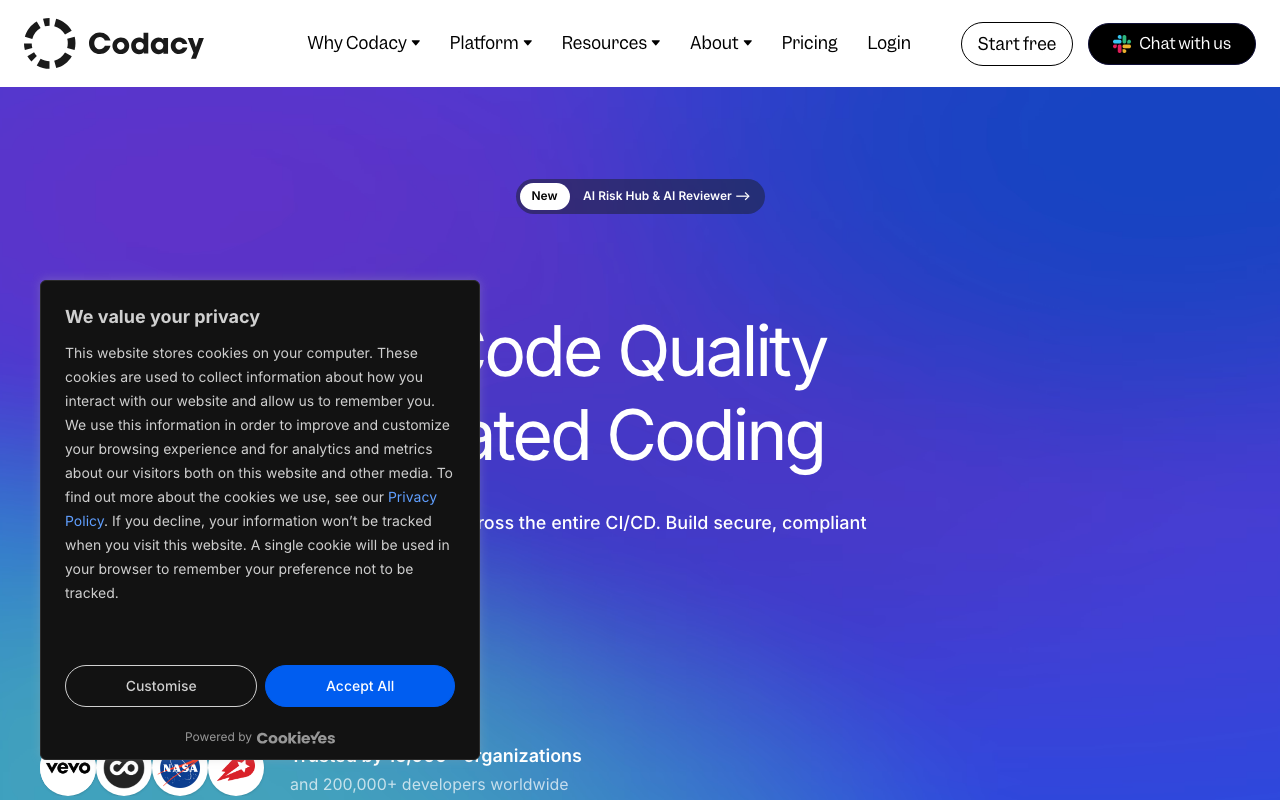
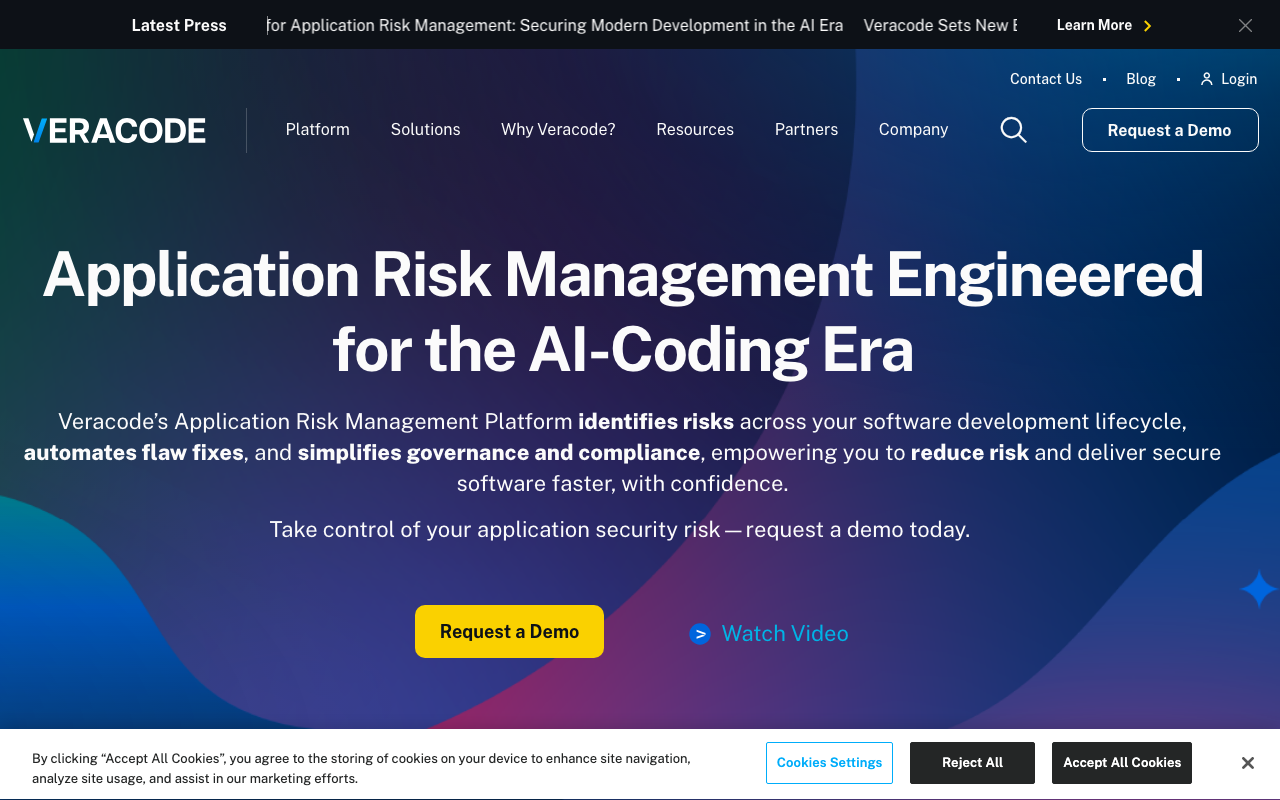
Codacy and Veracode are not in the same product category. Codacy is a developer-oriented code quality platform that includes security scanning as part of a broader code health offering. Veracode is an enterprise application security testing platform built for CISOs, security directors, and AppSec teams. Comparing them directly is like comparing a Swiss Army knife to a professional-grade power tool - one provides versatile coverage across many dimensions, the other provides deep capability in a specific domain.
The fundamental difference: Codacy answers the question “Is our code clean, well-tested, and reasonably secure?” Veracode answers the question “Does our application have exploitable vulnerabilities that could lead to a data breach?” These are related but distinct concerns, and the tools reflect that distinction in every design decision - from pricing ($15/user/month vs. $15,000+/year) to setup time (10 minutes vs. weeks) to target buyer (engineering leads vs. CISOs).
Choose Codacy if: you are a development team that needs a single affordable platform for code quality enforcement, coverage tracking, basic security scanning (SAST, SCA, secrets), and AI-powered code review. You want to ship cleaner code with fewer bugs and reasonable security coverage without enterprise procurement overhead. You value setup simplicity, predictable per-user pricing, and the ability to scan AI-generated code with the free AI Guardrails IDE extension.
Choose Veracode if: you are an enterprise security team that needs deep application security testing - binary SAST, DAST with AI-assisted authentication, SCA with behavioral supply chain analysis, compliance reporting aligned to PCI DSS, HIPAA, FedRAMP, and GDPR, developer security training at scale, and auditor-recognized certification. Your security program has budget, headcount, and compliance mandates that require enterprise-grade tooling.
If your organization needs both code quality and deep security: Use both. Codacy and Veracode have minimal feature overlap, and running them together provides comprehensive coverage. Or pair Codacy with a more affordable security tool like Snyk or Semgrep if Veracode’s pricing exceeds your budget.
At-a-Glance Feature Comparison
| Category | Codacy | Veracode |
|---|---|---|
| Primary focus | Code quality + basic security | Enterprise application security |
| Target buyer | Engineering leads, dev teams | CISOs, AppSec teams, compliance officers |
| SAST approach | Source code analysis (embedded engines) | Binary-level + source code analysis |
| SAST languages | 49 languages | 30+ languages |
| DAST | ZAP-powered (Business plan) | AI-assisted auth DAST (dedicated product) |
| SCA | Included in Pro plan | Phylum behavioral analysis (dedicated product) |
| Secrets detection | Yes | Yes |
| Container scanning | No | Yes |
| IaC scanning | Limited | Yes |
| AI code review | AI Reviewer (hybrid rule + AI) | None (Veracode Fix is remediation only) |
| AI code governance | AI Guardrails (free IDE extension) | None |
| AI remediation | AI Reviewer suggestions | Veracode Fix (AI-powered) |
| Code quality analysis | Yes - patterns, complexity, duplication | No |
| Code coverage tracking | Yes | No |
| Quality gates | Customizable thresholds on PRs | No (security policy gates only) |
| Developer training | No | Security Labs (hands-on training) |
| Compliance certification | No | Verified by Veracode |
| Compliance reporting | Basic (OWASP, SANS mapping) | Deep (PCI DSS, HIPAA, SOC 2, FedRAMP, GDPR) |
| Free tier | AI Guardrails IDE extension | No |
| Starting paid price | $15/user/month (Pro) | ~$15,000/year (SAST only) |
| Setup time | Under 10 minutes | Weeks to months (enterprise deployment) |
| Git platforms | GitHub, GitLab, Bitbucket | GitHub, GitLab, Bitbucket, Azure DevOps |
| Self-hosted | Business plan (premium pricing) | Cloud-primary, on-premises available |
What Is Codacy?
Codacy is an automated code quality and security platform trusted by over 15,000 organizations and 200,000 developers. Founded as a cloud-native code quality service, Codacy has evolved into a comprehensive developer platform that packages code quality analysis, SAST, SCA, DAST, secrets detection, code coverage tracking, duplication detection, and AI-powered code review into a single product with predictable per-user pricing.
Codacy’s design philosophy centers on developer accessibility. The platform connects to GitHub, GitLab, or Bitbucket and begins scanning pull requests automatically without any CI/CD pipeline configuration. Analysis runs on Codacy’s infrastructure, eliminating the need for build pipeline integration for basic scanning. This pipeline-less approach is the fastest setup experience in the code quality category - most teams go from signup to first analysis results in under 10 minutes.
The platform supports 49 programming languages through a strategy of embedding multiple third-party analysis engines - ESLint, Pylint, PMD, SpotBugs, Bandit, Gosec, and dozens of other language-specific analyzers - rather than building a single proprietary rule engine. This gives Codacy broad language coverage with the analysis depth of each embedded tool.
Codacy’s AI capabilities include three interconnected features. AI Guardrails is a free IDE extension for VS Code, Cursor, and Windsurf that scans code - including AI-generated code - in real time and auto-remediates issues before they are committed. AI Reviewer combines deterministic rule-based analysis with context-aware AI reasoning that draws on changed files, PR descriptions, and linked Jira tickets. AI Risk Hub (Business plan) provides organizational-level visibility into AI code risk.
Pricing is straightforward: the free Developer tier includes AI Guardrails. The Pro plan costs $15/user/month with unlimited scans, repos, and lines of code, and includes SAST, SCA, secrets detection, coverage tracking, duplication detection, and quality gates. The Business plan adds DAST, self-hosted deployment, SSO/SAML, and the AI Risk Hub at custom pricing.
Codacy is a G2 Leader for Static Code Analysis as of 2025, and is positioned as a modern, affordable alternative to heavier platforms like SonarQube for teams that want quality and basic security in a single tool.
What Is Veracode?
Veracode is an enterprise application security testing platform founded in 2006 in Burlington, Massachusetts. Veracode has been a Gartner Magic Quadrant Leader for Application Security Testing for 11 consecutive years - the longest streak of any vendor in the category. The company serves over 2,500 customers globally and has scanned over 37 trillion lines of code.
Veracode’s technical differentiator is binary-level SAST analysis - the ability to scan compiled artifacts (JARs, DLLs, WARs, executables) without requiring access to the original source code. This approach analyzes the actual compiled representation of the application, catching certain vulnerability classes that source-code-only tools may miss while enabling scanning of third-party components, acquired codebases, and legacy applications where source code may be unavailable or lost.
The Veracode platform covers multiple security testing dimensions. Veracode SAST performs binary and source code static analysis across 30+ languages, with Pipeline Scan providing a lightweight CLI for fast CI/CD integration. Veracode DAST tests running web applications with AI-assisted authentication handling that navigates complex login flows automatically. Veracode SCA scans open-source dependencies using Phylum behavioral analysis technology that sandbox-executes packages to detect malicious behavior beyond CVE database matching. Package Firewall blocks malicious packages at the repository level.
Veracode Fix is the AI-powered remediation engine that generates code fix suggestions for identified vulnerabilities, reportedly reducing fix time by up to 92%. Veracode Security Labs provides interactive, hands-on developer security training in containerized lab environments - a unique capability among AppSec platforms. The Verified by Veracode certification program provides third-party attestation that auditors in regulated industries recognize as evidence of a mature security program.
Veracode’s compliance reporting covers PCI DSS, HIPAA, SOC 2, NIST 800-53, FedRAMP, and GDPR. The platform generates audit-ready reports that align with regulatory framework requirements.
Pricing reflects Veracode’s enterprise positioning. SAST alone starts at approximately $15,000-$25,000/year for a single application. The full enterprise platform with SAST, DAST, SCA, Security Labs, and compliance features ranges from $50,000 to $250,000+ annually depending on application count and developer seats.
Feature-by-Feature Breakdown
SAST: Source Analysis vs. Binary Analysis
This is the most fundamental technical difference between the two platforms and reflects their entirely different design philosophies.
Codacy’s SAST performs source-code analysis using embedded third-party engines across 49 languages. When a developer opens a pull request, Codacy runs the relevant analyzers against the changed code and posts inline comments with severity ratings and remediation guidance. The analysis detects common vulnerability patterns - injection flaws, authentication issues, cryptographic weaknesses, insecure data handling - alongside code quality issues. The strength is breadth: 49 languages covered, combined quality and security findings in a single scan, and zero CI/CD configuration required for basic scanning.
The limitation is depth. Codacy’s security analysis depends on the capabilities of the embedded engines rather than a purpose-built security scanning engine. Complex multi-file vulnerability chains - where tainted input enters the application in one method and reaches a dangerous sink several layers deeper - are harder for Codacy to detect compared to dedicated SAST engines.
Veracode’s SAST performs both binary and source-level analysis using a proprietary scanning engine refined over nearly two decades. The binary analysis approach is unique: applications are compiled and the resulting artifacts (JARs, DLLs, WARs) are uploaded to the Veracode cloud for analysis. The scanner examines bytecode, MSIL, and native binaries to detect vulnerabilities in the compiled representation of the code. This catches certain vulnerability classes that source-only tools miss - compiler-introduced issues, runtime behavior patterns visible in bytecode, and vulnerabilities in the interaction between compiled modules.
The critical advantage of binary analysis is scanning without source code. Third-party vendor libraries, acquired codebases during M&A due diligence, legacy applications where build environments no longer exist - Veracode can analyze all of these. No other major SAST vendor provides this capability.
The tradeoffs are speed and source mapping. Binary analysis requires compilation and upload, making the scan cycle slower than source-level analysis. Full platform scans can take hours for large applications. Pipeline Scan mitigates this for CI/CD workflows by providing faster results, but the overall scanning experience is slower than Codacy’s automatic PR-level analysis. Additionally, mapping binary-level findings back to specific source code lines can be less precise than source-level analysis.
Bottom line on SAST: Veracode provides deeper, more mature security-focused SAST with the unique ability to scan compiled artifacts. Codacy provides broader language coverage with combined quality and security analysis at a fraction of the cost. Teams that need enterprise-grade vulnerability detection - especially for compiled or third-party code - need Veracode. Teams that need “good enough” security scanning alongside code quality enforcement will find Codacy sufficient.
SCA: Basic Coverage vs. Behavioral Analysis
Both tools include Software Composition Analysis, but the depth and approach differ substantially.
Codacy’s SCA is included in the Pro plan at $15/user/month. It scans dependency manifests (package.json, requirements.txt, pom.xml, and others) to identify known vulnerabilities in open-source packages, tracks CVEs across the dependency tree, and alerts teams to newly disclosed vulnerabilities. The SCA findings appear alongside code quality and SAST results in the same PR review, providing a unified view of all code health concerns.
Codacy’s SCA is effective for basic dependency vulnerability alerting but does not match the depth of dedicated SCA platforms. It does not include reachability analysis (determining whether vulnerable code paths in dependencies are actually called by your application), behavioral analysis for detecting malicious packages, or automated remediation PR generation.
Veracode’s SCA is a dedicated product with significantly deeper capabilities. The integration of Phylum behavioral analysis technology sets it apart from most SCA tools. Traditional SCA matches package versions against CVE databases. Veracode’s behavioral analysis sandbox-executes packages to detect malicious behavior - data exfiltration, reverse shell establishment, credential theft, and cryptocurrency mining - regardless of whether the package matches a known CVE. This addresses zero-day supply chain attacks that exploit novel techniques undetectable by database-only approaches.
Package Firewall extends this protection proactively by blocking malicious or vulnerable packages at the repository level before they enter your dependency tree. Veracode SCA also includes license compliance checking and SBOM generation in SPDX and CycloneDX formats.
The accessibility gap matters: Codacy includes SCA in a $15/user/month plan. Veracode SCA is a separate product that typically starts at approximately $12,000/year and is most commonly purchased as part of the enterprise platform bundle. For teams that need basic dependency vulnerability alerts, Codacy’s included SCA provides real value without additional cost. For teams that need supply chain protection against sophisticated attacks, Veracode’s behavioral analysis is in a different league - but at a different price point.
DAST: ZAP-Powered vs. AI-Assisted
Codacy’s DAST is powered by ZAP (Zed Attack Proxy) and is available on the Business plan at custom pricing. It tests running applications for runtime vulnerabilities - authentication bypasses, configuration errors, injection attacks, and other issues that static analysis cannot detect. The DAST capability is functional but positioned as a complementary feature within Codacy’s broader platform, not as a dedicated DAST product.
Veracode’s DAST is a standalone enterprise product with significant investment in reducing DAST deployment friction. The standout feature is AI-assisted authentication handling that automatically navigates complex login flows - multi-step authentication, OAuth redirects, CAPTCHA challenges, and custom login forms. Authentication is the number one barrier to effective DAST scanning because if the scanner cannot log in, it only tests the unauthenticated attack surface, missing the majority of application functionality where critical vulnerabilities typically reside.
Veracode DAST also integrates API security testing, scanning REST and SOAP APIs for common API vulnerability classes. The maturity of Veracode’s DAST reflects nearly two decades of development and a large enterprise customer base providing feedback on edge cases.
The practical difference: Codacy’s DAST is a “check the box” capability - it provides basic dynamic testing within a broader platform. Veracode’s DAST is a specialized security testing product that security teams rely on for compliance and thorough runtime vulnerability assessment. Teams with serious DAST requirements should choose Veracode or a dedicated DAST tool. Teams that want basic dynamic testing as an add-on to their code quality workflow may find Codacy’s Business plan sufficient.
Developer Experience
Codacy is built for developers. Veracode is built for security teams. This distinction shapes every aspect of the user experience.
Codacy’s developer experience prioritizes speed and simplicity. Setup requires connecting a Git platform and selecting repositories - no CI/CD configuration, no build pipeline changes, no infrastructure provisioning. Analysis begins automatically on the next pull request. Results appear as inline PR comments with severity ratings, descriptions, and suggested fixes. The AI Reviewer adds context-aware feedback that considers the full PR - changed files, descriptions, linked tickets. Quality gates enforce minimum standards without requiring developers to visit a separate dashboard.
The AI Guardrails IDE extension provides real-time scanning in VS Code, Cursor, and Windsurf, catching issues - including in AI-generated code - before they reach a commit. The extension is free for all developers, lowering the barrier to adoption.
Veracode’s developer experience has improved significantly but still reflects its enterprise security origins. Pipeline Scan provides a lightweight CLI that runs in CI/CD pipelines and returns results in minutes rather than hours. Veracode Fix generates AI-powered remediation suggestions that reduce the time from vulnerability discovery to fix. IDE plugins for VS Code and IntelliJ provide real-time feedback during development.
However, the core platform is designed for security analysts who triage hundreds of findings across dozens of applications, not for individual developers fixing issues in their PR. Full SAST scans are too slow for per-PR scanning in most pipelines. The initial onboarding process involves sales engagement, application registration, policy configuration, and build pipeline integration - a process measured in weeks, not minutes. Developers who have used Codacy, Snyk, or Semgrep will notice the friction difference immediately.
Veracode Security Labs partially compensates for the developer experience gap by training developers to avoid vulnerabilities in the first place. The interactive, hands-on training modules cover OWASP Top 10, language-specific security patterns, and real-world scenarios. This is a genuinely differentiated capability - no other AppSec platform provides the same depth of developer training. But training is not a substitute for a frictionless scanning experience.
Bottom line on developer experience: If developer adoption and inner-loop speed are priorities, Codacy wins decisively. If the goal is enterprise security program effectiveness with developer training as a strategic investment, Veracode’s approach - accepting developer friction in exchange for security depth and compliance - is the deliberate tradeoff.
Compliance and Certification
Codacy provides basic compliance coverage. Its SAST and SCA findings map to OWASP Top 10 and SANS Top 25 vulnerability categories. Quality dashboards show security trends over time. But Codacy does not generate audit-ready compliance reports aligned to specific regulatory frameworks, does not offer compliance certification programs, and does not provide the policy management depth that regulated industries require.
Veracode provides enterprise-grade compliance capabilities. Findings map to PCI DSS, HIPAA, SOC 2, NIST 800-53, FedRAMP, and GDPR. The platform generates reports formatted for auditor consumption, with evidence trails that demonstrate security testing cadence, remediation timelines, and policy adherence.
The Verified by Veracode certification program is unique in the AppSec market. It provides third-party attestation that an application meets defined security standards. Auditors in financial services, healthcare, and government recognize this certification as evidence of a mature application security program. For organizations undergoing regular security audits, presenting a Veracode certification simplifies the evidence-gathering process and accelerates audit completion.
Policy-based compliance management allows security teams to define requirements per application - mandatory scan types, minimum scan frequencies, maximum allowed vulnerability severities, and remediation SLAs. Different applications can have different policies based on their risk classification (critical customer-facing applications vs. internal tools), providing granular governance at enterprise scale.
The gap is substantial. Codacy’s compliance coverage is adequate for teams that need to demonstrate basic security hygiene. Veracode’s compliance capabilities are designed for organizations where regulatory compliance is a board-level concern, audit failure has material business consequences, and the security team needs to produce evidence that satisfies external auditors. For regulated industries - financial services, healthcare, government, defense - Veracode’s compliance depth is in a category that Codacy does not compete in.
CI/CD Integration
Codacy’s pipeline-less approach is its most distinctive operational advantage. Connect your repository, and Codacy begins scanning every commit and pull request automatically without any changes to your CI/CD configuration. There is no YAML to write, no scanner to install, and no build step to add. Analysis runs on Codacy’s infrastructure. For teams that want advanced features like code coverage tracking, CI/CD integration is needed to upload coverage reports, but the core scanning experience requires zero pipeline configuration.
Codacy supports GitHub Actions, GitLab CI, and Bitbucket Pipelines for advanced integrations and coverage uploads. The CLI tool provides flexibility for custom workflows.
Veracode requires explicit CI/CD integration. Applications must be compiled, packaged, and uploaded to the Veracode platform for analysis. Pipeline Scan provides a lightweight CLI that integrates into any CI/CD system - GitHub Actions, GitLab CI, Jenkins, Azure Pipelines, CircleCI, and others. The CLI runs policy-based scans and returns pass/fail results that can gate deployments.
Full platform scans are typically triggered from CI/CD but run asynchronously on Veracode’s cloud infrastructure. Results appear in the Veracode dashboard, and findings can be routed to issue trackers. The integration is well-documented but requires dedicated setup effort - configuring API credentials, defining scan profiles, setting up result routing, and establishing policy gates.
One significant platform difference: Veracode supports Azure DevOps natively. Codacy does not. For organizations standardized on Azure DevOps, this eliminates Codacy from consideration.
The tradeoff: Codacy’s automatic scanning is faster to deploy and requires less ongoing maintenance. Veracode’s explicit integration provides more control over scan timing, scope, and policy enforcement. For enterprise security programs that need precise control over when and how applications are scanned, Veracode’s approach is an advantage. For development teams that want scanning to happen transparently, Codacy’s approach is simpler.
Pricing Comparison
Codacy Pricing
| Plan | Price | What You Get |
|---|---|---|
| Developer (Free) | $0 | AI Guardrails IDE extension for VS Code, Cursor, Windsurf |
| Pro | $15/user/month | Unlimited scans, repos, LOC. AI Guardrails + AI Reviewer. SAST, SCA, secrets detection. Coverage, duplication, quality gates. GitHub, GitLab, Bitbucket integration |
| Business | Custom | Everything in Pro + DAST (ZAP-powered), AI Risk Hub, self-hosted option, SSO/SAML, audit logs, dedicated support |
Veracode Pricing
| Product | Estimated Annual Cost | What You Get |
|---|---|---|
| SAST only | ~$15,000-$25,000/year | Binary + source SAST, 30+ languages, Pipeline Scan, Veracode Fix |
| SCA only | ~$12,000/year | Dependency scanning, Phylum behavioral analysis, Package Firewall, SBOM generation |
| DAST only | ~$20,000/year | Automated web app scanning, AI-assisted authentication, API testing |
| Enterprise Platform | $50,000-$250,000+/year | All SAST, DAST, SCA. Container + IaC scanning. Security Labs training. Compliance management. Consulting services |
Side-by-Side Cost Analysis
| Team Size / Scenario | Codacy Cost (Annual) | Veracode Cost (Annual) | Notes |
|---|---|---|---|
| 5-person startup | $900 (Pro) | Not practical | Veracode’s minimum pricing exceeds most startup budgets |
| 10 developers, 5 apps | $1,800 (Pro) | ~$30,000-$50,000 (SAST + SCA) | 17-28x cost difference |
| 20 developers, 10 apps | $3,600 (Pro) | ~$50,000-$100,000 (platform) | 14-28x cost difference |
| 50 developers, 25 apps | $9,000 (Pro) | ~$100,000-$175,000 (platform) | 11-19x cost difference |
| 100 developers, 50 apps | $18,000 (Pro) | ~$150,000-$250,000+ (platform) | 8-14x cost difference |
Key Pricing Observations
The cost difference is not about value - it is about category. Codacy and Veracode are priced for different markets. Codacy’s $15/user/month targets development teams that want code quality with security features included. Veracode’s enterprise pricing targets security programs with dedicated budgets, headcount, and compliance mandates. Comparing their prices directly is misleading because you are comparing a code quality tool with basic security to a full enterprise security platform.
Codacy’s per-user pricing is predictable. Your bill scales linearly with team size regardless of codebase size, application count, or scan frequency. There are no surprises as your codebase grows or as you add applications. For growing companies, this predictability simplifies budgeting.
Veracode’s pricing requires a sales conversation. There is no self-service signup, no published price list, and no way to evaluate the tool without engaging the sales team. This reflects Veracode’s enterprise positioning but creates a barrier for teams that want to evaluate before committing. Multi-year contracts (2-3 years) typically yield 15-30% discounts.
Factor in the total cost of ownership. Veracode’s license cost is only part of the investment. Enterprise deployment requires security analyst time for result triage and false positive management (2-4 weeks initially), application onboarding and policy configuration, CI/CD integration setup, ongoing training for development teams, and dedicated security team headcount to manage the platform. These operational costs can equal or exceed the license cost in the first year.
Codacy’s free tier provides real value. The AI Guardrails IDE extension is genuinely free - not a trial, not a feature-limited version, but a standalone tool that any developer can use indefinitely. Veracode has no free tier for scanning capabilities, though the Security Labs Community Edition provides free developer training.
Use Cases: When to Choose Each Tool
Choose Codacy When
Your primary concern is code quality, not enterprise security compliance. If your team needs to enforce coding standards, track test coverage, reduce duplication, manage complexity, and prevent technical debt accumulation - with security scanning as a useful bonus rather than the central requirement - Codacy provides all of this at $15/user/month. The quality gates, coverage tracking, and duplication detection that Codacy provides are capabilities Veracode does not offer at all.
You need a single affordable platform for a small to mid-size team. Instead of assembling separate tools for code quality, security scanning, coverage tracking, and AI review, Codacy covers all of these in one product. For teams of 5-50 developers without dedicated security staff, the operational simplicity of a single vendor and dashboard has real value.
Speed of setup and developer adoption matter. Codacy’s pipeline-less approach means scanning begins in under 10 minutes. Developers see results in their PRs without changing their workflow. AI Guardrails catches issues in the IDE before code is committed. This low-friction approach drives adoption rates that enterprise security tools struggle to match.
Your team generates significant AI code. If your developers use GitHub Copilot, Cursor, or Windsurf extensively, Codacy’s AI Guardrails is specifically designed to scan AI-generated code in real time. The free IDE extension catches security and quality issues before AI-generated code reaches a commit - a workflow that no other code quality platform matches at this price point.
Budget is constrained and Veracode-class tooling is out of reach. For teams that need security scanning but cannot justify $15,000+/year for a dedicated security platform, Codacy’s included SAST, SCA, and secrets detection provide meaningful security coverage. The coverage is not as deep as Veracode’s, but for applications that are not handling highly sensitive data or subject to regulatory compliance, it is often sufficient.
Codacy is not ideal if: you need enterprise-grade compliance reporting (PCI DSS, HIPAA, FedRAMP), binary SAST for scanning compiled code without source, developer security training at scale, auditor-recognized certification, or the depth of DAST and SCA that dedicated security platforms provide.
Choose Veracode When
Application security is a board-level concern with dedicated budget. If your organization has a CISO, an AppSec team, and security testing mandates from leadership or regulators, Veracode is designed for this operating model. The platform provides the depth, governance, compliance reporting, and audit trail that enterprise security programs require.
You operate in a regulated industry. Financial services, healthcare, government, and defense organizations subject to PCI DSS, HIPAA, SOC 2, FedRAMP, NIST, or GDPR need compliance reporting that maps security findings to specific regulatory requirements. Veracode’s compliance capabilities, audit-ready reports, and the Verified by Veracode certification program directly address these needs. Codacy cannot match this compliance depth.
Binary analysis is a requirement. If you need to scan third-party vendor code, acquired codebases during M&A due diligence, legacy applications without available source, or compiled artifacts for security assurance, Veracode’s binary SAST is the only enterprise option. Codacy requires source code access and cannot analyze compiled artifacts.
Developer security training at scale is part of your strategy. If your security program includes reducing vulnerability introduction rates through developer education, Veracode Security Labs provides the most comprehensive hands-on training platform in the AppSec market. The training covers OWASP Top 10, language-specific security, and real-world vulnerability scenarios. This addresses the root cause of vulnerabilities - developer knowledge gaps - rather than just finding issues after they are written.
You need DAST for complex web applications. If your applications use multi-step authentication, OAuth flows, or custom login mechanisms, Veracode’s AI-assisted DAST authentication navigates these flows automatically with less manual configuration than other DAST tools. This means more of your application surface gets scanned, including the authenticated portions where the most critical vulnerabilities typically reside.
Supply chain security against zero-day attacks matters. Veracode’s Phylum behavioral analysis detects malicious packages through sandbox execution - identifying data exfiltration, reverse shells, and credential theft regardless of whether the package matches a known CVE. If software supply chain security against novel attacks is a priority, Veracode’s approach goes beyond traditional CVE matching.
Veracode is not ideal if: you need code quality features (patterns, complexity, duplication, coverage), you have a small team with limited budget, you want the fastest possible setup, or you prioritize developer experience over security depth. Veracode does not provide any code quality capabilities, and its developer experience trails developer-first tools significantly.
Migration Considerations
Moving from Codacy to Veracode
This migration happens when organizations outgrow Codacy’s security capabilities - typically when they enter regulated markets, experience security incidents, or face audit requirements that demand enterprise-grade AppSec tooling.
Before migrating, understand what you will lose:
- Code quality features disappear entirely. Veracode does not provide code quality analysis, pattern detection, complexity tracking, duplication detection, coverage monitoring, or quality gates. You will need to keep Codacy (or add SonarQube or another quality tool) to maintain code quality enforcement.
- Setup simplicity disappears. Codacy’s pipeline-less approach requires no CI/CD configuration. Veracode requires build pipeline integration, application registration, policy configuration, and security team training. Plan for weeks of deployment effort.
- Cost increases substantially. Moving from $3,600/year (20 developers on Codacy Pro) to $50,000+/year (Veracode platform) is a significant budget shift that requires executive approval and security budget allocation.
- AI Guardrails has no Veracode equivalent. If your team relies on real-time IDE scanning of AI-generated code through Codacy Guardrails, there is no comparable feature in Veracode. SonarLint (from SonarQube) provides IDE-level analysis but does not specifically target AI-generated code.
The practical approach: Do not replace Codacy with Veracode - supplement it. Keep Codacy for code quality and add Veracode for deep security. The tools have minimal overlap, and running both provides comprehensive coverage that neither achieves alone.
Moving from Veracode to Codacy
This migration is rare and typically happens when organizations determine they were over-invested in security tooling relative to their actual risk profile - or when budget cuts force consolidation.
Before migrating, understand the risks:
- Security depth decreases dramatically. Codacy’s SAST, SCA, and DAST are functional but do not match the depth of Veracode’s scanning engines, binary analysis, behavioral SCA, or AI-assisted DAST authentication. If your organization processes sensitive data or operates in a regulated industry, this downgrade may create unacceptable risk.
- Compliance capabilities are lost. Veracode’s regulatory compliance reporting, audit-ready reports, and the Verified by Veracode certification cannot be replicated with Codacy. If your organization relies on these for audit compliance, the migration is not viable without an alternative compliance mechanism.
- Developer training is lost. Veracode Security Labs has no equivalent in Codacy. You would need a separate training solution to maintain developer security education.
- Binary analysis capability is lost. If you scan third-party or legacy code that lacks source, Codacy cannot replace this capability.
The practical recommendation: If budget is the driving factor, consider replacing Veracode with a more affordable dedicated security tool like Snyk or Semgrep rather than relying on Codacy’s built-in security features as a substitute for enterprise AppSec. Codacy plus Snyk at approximately $9,600/year for 20 developers provides stronger combined coverage than Codacy alone.
Starting Fresh - Building Your Toolchain
For organizations choosing tools for the first time, here is a practical decision framework based on your primary concern:
If code quality is your primary concern and security is secondary: Start with Codacy Pro ($15/user/month). You get code quality enforcement, basic SAST, SCA, secrets detection, coverage tracking, and AI review in a single tool. Add a dedicated security tool later if your risk profile or compliance requirements grow.
If security is your primary concern and you have enterprise budget: Start with Veracode and add a code quality tool like Codacy or SonarQube alongside it. Veracode handles deep security scanning, compliance, and training. The quality tool handles code health, coverage, and developer-facing quality enforcement.
If you need both and want to minimize cost: Use Codacy Pro for code quality with basic security, and add Snyk ($25/developer/month for Team) for deeper security scanning. The combined cost of approximately $480/developer/year provides strong coverage across both domains for a fraction of Veracode’s starting price. See our Codacy vs Snyk comparison for how these two tools complement each other.
If you have zero budget: Use Codacy’s free AI Guardrails IDE extension for real-time code scanning, plus Snyk Free tier (100 SAST tests/month plus SCA, container, and IaC scans). This combination provides meaningful security and quality coverage at zero cost.
Alternatives to Consider
If neither Codacy nor Veracode perfectly matches your requirements, several other tools address different segments of the code quality and security spectrum.
For Code Quality (Codacy Alternatives)
SonarQube is the most direct alternative to Codacy for code quality. It provides 6,500+ deterministic analysis rules, the most mature quality gate enforcement in the market, and self-hosted deployment through the free Community Build. SonarQube’s analysis depth per language significantly exceeds Codacy’s, but it lacks Codacy’s AI Guardrails, AI Reviewer, and included SCA. For teams that prioritize analysis depth over breadth and AI features, SonarQube is the stronger quality tool. See our Codacy vs SonarQube comparison for a detailed breakdown.
For Enterprise Security (Veracode Alternatives)
Checkmarx is Veracode’s most direct competitor. Like Veracode, Checkmarx is a Gartner Magic Quadrant Leader for AST, offering SAST, DAST, SCA, API security, and compliance reporting. Checkmarx’s differentiator is CxQL - a custom SAST query language that allows security teams to write organization-specific rules. Checkmarx also offers stronger self-hosted deployment options. Veracode’s differentiators are binary analysis and Security Labs. See our Checkmarx vs Veracode comparison for the full enterprise-to-enterprise breakdown.
For Developer-First Security
Snyk provides SAST (Snyk Code), SCA with reachability analysis (Snyk Open Source), container scanning, and IaC scanning in a developer-friendly package. Snyk’s DeepCode AI engine provides deeper SAST than Codacy with faster scan times than Veracode. The free tier includes real scanning capabilities. For teams that want better security than Codacy provides but cannot justify Veracode’s enterprise pricing, Snyk at $25/developer/month fills the middle ground. See our Snyk vs Veracode comparison.
Semgrep is an open-source SAST engine with over 10,000 community rules. Semgrep Pro adds cross-file data flow analysis, secrets scanning, and SCA. The open-source core is free, and the commercial platform starts at $35/contributor/month. Semgrep’s strength is custom rule authoring using a developer-friendly YAML syntax. For teams that want maximum control over their security rules without enterprise pricing, Semgrep is the most flexible option.
For Combined Quality and Security
CodeRabbit is the best dedicated AI code review tool available. It does not replace either Codacy or Veracode but complements both by providing deeper, more contextual AI-powered PR review than either tool’s AI features. At $12/user/month with a generous free tier, CodeRabbit is worth considering as an addition to any security or quality toolchain.
For more alternatives to each tool, see our Codacy alternatives and Veracode alternatives guides. For a broader look at the SAST landscape, see our best SAST tools roundup.
Head-to-Head on Specific Scenarios
| Scenario | Better Choice | Why |
|---|---|---|
| Enforcing code quality standards on PRs | Codacy | Veracode has no code quality features |
| Tracking test coverage and duplication | Codacy | Veracode does not track quality metrics |
| Detecting complex multi-file injection vulnerabilities | Veracode | Binary SAST with deep data flow analysis |
| Scanning compiled code without source access | Veracode | Binary analysis is unique to Veracode |
| Basic dependency vulnerability scanning | Codacy | SCA included in Pro plan at $15/user/month |
| Supply chain protection against zero-day attacks | Veracode | Phylum behavioral analysis goes beyond CVE matching |
| DAST for complex authenticated web apps | Veracode | AI-assisted authentication handling |
| Scanning AI-generated code in the IDE | Codacy | AI Guardrails (free) has no Veracode equivalent |
| PCI DSS / HIPAA / FedRAMP compliance reporting | Veracode | Deep regulatory mapping and audit-ready reports |
| Auditor-recognized security certification | Veracode | Verified by Veracode program |
| Developer security training at scale | Veracode | Security Labs with hands-on training modules |
| Fastest setup for a new team | Codacy | Under 10 minutes, no CI/CD configuration needed |
| AI-powered PR review with context awareness | Codacy | AI Reviewer uses PR metadata and Jira tickets |
| Container and IaC security scanning | Veracode | Codacy does not scan containers |
| Budget under $10,000/year for 20 developers | Codacy | $3,600/year vs. $50,000+/year |
| Azure DevOps integration | Veracode | Codacy does not support Azure DevOps |
| M&A due diligence code scanning | Veracode | Binary analysis for acquired codebases |
Final Recommendation
Codacy and Veracode are not competitors. They are tools from different categories that happen to share some surface-level feature overlap in SAST and SCA. Choosing between them is not about which is “better” - it is about which problem you are trying to solve.
If your problem is code quality and you want security as a bonus: Choose Codacy. At $15/user/month, you get code quality analysis, coverage tracking, duplication detection, quality gates, SAST, SCA, secrets detection, and AI-powered review. The setup takes minutes, the pricing is predictable, and the developer experience is smooth. Codacy will not satisfy enterprise security auditors or detect the deepest vulnerability chains, but it will keep your code clean, well-tested, and free of common security issues. For the vast majority of development teams that are not in heavily regulated industries, this level of coverage is sufficient.
If your problem is enterprise application security: Choose Veracode. The binary SAST, AI-assisted DAST, behavioral SCA, compliance reporting, developer training, and certification program are designed for organizations where security is a strategic investment, not an afterthought. The pricing reflects enterprise value, the setup requires enterprise commitment, and the capabilities address enterprise requirements. But remember that Veracode provides zero code quality features - you will still need a quality tool alongside it.
For the most comprehensive coverage: Use both. Codacy handles code quality - patterns, duplication, complexity, coverage, quality gates, AI review. Veracode handles deep security - binary SAST, DAST, behavioral SCA, compliance, training, certification. The overlap between the two tools is minimal, and the combined coverage is stronger than any single platform provides. The combined cost (Codacy Pro at $3,600/year for 20 developers plus Veracode platform starting at $50,000/year) is significant, but organizations with serious security mandates typically have the budget to justify it.
For budget-conscious teams that need more security than Codacy alone: Pair Codacy with Snyk or Semgrep. Codacy handles quality, and the dedicated security tool handles deep vulnerability detection. The combined cost is a fraction of Veracode’s, and the coverage is stronger than Codacy alone. See our Codacy vs Snyk comparison for details on how these tools complement each other.
The question is not “Codacy or Veracode?” It is “What problem am I solving, and what is my budget?” Answer those two questions, and the right choice becomes clear.
Frequently Asked Questions
Is Codacy better than Veracode?
Codacy and Veracode serve fundamentally different audiences. Codacy is better for development teams that want a single, affordable platform covering code quality, basic security scanning (SAST, SCA, secrets, DAST), coverage tracking, and AI-powered code review at $15/user/month. Veracode is better for enterprise security teams that need deep application security testing with binary SAST analysis, AI-assisted DAST, compliance certifications (PCI DSS, HIPAA, FedRAMP), developer training (Security Labs), and the Verified by Veracode certification program. If your priority is code quality with security as a bonus, choose Codacy. If your priority is enterprise-grade application security, choose Veracode.
How much does Codacy cost compared to Veracode?
Codacy Pro costs $15/user/month with unlimited scans, repos, and lines of code. For a 20-developer team, that is $3,600/year. The Business plan with DAST and self-hosted options uses custom pricing. Veracode SAST alone starts at approximately $15,000-$25,000/year for a single application. The full enterprise platform with SAST, DAST, SCA, and Security Labs can range from $50,000 to $250,000+ per year depending on application count and developer seats. Codacy is roughly 5-50x cheaper depending on team and application size, but the two tools are not direct substitutes - Veracode's enterprise security depth is in a different category.
Can Codacy replace Veracode?
Codacy cannot fully replace Veracode for organizations that need enterprise application security. Codacy lacks binary SAST analysis, developer security training, the Verified by Veracode certification program, and the depth of compliance reporting that Veracode provides. However, for organizations where code quality is the primary concern and basic security scanning is sufficient, Codacy's SAST, SCA, and secrets detection may cover enough of the security dimension to avoid the cost of an enterprise platform like Veracode. Teams in regulated industries or handling highly sensitive data should not consider Codacy a substitute for Veracode.
Can Veracode replace Codacy?
Veracode cannot replace Codacy because it does not provide code quality features. Veracode does not detect code smells, enforce coding standards, track code coverage, measure code duplication, monitor complexity, or enforce quality gates on pull requests. Veracode is a security platform exclusively. If you replace Codacy with Veracode, you lose all code quality enforcement, which leads to accumulating technical debt even if your security posture is strong. The two tools serve different purposes and are complementary rather than interchangeable.
Does Veracode have code quality features like Codacy?
No. Veracode is exclusively an application security testing platform. It does not provide code quality analysis, pattern detection, coding standards enforcement, complexity tracking, duplication detection, coverage monitoring, or quality gates. Veracode focuses on finding security vulnerabilities through SAST, DAST, and SCA. Organizations that need both code quality and security typically use Codacy (or a similar quality tool like SonarQube) alongside Veracode rather than relying on either tool alone.
Can I use Codacy and Veracode together?
Yes, and this combination is effective because the tools have minimal overlap. Codacy handles code quality enforcement - patterns, duplication, complexity, coverage, quality gates, and basic security scanning. Veracode handles deep application security - binary SAST, DAST with AI-assisted authentication, SCA with behavioral analysis, compliance reporting, and developer training. Both tools post PR checks, so you can require both to pass before merging. The combined cost (Codacy Pro at $3,600/year for 20 developers plus Veracode starting at $15,000+/year) is significant, but the coverage is comprehensive.
Which tool is better for startups?
Codacy is significantly better for startups. At $15/user/month, Codacy provides code quality analysis, SAST, SCA, secrets detection, coverage tracking, and AI-powered review in a single affordable platform. The free tier includes the AI Guardrails IDE extension. Setup takes under 10 minutes with no infrastructure to manage. Veracode's pricing starts at $15,000/year for SAST alone, requires a sales process, and is designed for enterprise procurement workflows. Startups should start with Codacy and add a dedicated security tool like Snyk only when their security requirements outgrow Codacy's built-in capabilities.
Which has better SAST - Codacy or Veracode?
Veracode's SAST is significantly deeper for security vulnerability detection. Veracode's binary analysis scans compiled artifacts and can detect vulnerability classes that source-only tools miss. Its scanning engine has been refined over nearly two decades and supports 30+ languages. Codacy's SAST uses embedded third-party analysis engines across 49 languages, providing broader language coverage but shallower per-language security analysis. For detecting complex multi-file injection vulnerabilities and security issues in compiled code, Veracode is the stronger tool. For combined code quality and basic security scanning across more languages, Codacy provides broader coverage.
Does Codacy support binary analysis like Veracode?
No. Codacy performs source-code-level analysis only. It requires access to your source code through GitHub, GitLab, or Bitbucket integration to scan. Veracode's unique capability is binary-level SAST - scanning compiled artifacts (JARs, DLLs, WARs, executables) without needing the original source code. If you need to scan third-party vendor code, acquired codebases, or legacy applications where source is unavailable, Veracode is the only option between these two tools.
Which tool has better compliance reporting?
Veracode has substantially stronger compliance reporting. It maps findings to PCI DSS, HIPAA, SOC 2, NIST 800-53, FedRAMP, and GDPR. The Verified by Veracode certification program provides third-party attestation that auditors recognize as evidence of a secure development lifecycle. Codacy provides basic compliance mapping to OWASP and SANS standards through its SAST findings, but it does not offer the depth of regulatory reporting, audit-ready reports, or auditor-recognized certifications that Veracode provides. For regulated industries, Veracode's compliance capabilities are in a different league.
Which is easier to set up?
Codacy is dramatically easier to set up. Connect your GitHub, GitLab, or Bitbucket account, select repositories, and scanning begins automatically on the next pull request - no CI/CD configuration required. Total setup time is under 10 minutes. Veracode requires a sales process to obtain access, application onboarding with policy configuration, build pipeline integration for binary upload or Pipeline Scan setup, and security team training on the platform. Initial deployment typically takes weeks to months for enterprise-scale rollouts. The setup complexity reflects the different target markets - Codacy targets development teams, Veracode targets enterprise security programs.
Does Veracode have AI code review like Codacy?
Veracode offers Veracode Fix, an AI-powered remediation engine that generates code fix suggestions for identified security vulnerabilities. However, Veracode Fix is focused exclusively on security remediation, not general code review. Codacy's AI Reviewer provides context-aware PR analysis that considers changed files, PR descriptions, and linked Jira tickets to provide feedback on logic, complexity, and missing tests - going beyond pure security analysis. Codacy's AI Guardrails also provides free real-time IDE scanning of AI-generated code. For AI-powered code review breadth, Codacy is stronger. For AI-powered security fix suggestions, Veracode Fix is focused and effective.
Explore More
Tool Reviews
 Codacy Review
 Veracode Review
Related Articles
- Codacy vs Checkmarx: Developer Code Quality vs Enterprise AppSec in 2026
- I Reviewed 32 SAST Tools - Here Are the Ones Actually Worth Using (2026)
- AI Code Review for Enterprise Teams: Security, Compliance, and Scale in 2026
- 11 Best SAST Tools in 2026 - Static Application Security Testing Compared
- 7 Best Semgrep Alternatives for Code Security Scanning in 2026
Free Newsletter
Stay ahead with AI dev tools
Weekly insights on AI code review, static analysis, and developer productivity. No spam, unsubscribe anytime.
Join developers getting weekly AI tool insights.
Related Articles
Checkmarx vs Veracode: Enterprise SAST Platforms Compared in 2026
Checkmarx vs Veracode - enterprise SAST, DAST, SCA, Gartner positioning, pricing ($40K-250K+), compliance, and when to choose each AppSec platform.
March 13, 2026
comparisonCodacy Free vs Pro: Which Plan Do You Need in 2026?
Codacy Free vs Pro compared - features, limits, pricing, and when to upgrade. Find the right Codacy plan for your team size and workflow.
March 13, 2026
comparisonCodacy vs Checkmarx: Developer Code Quality vs Enterprise AppSec in 2026
Codacy vs Checkmarx - developer code quality vs enterprise AppSec, pricing ($15/user vs $40K+), SAST, DAST, SCA, compliance, and when to choose each.
March 13, 2026