Sourcery vs Flake8: Python Code Quality Compared (2026)
Sourcery vs Flake8 compared - AI-powered code review vs classic Python linter. Rules, refactoring, CI/CD, pricing, and which tool Python teams need.
Published:
Last Updated:
Quick Verdict
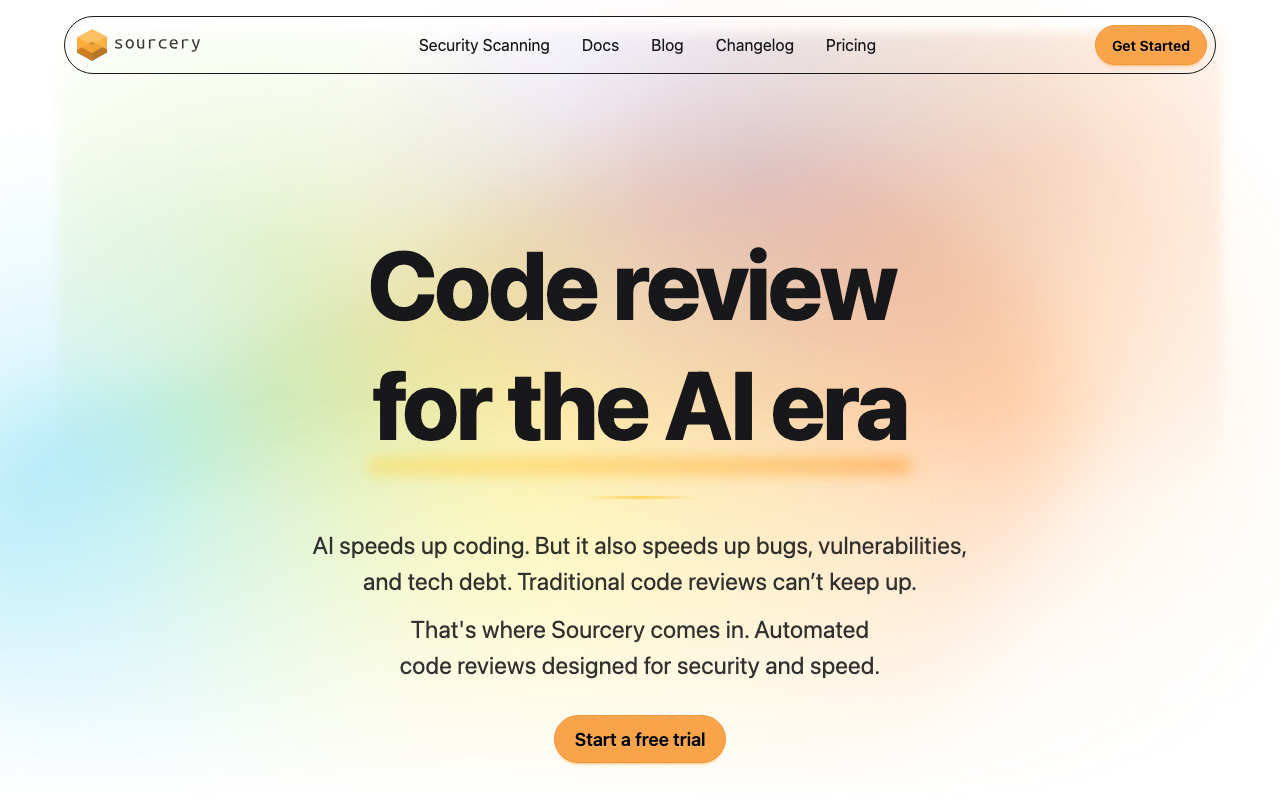
Sourcery and Flake8 are not really competitors - they solve different problems at different stages of the Python development workflow. Framing this as a head-to-head battle misses the point. Flake8 is a fast, free, battle-tested Python linting wrapper that runs in milliseconds in your editor, pre-commit hooks, and CI pipelines, enforcing PEP 8 style and catching common bugs through hundreds of deterministic rules. Sourcery is an AI-powered code review and refactoring platform that integrates with GitHub and GitLab to review pull requests, suggest Pythonic improvements, and provide the kind of contextual, judgment-based feedback that no rule engine can generate.
The clearest way to frame this: Flake8 tells you that a specific line violates a specific rule. Sourcery tells you that a function could be restructured, a loop should be a comprehension, or a class is more complex than it needs to be - and shows you what the improved version looks like.
Use Flake8 (or Ruff) as your foundation. Every Python project should run a linter in the editor and pre-commit hooks. Flake8 is free, universally understood, and covers the baseline style and bug-catching layer that every codebase needs. If you are starting fresh in 2026, consider Ruff instead - it implements Flake8’s rules plus dozens of plugins in a single binary that runs 10-100x faster. Either way, local linting at zero cost is a non-negotiable baseline.
Add Sourcery when linting is not enough. If your code reviews regularly surface comments like “this loop should be a comprehension,” “this function is too complex,” or “this class could be a dataclass” - if the quality issues showing up in PR review go beyond what any rulebook can encode - Sourcery at $10-24/user/month adds an AI reasoning layer that deterministic tools cannot provide.
The typical Python team setup: Flake8 or Ruff in the editor and pre-commit hooks for instant style enforcement, Sourcery on pull requests for deeper AI-driven code quality review. The two tools operate at completely different stages and do not conflict.
At-a-Glance Comparison
| Category | Sourcery | Flake8 |
|---|---|---|
| Type | AI-powered code review and refactoring platform | Python linting wrapper (style + bug checks) |
| Analysis approach | LLM reasoning + rules-based static analysis | Deterministic rule engine (AST-based) |
| Speed | Seconds to minutes (PR analysis) | Milliseconds (fast enough for every keystroke) |
| Language | Python (deepest), JavaScript, TypeScript, 30+ others | Python only |
| Runs where | GitHub/GitLab PR review, VS Code, PyCharm IDE | Editor, CLI, pre-commit hooks, CI pipelines |
| Core checks | 300+ refactoring patterns + AI reasoning | pyflakes, pycodestyle, mccabe complexity (+ 200+ plugins) |
| Formatting | No | No (use Black or Ruff separately) |
| Custom rules | .sourcery.yaml custom guidelines | 200+ plugins + per-file-ignores configuration |
| PR integration | Native - posts inline comments on every PR | No - requires CI setup and external tooling |
| IDE feedback | VS Code and PyCharm extensions (refactoring suggestions) | Editor extension (instant rule-based feedback) |
| Security scanning | Team plan: daily scans for 200+ repos | flake8-bandit plugin (basic patterns) |
| Type checking | No | No (use Mypy or Pyright separately) |
| Open source | No | Yes (MIT license) |
| Pricing | Free (open source); Pro $10/user/month; Team $24/user/month | Completely free |
| Git platforms | GitHub, GitLab (no Bitbucket, no Azure DevOps) | Not tied to any platform - runs anywhere |
| Plugin system | No (built-in rules + custom guidelines) | 200+ community plugins |
| Learning capability | Yes - adapts to team feedback | No - deterministic, consistent output |
What Is Flake8?
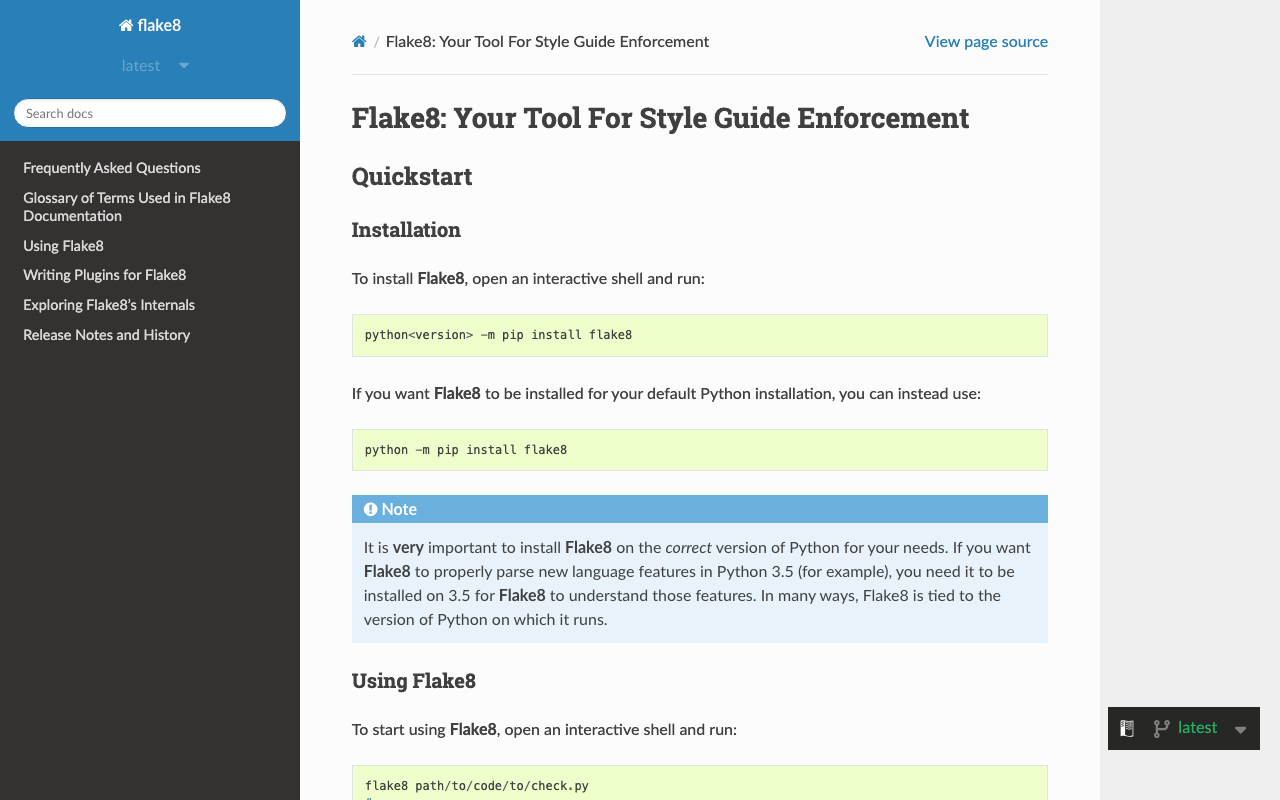
Flake8 is a Python linting wrapper that combines three core tools into a single command: pyflakes (which catches undefined names, unused imports, and other logical errors), pycodestyle (which enforces PEP 8 style conventions including whitespace, line length, and naming), and mccabe (which calculates cyclomatic complexity and flags overly complex functions). By combining these under a unified interface with a consistent output format and exit code behavior, Flake8 became the dominant Python linting standard for most of the 2010s and remains widely used today.
What made Flake8 particularly successful was its extensibility. Over 200 third-party plugins extend Flake8 with additional rules covering security (flake8-bandit), import ordering (flake8-isort), comprehension simplification (flake8-comprehensions), additional bug detection (flake8-bugbear), docstring conventions (flake8-docstrings), pytest idioms (flake8-pytest-style), type annotation enforcement (flake8-annotations), and dozens of other categories. Each plugin adds rules under its own prefix letter, making it easy to selectively enable or disable entire categories in configuration.
Flake8 is configured through a setup.cfg, tox.ini, or .flake8 file. Configuration options include the maximum line length, which errors and warnings to ignore globally or per file, and which directories to exclude from analysis. The per-file-ignores option is particularly useful for suppressing specific rules in test files or auto-generated code without disabling them project-wide.
Flake8 runs in milliseconds on most Python codebases. Even on large projects with hundreds of thousands of lines of Python, a full Flake8 run typically completes in a few seconds. This speed makes it practical to run on every file save in the editor, in pre-commit hooks without slowing down commits, and in CI pipelines without meaningfully extending build times.
Flake8 is completely free and open source under the MIT license. There is no commercial tier, no usage limits, and no enterprise edition. The entire tool and its ecosystem are funded by the Python community through open-source contributions. This zero-cost model is foundational to Flake8’s adoption - there is no pricing decision to make.
It is worth noting the competitive context: Ruff, released in 2022 and built in Rust, has emerged as the most actively growing alternative to Flake8. Ruff implements Flake8’s core rules plus rules from over 50 Flake8 plugins in a single binary that runs 10-100x faster. For new Python projects in 2026, Ruff is increasingly the preferred starting point. However, Flake8 remains relevant for established projects with existing configurations and for teams that rely on Flake8 plugins not yet implemented in Ruff. This comparison covers Flake8 directly, but many observations apply equally to Ruff as its functional successor.
What Is Sourcery?
Sourcery is an AI-powered code review and refactoring platform built specifically for teams that want to improve code quality beyond what deterministic linting can catch. Originally developed as a Python refactoring engine, Sourcery expanded into full AI-powered pull request review while maintaining deep Python expertise as its core differentiator.
Sourcery’s analysis combines two layers: a rules-based static analysis engine that understands language-specific idioms, and an LLM-powered layer that reasons about code context, intent, and improvement opportunities. For Python specifically, the rules-based layer understands idiomatic patterns like list comprehensions, context managers, dataclasses, generator expressions, and dictionary dispatch - and identifies when code could be rewritten to use these patterns more effectively. The AI layer provides contextual judgment about whether a suggestion genuinely improves the code given its purpose and surrounding context.
On GitHub and GitLab, Sourcery installs as an app and automatically reviews every pull request, posting inline comments with specific suggestions. Unlike Flake8’s output, which flags a specific rule violation and cites the rule code, Sourcery’s comments explain the reasoning behind a suggestion and show what the improved code would look like. This is a qualitatively different kind of feedback - less “this violates E501” and more “this block of code would be simpler if you restructured it this way, because…”
Sourcery’s IDE extensions for VS Code and PyCharm provide real-time refactoring suggestions as developers write code. A .sourcery.yaml configuration file in the repository root allows teams to enable or disable specific refactoring rules, set quality thresholds, and define custom coding guidelines that Sourcery enforces during reviews. The learning capability distinguishes Sourcery from static tools: when developers consistently dismiss a category of suggestion, Sourcery adapts its future reviews to reduce that type of comment.
For a complete breakdown of Sourcery’s capabilities, see our full Sourcery review. To understand how it compares against other AI tools, see CodeRabbit vs Sourcery and Sourcery vs Pylint.
Feature-by-Feature Breakdown
Linting and Rule Coverage
Rule coverage is Flake8’s home territory, and the comparison at this level is not close.
Flake8’s bundled rules cover the most critical categories of Python code quality:
- pyflakes rules catch logical errors: undefined names, unused imports, undefined locals, redefined names, and import shadowing. These are not style issues - they are genuine bugs that will fail at runtime.
- pycodestyle rules enforce PEP 8: indentation, whitespace usage, blank line conventions, line length limits, naming conventions, and dozens of other stylistic standards that the Python community has agreed upon over two decades.
- mccabe complexity flags functions whose cyclomatic complexity exceeds a configurable threshold, helping teams identify functions that are difficult to test and maintain.
With plugins, Flake8’s coverage extends dramatically. flake8-bugbear adds rules for common Python design mistakes (mutable default arguments, incorrect use of assert, zip without strict, and others). flake8-comprehensions catches cases where list, dict, or set construction could use comprehension syntax. flake8-bandit ports security rules from the Bandit tool. flake8-isort enforces import ordering. flake8-pytest-style catches common pytest anti-patterns. The plugin ecosystem effectively lets teams assemble a custom linting stack precisely tuned to their language use, framework conventions, and quality goals.
Sourcery’s rules-based analysis covers approximately 300 Python refactoring patterns focused on structural improvement rather than style enforcement. These are higher-level transformations: recognizing when a for-loop building a list should be a list comprehension, when a chain of attribute assignments should use a dataclass, when nested conditions can be simplified with an early return, or when a function duplicates an existing built-in. Sourcery does not check for PEP 8 compliance, import ordering, or the hundreds of style-level rules that Flake8 covers. It operates at a different level.
The division of labor is intentional: Flake8 handles the rule-based, mechanical layer of Python code quality. Sourcery handles the judgment-based, structural layer. Teams that try to use only one end up with a meaningful gap at the other end.
Refactoring Capabilities
Refactoring suggestions are Sourcery’s defining strength and an area where Flake8 has limited - though not zero - coverage.
Sourcery identifies complex refactoring opportunities that require semantic understanding. Representative examples of what Sourcery suggests:
- Converting a
forloop that builds a list into a list comprehension withiffiltering - Simplifying nested
if/elif/elsechains into a single expression or dictionary lookup - Replacing explicit
__init__methods with@dataclasswhere appropriate - Detecting when a method does not use
selfand should be a@staticmethodor module-level function - Identifying when a function’s logic duplicates an existing built-in (
any()instead of a manual loop check,max()with a key function instead of a sort-then-index) - Suggesting context manager usage (
withstatements) where manual resource management appears - Recognizing when generator expressions should replace list comprehensions to avoid materializing large intermediate lists
Flake8, via the flake8-comprehensions plugin, does implement some comprehension-related rules. It catches patterns like list(x.keys()) (should be list(x)), dict([(k, v) for k, v in items]) (should be a dict comprehension), and set([x for x in items]) (should be a set comprehension). The flake8-simplify plugin adds additional simplification rules for if statements and boolean operations.
However, these are simple, single-expression pattern matches. Flake8 cannot reason about whether a multi-line loop would be better as a comprehension, whether a class hierarchy could be flattened, or whether a function is more complex than its purpose requires. Those judgments require understanding code intent, which is what Sourcery’s AI analysis provides.
Speed and Feedback Latency
Speed is Flake8’s most important operational characteristic.
Flake8 runs in milliseconds. On most Python projects, a full flake8 . run completes in under a second. Even on large codebases with hundreds of thousands of lines, Flake8 typically finishes in two to five seconds. This speed means Flake8 can run on every file save in the editor through extensions like VS Code’s Python extension or the flake8 Vim integration, execute in pre-commit hooks without making commits feel slow, and complete in CI without adding meaningful time to build pipelines.
The speed advantage applies even more strongly to Ruff, Flake8’s Rust-based successor, which benchmarks at 10-100x faster than Flake8 on equivalent codebases.
Sourcery runs in seconds to minutes depending on PR size. Sourcery’s analysis involves LLM-powered reasoning that takes non-trivial compute time. For a small PR with five to ten changed files, Sourcery typically posts its review within 60 to 120 seconds. For larger PRs, analysis takes longer. This is entirely acceptable for PR-level review - developers are already waiting for CI checks - but it means Sourcery cannot provide the same real-time feedback loop that Flake8 delivers in the editor.
For daily coding workflow, Flake8’s speed is a genuine quality-of-life advantage. The tight feedback loop - write a line, immediately see whether it violates any rules - is more effective at preventing issues than a feedback loop with even a 30-second delay. Sourcery’s IDE extension provides faster inline suggestions while coding, but even those have latency that Flake8’s pure rule-matching avoids.
Pull Request Integration
Sourcery has native, first-class PR integration. Install the Sourcery GitHub App or connect GitLab, and every pull request automatically receives an AI review with inline comments. The review includes specific line-by-line suggestions, an overall PR summary, and optionally a review guide for human reviewers. Sourcery posts comments directly on the PR diff, so developers see feedback inline alongside the changed code. Interactive commands like @sourcery-ai resolve dismiss all Sourcery comments after addressing them, and @sourcery-ai summary generates a PR summary on demand.
Flake8 has no native PR integration. To surface Flake8 results in pull requests, you configure your CI pipeline to run flake8 and either fail the build on errors (the simplest approach) or add a GitHub Action or tool like reviewdog that annotates the PR diff with Flake8’s output. The --format flag on Flake8 produces output in various formats, and the flake8-github-annotations plugin formats output specifically for GitHub Actions’ annotation system, which causes violations to appear as inline comments on the PR diff.
This works well, but it requires explicit configuration rather than the plug-in-the-app experience that Sourcery provides. For teams that want Flake8 linting results to appear natively in PR annotations without setup overhead, running Flake8 through a platform like DeepSource or Codacy provides the integration layer automatically. Both platforms run Flake8-compatible analysis and surface results as PR comments and quality dashboards.
For a comprehensive view of how Python linting fits into the PR review workflow, see our best code review tools for Python guide.
Code Formatting
Neither Flake8 nor Sourcery is a code formatter.
Flake8 reports formatting violations (inconsistent whitespace, missing blank lines, lines exceeding max-length) but does not automatically fix them. It tells you that a line is too long; it does not shorten the line for you. For automatic formatting, Python teams pair Flake8 with Black (an opinionated formatter) or with Ruff’s built-in formatter (ruff format). Some teams add autopep8 or yapf for lighter-touch automatic fixing of pycodestyle violations specifically.
Sourcery is a code review and refactoring tool, not a formatter. It suggests structural improvements to code but does not handle formatting concerns like line length, whitespace, or indentation style. If you want consistent formatting in a stack that includes Sourcery, you need a separate formatter - Black or Ruff being the standard choices.
The recommended approach for Python teams is to handle formatting through the formatter layer (Black or ruff format), linting through the linting layer (Flake8 or Ruff), and code quality review through the AI layer (Sourcery). Each tool handles what it does best.
Security Scanning
Flake8 handles security through the flake8-bandit plugin, which ports a subset of the Bandit security linter’s rules into Flake8. Common patterns covered include use of assert statements (stripped by Python optimization), subprocess calls with shell=True, dangerous uses of eval() and exec(), hardcoded passwords and bind-all interfaces, insecure hash algorithms (MD5, SHA1), use of XML parsers vulnerable to XXE attacks, and several others. These are deterministic, single-file pattern checks - Flake8 flags specific code constructs that are known security risks. Coverage is reasonable for catching obvious mistakes but limited compared to dedicated SAST tools.
Sourcery’s Team plan ($24/user/month) includes dedicated security scanning beyond what plugin-based linting provides. Sourcery runs daily security scans across up to 200+ repositories, identifies vulnerabilities, and provides fix suggestions. This adds a systematic security scanning workflow - scheduled scans that catch issues in existing code, not just new changes.
For teams with serious security requirements, neither Flake8 nor Sourcery is a substitute for a dedicated SAST tool. See our best SAST tools guide and the Semgrep vs Bandit comparison for where dedicated security tools fit relative to linters.
IDE and Editor Support
Flake8 integrates with virtually every Python-aware editor. VS Code runs Flake8 through the Python extension or the dedicated Flake8 extension, displaying violations as red squiggles in the editor with tooltips showing the rule code and description. PyCharm supports Flake8 through its external tools configuration and through plugins. Vim, Emacs, Sublime Text, Neovim, and most other serious editors have Flake8 integration through plugins or language server protocols. Because Flake8 has been the Python linting standard for over a decade, editor support is essentially universal and requires minimal configuration.
Sourcery’s VS Code and PyCharm extensions provide real-time refactoring suggestions as you write code. As you type, Sourcery’s IDE extension identifies opportunities for improvement and shows them as code actions in the quick-fix menu. The VS Code extension includes a chat interface for asking questions about code, requesting explanations, and getting refactoring suggestions for selected code blocks. The PyCharm extension integrates Sourcery’s suggestions natively into PyCharm’s refactoring workflow.
Many Python developers run both simultaneously without conflict: Flake8 in the editor for instant rule-based feedback (style violations, unused imports, undefined names), and Sourcery in the editor for refactoring suggestions and AI-assisted improvement (structural improvements, idiomatic patterns, complexity reduction).
Configuration and Customization
Flake8 is configured through a setup.cfg, tox.ini, or .flake8 file in the repository root. Configuration options include maximum line length, globally ignored error codes, per-file-ignores (different rules for test files, migrations, or generated code), and plugin-specific settings. The configuration is a code file that lives in the repository, is version-controlled, and is reviewed alongside the code it governs. Any developer can inspect exactly which rules are active and why, with no ambiguity.
The plugin system extends configuration depth significantly. Adding flake8-bugbear enables its additional rules under the B prefix. Adding flake8-bandit enables security rules under S. Each plugin’s rules are individually enable/disable-able, giving teams precise control over exactly which checks run.
Sourcery is configured through a .sourcery.yaml file in the repository root. Teams can enable or disable specific refactoring rules, set quality thresholds, specify the Python version, and define custom coding guidelines. Custom guidelines allow teams to codify organizational conventions - not just coding style but architectural patterns, naming preferences, and project-specific best practices - that Sourcery enforces during reviews. This goes beyond what Flake8’s configuration supports: Flake8 can only apply rules that exist in its rule set or installed plugins, while Sourcery’s custom guidelines add an arbitrary natural-language layer on top of the built-in rules.
Pricing Comparison
Flake8 Pricing
Flake8 is completely free. The CLI, all bundled checks, and the entire plugin ecosystem are open source under MIT, GPL, or BSD licenses depending on the specific tool. There is no paid tier, no enterprise edition, and no usage limits. Zero cost, no decision required.
Sourcery Pricing
| Plan | Price | Key Capabilities |
|---|---|---|
| Free | $0 | Public repos only, AI code reviews, basic refactoring suggestions, GitHub integration |
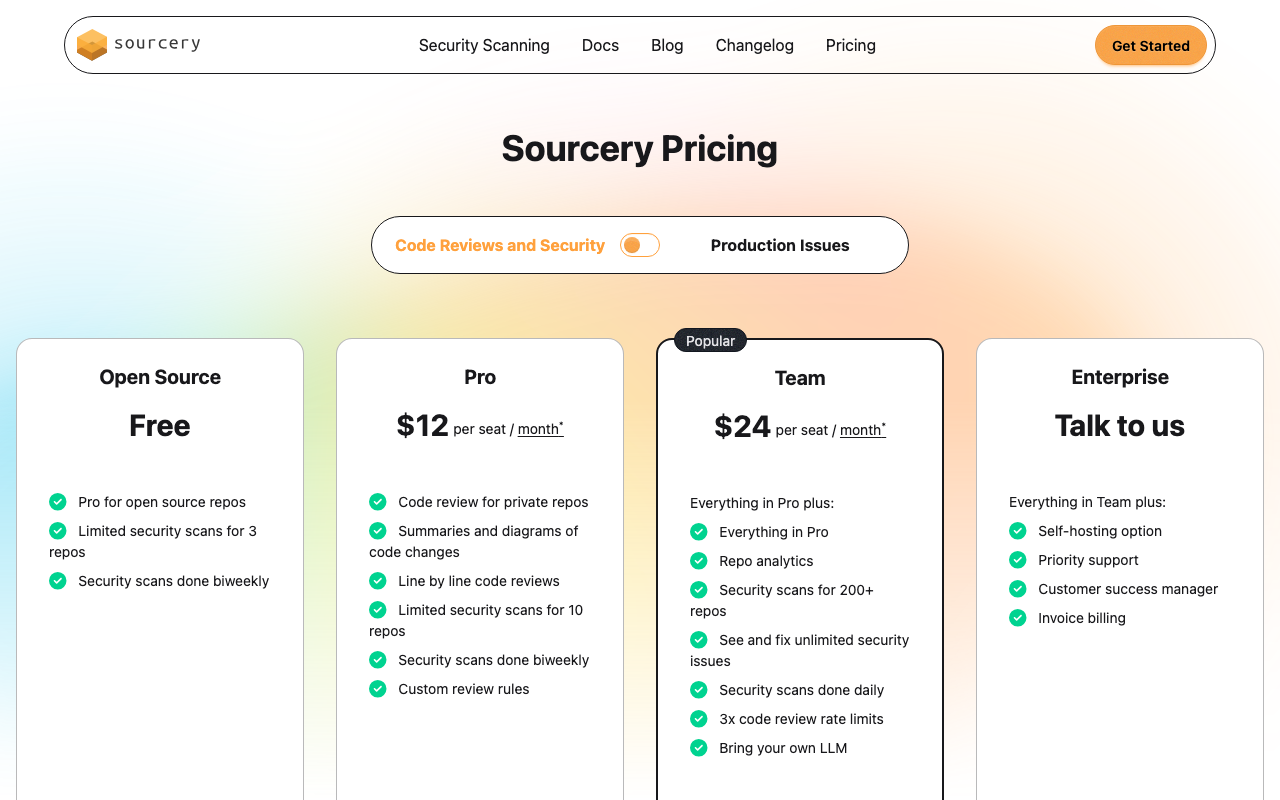
| Pro | $10/user/month | Private repos, advanced AI reviews, custom coding guidelines, GitHub + GitLab (including self-hosted) |
| Team | $24/user/month | Everything in Pro plus repository analytics, security scanning (200+ repos), daily scans, 3x rate limits, bring-your-own-LLM |
| Enterprise | Custom | SSO/SAML, custom AI model tuning, self-hosted deployment, dedicated support, compliance features |
Annual billing reduces prices by 20% across paid plans.
Cost at Scale
| Team Size | Flake8 Cost (Annual) | Sourcery Pro (Annual) | Sourcery Team (Annual) |
|---|---|---|---|
| 1 developer | $0 | $120 | $288 |
| 5 developers | $0 | $600 | $1,440 |
| 10 developers | $0 | $1,200 | $2,880 |
| 25 developers | $0 | $3,000 | $7,200 |
| 50 developers | $0 | $6,000 | $14,400 |
Sourcery’s free tier for open-source projects is genuinely useful. Unlike many commercial tools where the free tier is stripped of meaningful functionality, Sourcery’s free plan on public repositories includes full AI code reviews and refactoring suggestions. Open-source Python projects get Sourcery’s core value without any cost. The free tier restriction applies only to private repositories.
Compared to other AI code review tools, Sourcery’s Pro tier at $10/user/month is one of the most affordable in the category. CodeRabbit charges $24/user/month for its Pro plan, Qodo starts at $30/month flat for up to 30 users, and GitHub Copilot code review ranges from $19-39/user/month. Sourcery Pro undercuts all of them.
For teams wanting a managed platform rather than assembling individual tools, Codacy ($15/user/month) and DeepSource ($24/user/month) both run Flake8-compatible analysis as part of their platform, surface results in PR comments and dashboards, and add quality gate enforcement - providing the integration layer that bare Flake8 requires CI configuration to achieve.
When Flake8 Is Enough
Solo developers and small teams. For a solo developer or a two to three person team, Flake8 in the editor with a good .flake8 configuration provides excellent code quality enforcement at zero cost. With flake8-bugbear, flake8-comprehensions, and flake8-bandit added, a well-configured Flake8 setup catches the vast majority of issues that matter for a small, high-bandwidth team where everyone reviews everything anyway.
Budget-constrained teams. When budget does not permit paying per-seat fees for AI review, a strong Flake8 configuration with a carefully chosen plugin set delivers real value at no cost. Flake8 catches the rule violations that cause the most friction in code review, reducing review time on mechanical issues and freeing reviewers to focus on logic and design.
Projects without a regular PR workflow. Flake8’s value is universal across all workflows - it runs in the editor, in pre-commit hooks, and in CI regardless of how you manage code changes. Sourcery’s primary value is at the PR review stage. Teams that do not use pull requests, or that use very informal review processes, capture much less value from Sourcery than from consistent local linting with Flake8.
When rule-based enforcement is the goal. If the primary quality concern is consistent PEP 8 compliance, no unused imports, no undefined names, and maximum function complexity limits - goals that map cleanly to deterministic rules - Flake8 addresses all of these precisely and without cost.
When to Add Sourcery
Teams investing in code readability and idiomatic Python. If your team has adopted Pythonic idiom as a conscious engineering value - “does it work” matters but “is it good Python” matters too - Sourcery’s refactoring suggestions align directly with that priority. Sourcery catches the opportunities that no rulebook captures: overly complex logic that could be simpler, loops that should be comprehensions, functions that are doing too much. This is the category of feedback that elevates code quality beyond “passes the linter.”
Teams with high PR volume where manual review is a bottleneck. At five or more developers opening multiple PRs per day, the combined review time adds up. Sourcery reduces reviewer burden by catching mechanical quality issues before human reviewers see the code. Reviewers can focus on logic, design, and architecture rather than pointing out refactoring opportunities they have mentioned before in previous reviews.
Growing teams where code quality consistency is drifting. As teams grow, individual developers write Python in increasingly different styles. Without automated enforcement of higher-level quality standards, even a well-configured Flake8 setup homogenizes style but does not address structural consistency. Sourcery’s custom coding guidelines and refactoring suggestions provide a higher-level consistency layer that captures team-specific conventions that Flake8 rules cannot encode.
Open-source maintainers reviewing external contributions. Sourcery’s free tier on public repositories is a meaningful benefit for maintainers who receive PRs from contributors with varying Python expertise. Sourcery catches refactoring opportunities in contributions before maintainers spend review time on them, and the AI-generated PR summary helps maintainers understand a contribution at a glance. Given that this use case costs nothing, enabling Sourcery on an active open-source Python project is a straightforward decision.
The Combined Stack
For the majority of Python development teams in 2026, the right answer is using both Flake8 (or Ruff) and Sourcery in a layered stack:
- Flake8 or Ruff in the editor for instant linting and formatting feedback as code is written - catches undefined names, import issues, PEP 8 violations, and hundreds of rule-based patterns in real time.
- Flake8 or Ruff in pre-commit hooks for enforcing lint standards before every commit - prevents broken linting from reaching the repository.
- Flake8 or Ruff in CI for the same standards across all branches - a clean CI check confirms no lint violations exist.
- Sourcery on PRs (GitHub or GitLab integration) for AI-powered refactoring suggestions and code quality review at the point where changes are reviewed.
This stack gives you the fastest possible linting feedback (Flake8/Ruff in the editor), automatic enforcement at commit time (pre-commit), CI validation, and deeper code quality analysis (Sourcery on PRs). Each layer catches a different category of issue, and none of them are redundant with each other.
For a broader view of how these tools fit into the Python ecosystem, see our best code review tools for Python and best code quality tools roundups.
Alternatives to Consider
Ruff is the most important alternative to Flake8 to know about in 2026. Ruff implements Flake8’s core rules plus rules from over 50 Flake8 plugins in a single Rust-based binary that runs 10-100x faster. For teams currently using Flake8 plus multiple plugins, switching to Ruff reduces the number of tools from five to seven down to one. Ruff also includes a code formatter compatible with Black. If you are evaluating your Python linting setup in 2026, Ruff deserves a direct comparison with Flake8. Our Sourcery vs Ruff comparison covers how Sourcery fits alongside Ruff specifically.
Pylint is the most comprehensive Python-only linter. It performs inter-file analysis, detects issues related to inheritance hierarchies, identifies incorrect attribute access, and runs a broader set of checks than Flake8 across some categories. Pylint is significantly slower than Flake8 and dramatically slower than Ruff, but it remains the most thorough option for teams that want deep rule-based analysis. Many teams use Ruff or Flake8 as the fast daily linter and run Pylint separately in CI for deeper checks. See our Sourcery vs Pylint comparison for a detailed breakdown.
CodeRabbit ($24/user/month Pro) is the most capable AI code review tool for teams needing cross-file context awareness, multi-language coverage, and support for all four major git platforms (GitHub, GitLab, Bitbucket, Azure DevOps). In independent benchmarks, CodeRabbit produces more actionable catches per PR than Sourcery. The trade-off is that CodeRabbit costs 2.4x more than Sourcery Pro. See our CodeRabbit vs Sourcery comparison for a detailed breakdown.
DeepSource ($24/user/month Team plan) is a code quality platform that integrates with Python analysis engines (including Flake8-compatible rules) and surfaces results as inline PR comments and quality dashboards. DeepSource’s Autofix AI automatically generates fixes for detected issues - not just suggestions, but ready-to-commit code changes. For teams that want the managed platform experience without assembling individual tools, DeepSource provides the integration layer that bare Flake8 requires manual CI setup to achieve.
Semgrep is worth mentioning for teams with security requirements. Semgrep is a static analysis tool that supports custom rule writing in a pattern-matching DSL, with particularly strong security rule libraries for Python. Unlike Flake8’s security plugin (flake8-bandit), Semgrep performs cross-file data flow analysis - it can track user input from an HTTP handler through multiple functions to a database call and flag the injection vulnerability at the sink. For security-critical Python applications, Semgrep’s depth exceeds what Flake8 plugins can provide.
Mypy and Pyright are type checkers - not linters - but they belong in any Python code quality discussion. Neither Flake8 nor Sourcery performs type checking. Mypy is the most widely used Python type checker; Pyright powers VS Code’s Pylance extension and is faster for most projects. Both are free. A complete Python quality stack adds one of these regardless of which linter and AI reviewer you choose. See our best SAST tools overview for context on where type checkers fit in the broader tooling landscape.
Final Recommendation
Sourcery vs Flake8 is not a choice most Python developers should face as an either/or decision. The tools occupy complementary, non-overlapping positions in the Python code quality stack, and the right answer for most teams is using both.
Flake8 belongs in every Python project. The argument for not running any linter is essentially the argument for accepting preventable bugs, inconsistent style, and review time spent on mechanical issues - which does not hold up. Flake8 is free, universally supported, and covers the baseline style and bug-catching layer that every codebase needs. Set up Flake8 with a sensible plugin selection (at minimum: flake8-bugbear, flake8-comprehensions, and flake8-isort or the equivalent), add it to pre-commit hooks and CI, and enable your editor’s Flake8 extension. If starting fresh, seriously evaluate Ruff as the single-tool replacement for Flake8 plus its plugins.
Sourcery becomes the right investment when your team’s quality pain points go beyond style. If your code reviews regularly surface structural improvement comments - “this should be a comprehension,” “this function is doing too much,” “this could be a dataclass” - if you are spending review time on quality improvements that no rulebook can automate, then Sourcery at $10/user/month converts that review time into automated AI suggestions. For Python-heavy teams of five or more, if Sourcery saves even two hours of senior developer review time per month across the team, the math is straightforward.
For solo developers and open-source maintainers: Use Flake8 (or Ruff) as your linting foundation at zero cost. Enable Sourcery’s free tier on public repositories for AI-powered refactoring suggestions, also at zero cost. This combination costs nothing and covers both layers.
For small Python teams (3-8 developers): Use Flake8 or Ruff as your linting and formatting standard, evaluate Sourcery Pro at $10/user/month, and add Mypy or Pyright for type checking. This stack covers style enforcement (Flake8/Ruff), type safety (Mypy/Pyright), and code quality improvement (Sourcery) at minimal cost.
For growing Python teams (10-50 developers): The Flake8/Ruff + Mypy + Sourcery stack applies, but consider whether a managed platform like Codacy ($15/user/month), DeepSource ($24/user/month), or CodeRabbit ($24/user/month) provides better organizational value than assembling individual tools. Platforms provide unified dashboards, quality gate enforcement, security scanning, and visibility into quality trends across multiple repositories that individual CLI tools do not offer.
For enterprise Python teams: Flake8 or Ruff and type checking as the local developer toolchain. Sourcery Team or Enterprise ($24/user/month or custom) for AI-powered PR review. Consider pairing with a dedicated SAST tool for compliance-grade security analysis.
The bottom line is clear. Flake8 is the proven Python linting standard - free, fast, and comprehensive through its plugin ecosystem. Every Python project should use it, or its successor Ruff. Sourcery is the strongest AI-powered refactoring reviewer for Python teams - it catches what rules miss, teaches better Python idioms, and reduces review burden on human engineers. Add Sourcery when the investment is justified by your team’s quality goals and the value of feedback that deterministic linting cannot provide. The two tools are better together than either one alone.
Further Reading
- Best Python Code Quality Tools: Sourcery vs Black vs Flake8 vs Ruff
- Qodo vs Sourcery: AI Code Review Approaches Compared (2026)
- Sourcery vs Black: Code Refactoring vs Code Formatting (2026)
- Sourcery vs Codacy: AI Code Review Tools Compared (2026)
- Sourcery vs DeepSource: AI Code Review Tools Compared (2026)
 Gitar
GitarComments are not enough
Gitar applies the fix, validates it in CI, and clears the queue.
See it on your repo Read our independent Gitar reviewFrequently Asked Questions
What is the main difference between Sourcery and Flake8?
Sourcery is an AI-powered code review and refactoring platform that reviews pull requests on GitHub and GitLab and provides contextual, judgment-based feedback. Flake8 is a free, open-source Python linting wrapper that runs in milliseconds in your editor, pre-commit hooks, and CI pipeline, enforcing PEP 8 style and catching common bugs through deterministic rules. Flake8 tells you that your code violates a specific rule. Sourcery tells you that your code could be restructured, simplified, or made more Pythonic - and explains why, with a concrete improved version. Most Python teams use Flake8 (or its faster successor Ruff) as their linting foundation and evaluate Sourcery as an additional AI review layer for pull requests.
Is Flake8 still relevant in 2026?
Flake8 remains widely used in 2026, particularly in projects that were set up several years ago and have not migrated to Ruff. Flake8 itself is a mature, stable tool with a rich plugin ecosystem spanning over 200 plugins. However, for new projects started in 2026, Ruff is increasingly the default choice because it implements rules from Flake8 and over 50 of its plugins in a single Rust-based binary that runs 10 to 100 times faster. Flake8 is not obsolete - its plugin ecosystem and established configuration format mean many teams will continue using it for years - but its adoption in greenfield projects is declining in favor of Ruff. If your team is evaluating a linting tool from scratch today, Ruff deserves consideration alongside or instead of Flake8.
Does Sourcery replace Flake8?
No - Sourcery and Flake8 are complementary tools that operate at different layers of the Python development workflow. Flake8 handles fast, deterministic linting: enforcing PEP 8 style, catching undefined names and unused imports, checking line length limits, and applying hundreds of rule-based checks in milliseconds. Sourcery handles AI-assisted analysis: identifying refactoring opportunities, suggesting idiomatic Python patterns, reviewing pull request context, and providing feedback that rule-based linters cannot generate. Running Flake8 in your editor and pre-commit hooks alongside Sourcery on pull requests gives you both instant linting feedback and deeper code quality review. The tools address different categories of problems at different workflow stages.
Is Flake8 free?
Yes, Flake8 is completely free and open source under the MIT license. There is no paid tier, no commercial restrictions, and no usage limits. Flake8 itself, all of its bundled checks (pyflakes, pycodestyle, mccabe complexity), and the vast ecosystem of third-party Flake8 plugins are all freely available on PyPI. This zero-cost model makes Flake8 accessible to teams of any size, which is one reason it became the dominant Python linting standard for over a decade.
What does Sourcery do that Flake8 cannot?
Sourcery provides several capabilities that Flake8 fundamentally cannot match because they require AI reasoning rather than deterministic rule matching. These include: identifying when a multi-step loop can be simplified to a list comprehension or generator expression with filtering, detecting when a chain of if/elif statements would be cleaner as a dictionary dispatch or match statement, suggesting when a class with only an __init__ method and simple attributes would benefit from conversion to a dataclass, generating PR summaries that explain what a pull request does in plain language, providing contextual review comments that consider the intent and surrounding code rather than just the changed line, and adapting to team preferences over time by learning from accepted and dismissed suggestions. Flake8 can only enforce predefined, deterministic rules about specific code patterns - it cannot reason about code intent or suggest structural improvements.
How does Flake8 compare to Ruff?
Ruff is the modern successor to Flake8 for most purposes. Ruff is written in Rust and runs 10 to 100 times faster than Flake8 on equivalent codebases. Ruff implements rules from Flake8's core checks and over 50 Flake8 plugins (including pyflakes, pycodestyle, flake8-bugbear, flake8-isort, flake8-comprehensions, flake8-bandit, and many more) in a single binary. For teams currently using Flake8 plus multiple plugins, switching to Ruff typically replaces three to seven separate tools with one. Flake8's advantage over Ruff is its larger plugin ecosystem - some niche Flake8 plugins have not yet been reimplemented in Ruff. But for the vast majority of Python teams, Ruff covers the same ground faster with less toolchain complexity. If you are evaluating Flake8 alternatives in 2026, Ruff is the strongest candidate.
Can Flake8 review pull requests automatically?
Flake8 has no native pull request integration. To surface Flake8 results in pull requests, you need to configure your CI pipeline to run flake8 and either fail the build on violations or add a GitHub Action or similar tool that annotates the PR diff with Flake8 findings. Tools like reviewdog can take Flake8 output and post it as inline PR comments. This works well but requires manual CI configuration. Sourcery, by contrast, has first-class native PR integration - install the GitHub App or connect GitLab, and Sourcery automatically reviews every pull request and posts inline comments without any additional CI setup.
What is Flake8's plugin ecosystem like?
Flake8 has one of the largest plugin ecosystems among Python linting tools, with over 200 plugins available on PyPI. Popular plugins include flake8-bugbear (additional bug detection and design issue rules), flake8-isort (import ordering), flake8-comprehensions (list and dict comprehension simplification), flake8-bandit (security checks from Bandit), flake8-docstrings (docstring presence and style), flake8-typing-imports (type annotation imports), flake8-simplify (code simplification), and flake8-pytest-style (pytest best practices). Each plugin adds its own prefix letter to violation codes, making it easy to identify which plugin flagged an issue. The plugin ecosystem is Flake8's strongest competitive advantage - it allows teams to assemble a highly customized linting stack tailored to their specific language features, frameworks, and conventions.
Does Sourcery work with pre-commit hooks?
Sourcery has a CLI that can be run in pre-commit hooks, giving developers local feedback before commits reach GitHub or GitLab. However, Sourcery's primary value is in its GitHub and GitLab PR integration, where its AI analysis produces the most contextual and useful feedback. The CLI mode provides a subset of Sourcery's capabilities compared to the full PR review experience. Flake8, by contrast, was built for exactly this kind of local CLI use and has excellent pre-commit hook support through the pre-commit framework. For fast, reliable pre-commit linting, Flake8 (or Ruff) is the right tool. Sourcery's CLI adds a complementary layer for refactoring suggestions at the local level.
What is Sourcery's pricing?
Sourcery has four pricing tiers. The Free plan covers all public (open-source) repositories with AI code reviews, basic refactoring suggestions, and GitHub integration. The Pro plan at $10/user/month unlocks private repository support, advanced AI reviews, custom coding guidelines, and GitHub plus GitLab integration including self-hosted instances. The Team plan at $24/user/month adds repository analytics, security scanning for 200+ repositories, unlimited security issue fixes, daily security scans, 3x code review rate limits, and the option to bring your own LLM. The Enterprise plan has custom pricing and adds SSO/SAML, custom AI model tuning, self-hosted deployment, a dedicated account manager, and compliance features.
Should I use Flake8 or Ruff for a new Python project in 2026?
For a new Python project in 2026, Ruff is the stronger default choice. It consolidates Flake8, isort, Black, and dozens of Flake8 plugins into a single binary, runs dramatically faster, and is actively developed by Astral (the team behind the uv package manager). If you were previously combining Flake8 + isort + Black + several plugins, Ruff replaces all of them with a single tool and a single configuration file. The main reason to start a new project with Flake8 in 2026 is if you need a specific Flake8 plugin that Ruff has not yet implemented - that list of gaps is shrinking rapidly, but some niche plugins remain Flake8-only. For most new projects, start with Ruff.
What is the best Python code quality stack combining Flake8 or Ruff with Sourcery?
The recommended Python code quality stack for most teams in 2026 is: Ruff for linting and formatting in the editor and pre-commit hooks (effectively replacing Flake8, isort, and Black), Mypy or Pyright for static type checking, Sourcery for AI-powered PR review on GitHub or GitLab. For teams using Flake8 rather than Ruff, the same layered approach applies - Flake8 for local linting, Sourcery for PR review. Each layer catches a different category of problem: Flake8 or Ruff catches rule violations deterministically, Mypy or Pyright catches type errors, and Sourcery catches structural quality issues and refactoring opportunities that neither linting nor type checking can detect. Adding Bandit for security scanning (or using Ruff's flake8-bandit rules) completes a solid baseline stack.
Is Sourcery good for open-source Python projects?
Yes - Sourcery's free tier is genuinely valuable for open-source Python projects. Public repositories get full AI code reviews, basic refactoring suggestions, and GitHub integration at zero cost. For open-source maintainers who receive pull requests from contributors with varying Python expertise, Sourcery's automatic PR review catches refactoring opportunities before maintainers spend their own time on them. The AI-generated PR summary also helps maintainers understand what a contribution does at a glance. Flake8 similarly has excellent support for open-source projects - it is free, well-documented, and trivial to include in CI through GitHub Actions. Most serious open-source Python projects use Flake8 or Ruff as their linting standard and increasingly add Sourcery for AI-assisted PR review.
Explore More
Tool Reviews
 Sourcery Review
Free Newsletter
Stay ahead with AI dev tools
Weekly insights on AI code review, static analysis, and developer productivity. No spam, unsubscribe anytime.
Join developers getting weekly AI tool insights.
Related Articles
CodeRabbit vs Qodo: AI Code Review Tools Compared (2026)
CodeRabbit vs Qodo - we compare pricing, features, test generation, and review quality so you can pick the right AI reviewer for your team.
February 21, 2026
comparisonWhat Happened to CodiumAI? The Rebrand to Qodo Explained
CodiumAI rebranded to Qodo in 2024. Here's what changed, what stayed the same, and what it means for existing users and new buyers.
February 22, 2026
comparisonGitar vs Qodo: Workflow Automation or Test Generation?
Gitar vs Qodo compared on review architecture, test generation, self-hosting, migrations, CI ownership, and pricing. Which AI code quality platform fits your team.
August 12, 2026