Sourcery vs mypy: Type Checking vs AI Refactoring (2026)
Sourcery vs mypy - AI-powered code review vs Python's static type checker. Purposes, strengths, integration, pricing, and how to use both together.
Published:
Last Updated:
Quick Verdict
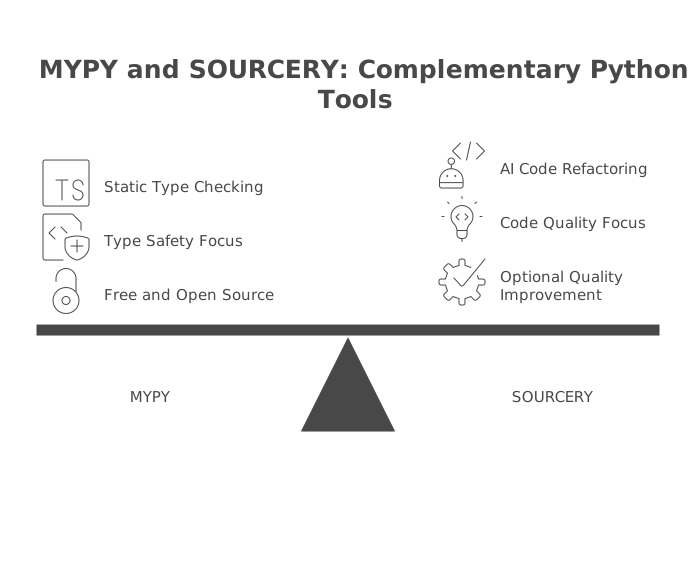
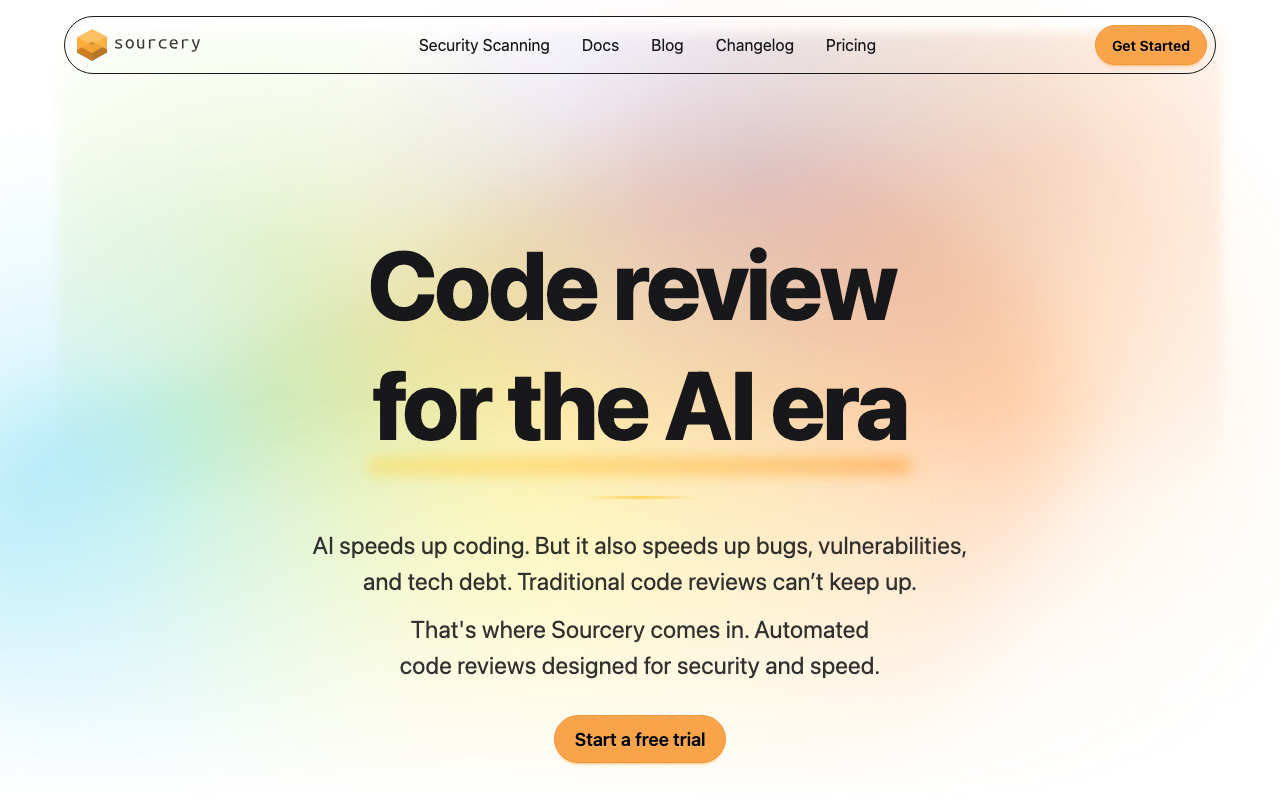
Sourcery and mypy are not competing tools - they occupy entirely different positions in the Python code quality stack. mypy is a free, open-source static type checker that verifies Python type annotations at compile time, catching type errors before they become runtime exceptions. Sourcery is a paid, AI-powered code review and refactoring platform that integrates with GitHub and GitLab to review pull requests, suggest idiomatic Python improvements, and provide contextual feedback that no static analysis tool can generate.
The comparison matters because Python teams frequently audit their quality toolchain and ask whether investing in AI code review makes sense when they already have type checking. The answer requires understanding that type correctness and code quality are orthogonal dimensions - fixing type errors does not improve code structure, and refactoring suggestions do not verify type annotations. Both tools address real gaps, and the most effective Python teams use both.
Choose mypy alone if: you are adding type checking to a Python codebase for the first time, you want zero-cost enforcement of type annotations in your CI pipeline, or your primary concern is runtime type errors and refactoring confidence rather than code review quality.
Choose Sourcery (alongside mypy) if: you want AI-powered pull request review that catches logic issues, idiomatic violations, and architectural concerns beyond what type checking covers, you value refactoring suggestions that make Python code more maintainable, and your budget allows $10/user/month for private repositories.
The most effective Python team setup: Run mypy in your editor and CI pipeline for type correctness. Run Ruff for fast linting. Use Sourcery as your PR review assistant for contextual AI feedback, refactoring suggestions, and PR summaries. Each tool operates at a different layer and they do not overlap.
At-a-Glance Comparison
| Category | Sourcery | mypy |
|---|---|---|
| Type | AI-powered code review and refactoring platform | Static type checker for Python |
| Primary purpose | PR review, refactoring, code quality | Type annotation verification, type safety |
| How it runs | GitHub/GitLab PR integration, IDE extension | CLI, editor extension, pre-commit hook, CI |
| Analysis approach | LLM reasoning + rules-based refactoring engine | Type inference and annotation checking |
| Real-time editor feedback | VS Code and PyCharm (refactoring suggestions) | VS Code Mypy extension, Pylance, PyCharm |
| Pull request integration | Yes - automatic inline comments on every PR | No native PR integration (CI pass/fail only) |
| Type checking | No - AI does not perform type inference | Yes - complete type verification with annotations |
| Refactoring suggestions | Core feature - idiomatic Python transformations | No refactoring suggestions |
| Custom rules | .sourcery.yaml configuration (YAML-based) | mypy plugins (Python API) |
| Framework support | Django/Flask understood contextually via AI | django-stubs, mypy-django plugin, sqlalchemy2-stubs |
| Security scanning | Team plan ($24/user/month) | None |
| Git platform support | GitHub, GitLab (including self-hosted) | Not tied to any platform - runs anywhere |
| Free tier | Full features for open-source (public) repos | Completely free for all projects, always |
| Paid pricing | Pro $10/user/month, Team $24/user/month | Free (no paid tier exists) |
| Open source | No (proprietary SaaS) | Yes (MIT license) |
| False positive rate | Lower - AI skips non-actionable issues in context | Depends on configuration; very low when stubs are installed |
| Speed | Async PR analysis (minutes after PR open) | Seconds to minutes depending on codebase size |
| Strict mode available | N/A | Yes - —strict flag requires full annotation coverage |
What Is mypy?
mypy is the reference static type checker for Python, created by Jukka Lehtosalo and now maintained as part of the Python typing ecosystem. It reads Python source code along with type annotations (introduced in PEP 484 and refined through PEP 526, 544, 585, 604, and later standards) and verifies that values flow consistently with their declared types across the entire program. A function annotated as def greet(name: str) -> str that is called with an integer argument will produce a mypy error before your code ever runs.
The core value proposition of mypy is catching type errors at development time rather than runtime. Python is a dynamically typed language, which means the interpreter does not check types until the relevant code actually executes. A type error in an error-handling code path, a rarely-triggered branch, or an edge case may escape testing entirely and surface in production. mypy’s analysis catches these errors statically, regardless of whether a test exercises the relevant path.
mypy’s checking operates at multiple levels of strictness. In its default mode, mypy checks the files you point it at and flags obvious inconsistencies. With --disallow-untyped-defs, it requires all function signatures to be annotated. With --strict, it enables the full set of strictness options - requiring annotations everywhere, disabling dynamic fallbacks, and treating all implicit Any types as errors. Teams typically adopt mypy incrementally: start with default mode on new code, add --ignore-missing-imports to silence stubs that are not yet installed, and progressively tighten the configuration as the codebase gains annotation coverage.
Type stubs are central to mypy’s practical usefulness. Many popular libraries - Django, SQLAlchemy, NumPy, Pandas, Requests, and dozens of others - either include inline type annotations (PEP 561 compatible packages) or have community-maintained stubs packages (in the typeshed repository or as separate packages like django-stubs, sqlalchemy2-stubs, pandas-stubs). Without stubs, mypy treats third-party library calls as returning Any, which reduces type checking coverage. With stubs installed, mypy can verify your usage of those libraries’ APIs against their type signatures.
mypy runs entirely locally with no cloud component, no account requirement, and no subscription. The VS Code Mypy extension from Microsoft runs mypy in the background and underlines type errors as you type. PyCharm has its own type checking engine (compatible with PEP 484 annotations) and supports mypy through the Mypy plugin. In CI, mypy runs as a standard CLI command and returns a non-zero exit code when type errors are found, making it straightforward to fail a CI pipeline on type violations.
For a related look at Python quality tools, our best code review tools for Python post covers the broader ecosystem.
What Is Sourcery?
Sourcery is an AI-powered code review and refactoring platform that began as a Python-first refactoring engine and has expanded to support over 30 programming languages. The core premise is that static analysis tools - including type checkers like mypy - catch specific categories of problems, but they cannot actively make your code better. Sourcery’s goal is to improve code quality by combining a rules-based refactoring engine with LLM-powered contextual understanding.
Sourcery operates primarily through pull request integration. Install the Sourcery GitHub App or connect your GitLab instance, and Sourcery automatically reviews every pull request on connected repositories. It posts inline comments with specific, actionable feedback - flagging code smells, idiom violations, and logic issues - and attaches suggested fixes showing exactly what improved code would look like.
For Python specifically, Sourcery’s refactoring analysis goes significantly deeper than generic AI review tools. Its rules-based engine recognizes concrete transformation opportunities: converting verbose for-loops into list comprehensions, replacing manual resource management with context managers, simplifying nested conditionals with early returns and guard clauses, using f-strings instead of .format() or concatenation, applying @dataclass instead of boilerplate __init__ methods, and detecting Django and Flask anti-patterns. These suggestions are not LLM guesses - they are based on deterministic pattern matching against a validated library of Python transformations.
The LLM layer handles what pattern matching cannot: logic errors visible in the full diff, architectural concerns, missing edge case handling, misleading variable names, and the category of issues that only make sense in the context of an entire pull request. Sourcery considers the complete diff - all changed files together - when generating feedback, not files in isolation.
Sourcery also generates PR summaries explaining changes in plain language, creates review guides for large diffs, and supports interactive commands: @sourcery-ai summary on demand, @sourcery-ai guide for a review guide, @sourcery-ai resolve to resolve all comments, and @sourcery-ai dismiss to dismiss pending reviews.
The VS Code and PyCharm extensions provide real-time refactoring suggestions as you write code, with a chat interface for on-demand questions and explanations. Configuration is managed through a .sourcery.yaml file version-controlled alongside the code.
For a detailed breakdown, see our Sourcery review and the Sourcery vs Pylint comparison for context on how Sourcery fits the Python linting landscape.
Feature-by-Feature Breakdown
Type Checking vs Code Quality Analysis
The most important structural difference between these two tools is what they analyze and what they produce.
mypy performs type inference and annotation verification. When you write def process(items: list[str]) -> int, mypy tracks every call site, verifies that the caller passes a list of strings, and confirms that the return value is used as an integer. It traces type information through function calls, class hierarchies, generic type parameters, and protocol implementations. The output is precise: a specific file, line number, and explanation of why the types are inconsistent. mypy errors are facts - the code is provably inconsistent with its declared types.
Sourcery performs code quality and refactoring analysis. It asks: is this code idiomatic? Is this logic clear? Does this pattern have a cleaner alternative? Does this diff introduce subtle bugs? Sourcery’s output is context-dependent suggestions, not violations of a formal rule. A Sourcery comment might say “this loop could be a comprehension for cleaner code” or “this function handles too many concerns - consider splitting the validation logic.” These suggestions require judgment - they are improvement opportunities, not correctness violations.
This distinction has practical implications. mypy errors must be fixed - if your CI runs mypy --strict, a type error blocks the build and the code cannot merge until the error is resolved. Sourcery suggestions are optional - developers can dismiss them, and Sourcery learns from dismissals to reduce similar noise in future reviews. This reflects the nature of the problems each tool addresses. Type correctness is binary: either the types are consistent or they are not. Code quality is a spectrum, and what constitutes an improvement depends on team preferences, context, and priority.
Teams should configure both tools with clear policies: mypy runs as a hard gate (zero type errors allowed) while Sourcery suggestions are taken seriously but not mechanically applied.
Python Ecosystem Integration
mypy’s ecosystem integration is deep and mature. The typeshed repository contains type stubs for the entire Python standard library plus hundreds of popular packages. The stub package ecosystem covers essentially every major Python library - django-stubs for Django, sqlalchemy2-stubs for SQLAlchemy, pandas-stubs for Pandas, boto3-stubs for AWS SDK, mypy-boto3-builder for generating boto3-specific stubs, types-requests for the Requests library, and many more. The py.typed marker (PEP 561) tells mypy that a package ships its own inline type annotations, and an increasing proportion of new Python packages include these annotations by default.
For Django specifically, the mypy-django plugin handles the dynamic attribute injection that Django’s ORM uses - without it, mypy produces false positives on model field access. With django-stubs and the plugin, mypy can verify ORM queries, validate form field types, check view function signatures against URL patterns, and catch common Django type mistakes before they reach production.
Sourcery’s ecosystem integration is primarily through git platforms. The GitHub App and GitLab integration are the primary integration points. For framework-specific understanding, Sourcery relies on its AI model’s knowledge of Django, Flask, FastAPI, SQLAlchemy, and other popular Python frameworks rather than formal type stubs. This means Sourcery can provide contextual advice about Django ORM usage patterns without requiring plugin configuration, but it also means its framework-specific analysis is less precise than mypy’s type-driven approach.
Both tools have VS Code and PyCharm extensions, but they serve different purposes. mypy’s extensions surface type errors as you type. Sourcery’s extensions surface refactoring suggestions and provide an AI chat interface. Running both simultaneously gives you comprehensive in-editor feedback: red underlines from mypy for type errors, code action suggestions from Sourcery for quality improvements.
CI/CD Integration
mypy in CI is a standard pattern with well-established tooling. A typical GitHub Actions workflow step is three lines: install mypy plus any stub packages, then run mypy src/ --strict. The exit code reflects pass/fail, and mypy’s output is human-readable. For performance, the dmypy daemon caches analysis results between runs, and the .mypy_cache directory can be stored as a CI cache artifact to speed up subsequent runs dramatically on large codebases.
Many teams use the pre-commit framework with mypy’s official hook to block commits that introduce type errors. This catches errors at the earliest possible stage - before they enter the repository at all.
Sourcery’s CI integration is less central to its value proposition. Sourcery’s primary delivery mechanism is the PR review comment, not a CI pass/fail gate. The Sourcery GitHub App runs automatically when a PR is opened, posting inline comments without requiring any CI configuration. Some teams configure Sourcery’s quality gate to block PR merging if Sourcery’s review score drops below a threshold, but this is optional - most teams use Sourcery’s feedback as advisory rather than mandatory.
For teams asking which tool belongs in CI, the answer is both - but differently. mypy belongs in CI as a hard gate with a non-zero exit code failing the build on type errors. Sourcery belongs as an automated reviewer that comments on PRs, with its suggestions taken seriously but not enforced as a merge prerequisite.
Refactoring and Code Improvement
mypy does not suggest refactoring. It tells you what is wrong (the types are inconsistent), not how to restructure code for clarity or maintainability. Resolving a mypy error might require adding an annotation, adding a runtime guard, or restructuring a function - but mypy does not tell you which approach is best. It is purely diagnostic.
Sourcery’s refactoring suggestions are its core differentiator. For Python code, Sourcery has one of the richest sets of Pythonic transformation patterns available in any automated tool. It recognizes when:
- A
forloop that builds a list could be a list comprehension - A manual
try/finallyfor resource cleanup should usewithand a context manager - A series of
if/elifbranches dispatching on a string key would be cleaner as a dictionary - A function using only
selfto read attributes and call other methods without modifying state should be a@staticmethodor standalone function - An
__init__method doing only attribute assignment should use@dataclass - A nested conditional would be cleaner with an early return (guard clause) pattern
- A Django queryset is making unnecessary round-trips that could be combined with
select_relatedorprefetch_related
These suggestions require understanding Python idioms at a level that mypy, Pylint, and other static tools do not attempt. An experienced Python engineer providing these suggestions in a code review would be offering genuine value. Sourcery automates that value across every pull request.
For teams that want both type safety and code quality improvement, the two tools are strictly additive - mypy’s type checking does not reduce the value of Sourcery’s refactoring suggestions, and Sourcery’s refactoring suggestions do not reduce the value of mypy’s type checking.
Configuration and Customization
mypy’s configuration is extensive and well-documented. The mypy.ini section or [tool.mypy] in pyproject.toml controls strictness levels for each module independently, plugin loading, ignore patterns, stub search paths, and dozens of type-checking behaviors. This per-module configuration is powerful for incremental adoption: set strict mode for new modules while allowing ignore_errors = True on legacy modules that have not been annotated yet.
Writing mypy plugins requires implementing a plugin API in Python. mypy plugins can intercept type inference for specific function calls, class definitions, or decorators, making it possible to teach mypy about custom metaclasses, descriptor protocols, or DSL-style APIs that the standard type system cannot express.
Sourcery’s configuration is simpler but more focused on team conventions. The .sourcery.yaml file defines custom coding guidelines - naming conventions, patterns to avoid, complexity thresholds, and project-specific rules in a YAML format. This is significantly more accessible than writing mypy plugins, but provides less programmatic power. You cannot write arbitrary AST analysis as a Sourcery custom rule. For standard code quality convention enforcement, Sourcery’s configuration is sufficient and far easier to maintain than custom plugins.
Security Analysis
mypy has no security analysis capability. It does not perform taint tracking, does not know about dangerous API patterns, and does not flag security vulnerabilities. mypy’s sole concern is type correctness. A SQL injection vulnerability where user input flows to a raw SQL call is not a type error and mypy will not catch it.
Sourcery includes security scanning on its Team plan ($24/user/month). This covers 200+ repositories with daily scans and provides fix suggestions for identified vulnerabilities. Sourcery’s security scanning goes beyond mypy’s zero coverage, but for serious Python security requirements, dedicated tools like Semgrep or Bandit are more thorough.
For Python teams with security requirements, the practical recommendation is to add Bandit (free, runs in seconds on pre-commit) for Python-specific SAST patterns and Semgrep for cross-file taint tracking. Neither mypy nor Sourcery replaces purpose-built security scanning for teams where security is a priority.
Pricing Comparison
mypy Pricing
mypy is completely free. There is no paid tier, no enterprise edition, and no per-user or per-repository licensing. The core mypy package, all official stub packages (available on PyPI), the VS Code Mypy extension, and the pre-commit hook integration are all free and open source under the MIT license. The total cost of mypy is zero dollars for any team size, any commercial project, and any use case.
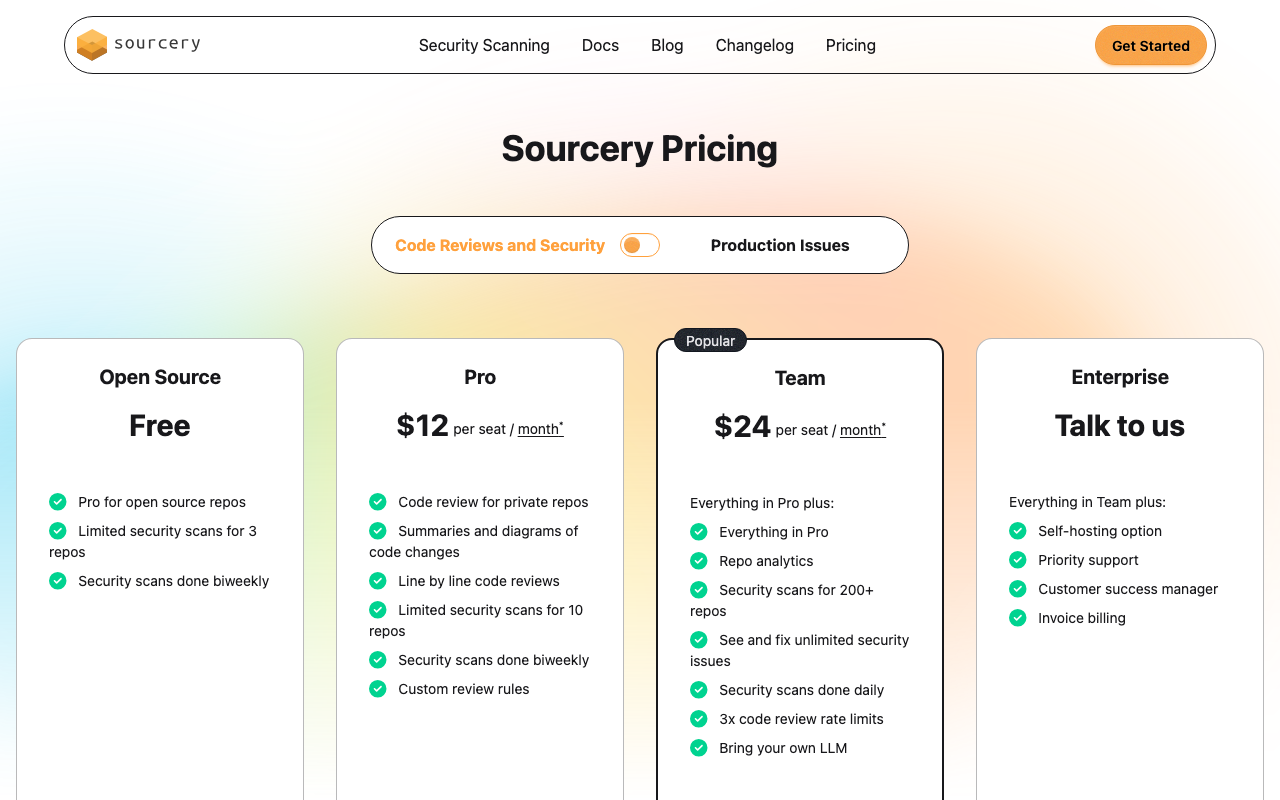
Sourcery Pricing
| Plan | Price | Key Features |
|---|---|---|
| Free | $0 | Open-source repositories only. AI code reviews, basic refactoring suggestions, GitHub integration, VS Code and PyCharm extensions. |
| Pro | $10/user/month | Private repositories, advanced AI reviews, custom coding guidelines, GitHub and GitLab integration (including self-hosted), IDE chat assistant, priority support. |
| Team | $24/user/month | Everything in Pro plus repository analytics dashboard, security scanning for 200+ repos, unlimited security issue fixes, daily security scans, 3x code review rate limits, bring-your-own-LLM option. |
| Enterprise | Custom | Everything in Team plus SSO/SAML, custom AI model tuning, self-hosted deployment, dedicated account manager, compliance and audit features, SLA guarantees. |
All paid plans offer a 20% discount for annual billing. Seats are charged per assigned developer, not per contributor.
Side-by-Side Cost at Scale
| Team Size | mypy Annual Cost | Sourcery Pro Annual Cost | Sourcery Team Annual Cost |
|---|---|---|---|
| 1 dev | $0 | $120 | $288 |
| 5 devs | $0 | $600 | $1,440 |
| 10 devs | $0 | $1,200 | $2,880 |
| 20 devs | $0 | $2,400 | $5,760 |
| 50 devs | $0 | $6,000 | $14,400 |
Pricing Observations
The cost comparison is uncomplicated for type checking. If you only need Python type annotation verification, mypy does it for free and will continue to do so. Sourcery’s value proposition is entirely in what it adds beyond type checking: AI-assisted PR review, refactoring suggestions, PR summaries, and PR workflow integration. Nothing in Sourcery overlaps with mypy.
Sourcery Pro at $10/user/month is among the most affordable AI code review tools. For comparison, CodeRabbit costs $24/user/month, DeepSource costs $24/user/month, and most other AI review platforms price at $15-30/user/month. Sourcery’s Pro plan is entry-level pricing that makes AI PR review accessible to small teams.
Open-source Python projects get Sourcery for free. The Free tier’s full AI review features on public repositories is one of the more generous offers in the AI review space. Open-source Python projects can benefit from Sourcery’s refactoring suggestions and PR review quality at zero cost while continuing to use mypy at zero cost.
The Team plan at $24/user/month competes with broader platforms. For comparison, Qodo charges $30/month flat for up to 30 users on its Teams plan for agentic PR review plus automated test generation, and DeepSource charges $24/user/month for a full quality platform with dashboards and autofix. Sourcery’s Team plan is strong value for Python teams wanting AI review plus basic security scanning. For teams that need comprehensive security alongside PR review, a dedicated SAST tool such as Semgrep or Snyk Code remains the better pairing.
Use Cases - When to Choose Each
When mypy Alone Is the Right Starting Point
Projects adding type safety to an existing Python codebase. mypy is the natural first step when a team decides to adopt type annotations. It is free, runs locally, integrates with every CI system, and can be adopted incrementally - one module at a time, with progressively stricter configuration as coverage increases. There is no reason to delay adding mypy while evaluating other tools.
Teams where runtime type errors are the primary pain point. If your team’s most common production issues are AttributeError, TypeError, or unexpected None values from API boundaries, mypy directly addresses this root cause. Adding type annotations and running mypy catches these errors before they reach production. Sourcery would not catch these issues - type errors are not code quality problems, they are correctness problems.
Solo developers and very small teams. When you are the only developer or working in a team of two or three, mypy in the editor and pre-commit hooks provides comprehensive local type enforcement for free. AI PR review adds the most value when multiple developers are contributing code and maintaining a consistent review standard is difficult. For a solo developer, mypy catches the type issues that matter and costs nothing.
Budget-constrained teams. mypy is free, always. If $10/user/month is not in the budget, mypy plus Pylint (or the faster Ruff linter) plus Bandit for security provides a comprehensive Python quality stack at zero cost.
When Sourcery Adds Value Alongside mypy
Python teams whose PR review workflow produces inconsistent feedback. If your team’s code review quality varies - some reviewers catch idiomatic issues, others do not - Sourcery provides a consistent AI baseline that applies the same Pythonic standards to every PR. mypy enforces type correctness consistently, but it does not review for code quality. Sourcery fills that gap.
Teams that want refactoring suggestions beyond what any static tool provides. mypy does not tell you to replace a for-loop with a list comprehension. Pylint does not suggest using a context manager instead of manual try/finally. Sourcery’s refactoring analysis identifies these improvement opportunities systematically, across every PR, with specific before/after code diffs.
Open-source Python projects. Sourcery’s Free tier makes it a zero-cost addition to any open-source project. Getting AI review, refactoring suggestions, and PR summaries on every community contribution costs nothing when the repository is public. Combined with mypy in CI (also free), this gives open-source maintainers a strong automated quality baseline.
Small to mid-size Python teams at $10/user/month. For a team of five developers, Sourcery Pro costs $600/year - minor compared to engineering time saved on review cycles. If your team’s pain point is time spent on code review rather than type errors, Sourcery’s cost-to-value ratio is competitive.
When You Need a Broader Platform
Both mypy and Sourcery have gaps that broader platforms address.
When you need quality gates and organizational dashboards: SonarQube and Codacy both provide quality gate enforcement, PR blocking on failing gates, organizational trend dashboards, and technical debt tracking that neither mypy nor Sourcery offers as a first-class feature. SonarQube’s Community Build is free for self-hosted deployment and covers Python deeply. Codacy Pro at $15/user/month is a cloud platform with quality gates, SCA, SAST, and coverage tracking alongside Python linting.
When you need comprehensive security scanning: Bandit (free Python SAST) covers the security gaps that neither mypy nor Sourcery base plans address. Semgrep (free CLI) extends to taint tracking and cross-file data flow analysis. For teams with significant security requirements, neither Sourcery’s Team plan security scanning nor mypy’s type checking is a substitute for purpose-built SAST. See our best SAST tools post for a full comparison.
When you need all-git-platform support: Sourcery only supports GitHub and GitLab. If your team uses Bitbucket or Azure DevOps, CodeRabbit ($24/user/month) and Qodo ($30/month flat for up to 30 users on Teams) support all four major git platforms. Qodo in particular pairs its PR bot with IDE and CLI clients and automated test generation - a useful consolidation for teams that want to avoid assembling multiple tools. mypy is not tied to any platform, so it remains relevant regardless of which AI review tool you choose.
Running mypy and Sourcery Together
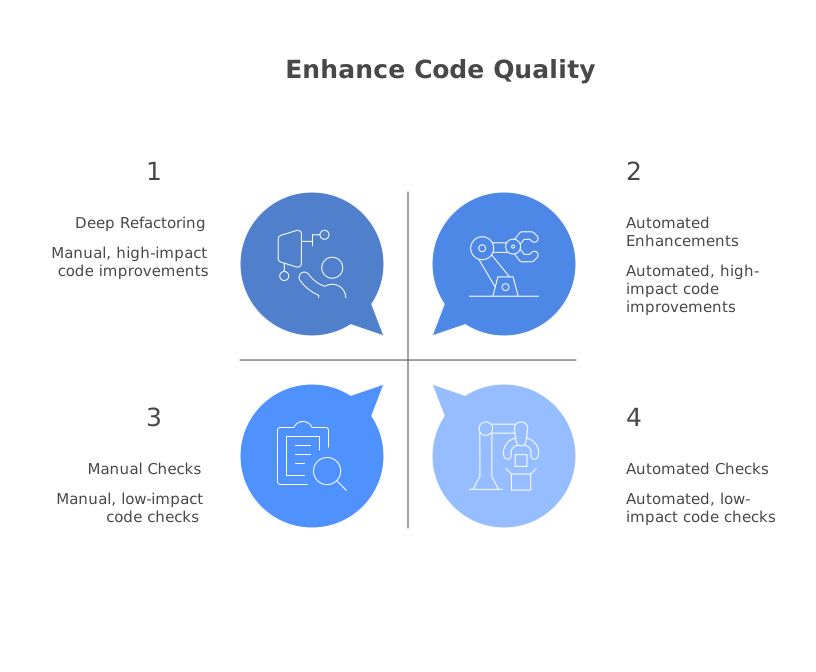
The most effective Python quality setup does not require choosing between mypy and Sourcery. They operate at different stages of the development workflow and complement each other without overlap.
The Recommended Workflow
Step 1 - Editor (real-time): Run mypy (via the VS Code Mypy extension or Pylance in Pyright mode) as you write code. Type errors are underlined in real time. Run Sourcery’s VS Code or PyCharm extension simultaneously for refactoring suggestions. The two tools use different signal channels - mypy surfaces type errors, Sourcery suggests improvements - and the combined in-editor experience is richer than either tool alone.
Step 2 - Pre-commit hooks: Configure the pre-commit framework with mypy’s official hook. When you run git commit, mypy runs on staged files and blocks the commit if type errors are introduced. Ruff can also run at this stage for fast linting. This ensures type errors and linting violations never enter the repository. Sourcery does not have a pre-commit hook - it operates at the PR level.
Step 3 - Pull request (Sourcery’s primary stage): When you open a PR on GitHub or GitLab, Sourcery automatically analyzes the diff and posts inline comments. The AI reviewer provides refactoring suggestions, flags logic issues, generates a PR summary, and evaluates the change in full context. This is the stage where Sourcery provides unique value that mypy cannot replicate - mypy has already validated type correctness before the code reached PR stage.
Step 4 - CI pipeline: Run mypy in CI as a hard quality gate. mypy src/ --strict returns a non-zero exit code if type errors are found, failing the build. Store the .mypy_cache directory as a CI cache artifact to speed up subsequent runs on large codebases. Some teams also run Ruff in CI alongside mypy for linting enforcement. Sourcery’s PR review runs independently of the CI pipeline via the GitHub App.
Configuration Alignment
A practical consideration when running both tools: make sure mypy’s type enforcement and Sourcery’s refactoring suggestions are not creating conflicting signals for developers. For example, if mypy requires that functions return an explicit type and Sourcery suggests removing a return type annotation for brevity, developers receive contradictory guidance. The resolution is simple: your .sourcery.yaml configuration should note team preferences that align with your mypy strictness settings.
For teams that want to add type annotations incrementally, communicate this roadmap in both the mypy configuration (using per-module ignore settings for legacy code) and in the Sourcery guidelines (noting that annotation coverage is being increased). This prevents Sourcery from flagging the absence of annotations in legacy modules that are scheduled for annotation in a future sprint.
A Modern Python Quality Stack in 2026
For teams starting fresh or redesigning their quality toolchain in 2026, the recommended combination is:
- Ruff for fast linting and formatting (replaces Pylint and Flake8, runs in milliseconds)
- mypy for type checking (free, comprehensive, runs locally and in CI)
- Sourcery for AI-powered PR review (Pro at $10/user/month for private repositories)
- Bandit for Python security scanning (free, adds pre-commit in under a minute)
This stack covers type correctness, code quality enforcement, AI-assisted PR review, and basic security at a combined cost of $10/user/month for teams with private repositories. Each tool operates at a distinct layer and none of them overlap.
Alternatives to Consider
DeepSource
DeepSource is a modern code quality and static analysis platform with 5,000+ analysis rules and a claimed sub-5% false positive rate. For Python, DeepSource’s analyzer covers anti-patterns, performance issues, security vulnerabilities, style violations, and type-consistency issues. Its Autofix AI automatically generates and applies fixes for detected issues - a step beyond Sourcery’s suggestion-and-review workflow. The free tier covers individual developers. The Team plan costs $24/user/month and includes AI code review, Autofix AI, security scanning, and code health dashboards. DeepSource is a strong alternative for teams that want both static analysis depth and AI-assisted remediation in one platform. See our DeepSource vs Codacy comparison for platform context.
Pyright
Pyright is Microsoft’s Python type checker - faster than mypy on large codebases, written in TypeScript, and the engine powering Pylance in VS Code. For teams whose primary frustration with mypy is speed (mypy can take tens of seconds on large codebases), Pyright provides near-instant type checking in the editor and competitive CI performance. Pyright is free and open source. Some teams use Pyright in VS Code via Pylance for the editor experience and mypy in CI for the reference implementation’s stricter correctness guarantees. Pyright does not compete with Sourcery - it is a type checker, not a code review platform.
CodeRabbit
CodeRabbit is an AI code review platform at $24/user/month with strong Python support and coverage of GitHub, GitLab, Bitbucket, and Azure DevOps. For teams that want AI PR review comparable to Sourcery but need platform support beyond GitHub and GitLab, CodeRabbit is the most direct alternative. It does not replace mypy - CodeRabbit provides PR-level review while mypy handles type checking. See our CodeRabbit vs Sourcery comparison for a direct platform comparison.
Semgrep
Semgrep is the leading free tool for Python security scanning. While not a general-purpose quality tool, Semgrep’s Python security rulesets cover injection vulnerabilities, authentication issues, and cryptographic weaknesses that neither mypy nor Sourcery detect. The open-source CLI is free, runs in CI or locally, and provides cross-file taint tracking. For Python teams where security is a priority, adding Semgrep alongside mypy and Sourcery takes 15 minutes to configure and adds meaningful vulnerability detection at no cost. See our Semgrep vs Bandit comparison for context on Python security tooling.
Qodo
Qodo (formerly CodiumAI) is worth considering for Python teams that want AI code review and automated test generation from one platform. The free Developer tier covers 30 PR reviews per month; the Teams plan is $30/month flat for up to 30 users. Qodo supports GitHub, GitLab, Bitbucket, and Azure DevOps, so for Python teams on Azure DevOps in particular, where Sourcery is not available, it is one of the more practical AI code review options. Its credit-based pricing for the IDE and CLI clients takes some getting used to, and it does not replace mypy - Qodo reviews and generates tests, mypy proves type correctness.
SonarQube
SonarQube is the most mature code quality platform for teams that need centralized dashboards, quality gate enforcement, and technical debt tracking. For Python, SonarQube provides over 100 dedicated rules covering bugs, code smells, security vulnerabilities, and maintainability issues. The Community Build is free for self-hosted deployment and covers Python analysis, quality gates, and branch analysis. SonarQube does not replace mypy (it has limited type-aware checks) or Sourcery (it is not an AI review platform), but it adds the organizational platform layer - dashboards, trend tracking, PR decoration, quality gates - that neither mypy nor Sourcery provides as a first-class feature.
Final Recommendation
The Sourcery vs mypy comparison resolves quickly once the tools’ purposes are understood: they do not compete. mypy is a type correctness tool. Sourcery is a code quality and PR review tool. The question is not which to choose but whether each belongs in your Python quality stack.
mypy belongs in every Python project that uses type annotations. If your team is writing annotated Python - and in 2026, most serious Python projects are - mypy in your editor and CI pipeline is the correct tool for verifying those annotations. It is free, it catches real bugs, and it makes large-scale Python refactoring feasible. There is no scenario where mypy is not worth using if you have type annotations.
Sourcery belongs on top of mypy for teams that want better PR review. Once type correctness is handled by mypy, the remaining code quality questions - is this code idiomatic, is this structure maintainable, is this logic clear, does this PR follow our standards - are exactly what Sourcery addresses. At $10/user/month, Sourcery Pro is one of the most affordable ways to add AI-powered PR review to a Python team.
For solo Python developers: mypy in the editor and pre-commit hooks, Ruff for linting, and Bandit for security. This covers type correctness, code quality enforcement, and security at zero cost. Use Sourcery’s Free tier if your code is open source.
For small Python teams (3-8 developers): mypy locally and in CI for type checking. Sourcery Pro at $10/user/month for AI-assisted PR review. The combination gives you type safety enforcement and intelligent PR review without redundancy. Annual cost for a 5-person team: $600 for Sourcery Pro, $0 for mypy.
For mid-size Python teams (10-30 developers): Evaluate whether you want a platform layer - SonarQube, Codacy, or DeepSource - for quality gates, centralized dashboards, and organizational trend tracking, or whether mypy plus Sourcery is sufficient. For teams with strong security requirements, add Bandit and Semgrep regardless of which review approach you choose.
For Python teams on Bitbucket or Azure DevOps: Sourcery does not support these platforms. Use mypy in CI for type checking and evaluate CodeRabbit ($24/user/month) or Qodo ($30/month flat for up to 30 users on Teams) for AI PR review - both support all four major git platforms.
For open-source Python projects: mypy in CI (via GitHub Actions) plus Sourcery’s Free tier on GitHub is a strong, zero-cost combination. The Sourcery Free tier’s full AI review capability on public repositories is one of the most generous offerings in the AI review space.
The bottom line: mypy and Sourcery address different, non-overlapping problems in the Python development workflow. A Python team serious about code quality in 2026 uses both.
Further Reading
- Best Python Code Quality Tools: Sourcery vs Black vs Flake8 vs Ruff
- Qodo vs Sourcery: AI Code Review Approaches Compared (2026)
- Sourcery vs Black: Code Refactoring vs Code Formatting (2026)
- Sourcery vs Codacy: AI Code Review Tools Compared (2026)
- Sourcery vs DeepSource: AI Code Review Tools Compared (2026)
 Gitar
GitarComments are not enough
Gitar applies the fix, validates it in CI, and clears the queue.
See it on your repo Read our independent Gitar reviewFrequently Asked Questions
Is Sourcery a replacement for mypy?
No. Sourcery and mypy solve fundamentally different problems and cannot replace each other. mypy is a static type checker - it verifies that your type annotations are correct and that values are used consistently with their declared types. Sourcery is an AI-powered pull request review and refactoring platform - it reviews code for quality, idiomaticity, logic issues, and architectural concerns. mypy finds type errors; Sourcery finds code quality issues and suggests improvements. The vast majority of Python teams serious about quality use both: mypy enforces type correctness locally and in CI, while Sourcery provides contextual AI feedback during pull request review.
Is mypy free?
Yes, mypy is completely free and open source under the MIT license. There is no paid edition, no premium tier, and no usage limits. The core mypy package, all its plugins (mypy-django, sqlalchemy-stubs, etc.), the VS Code Mypy extension, and the pre-commit hook integration are entirely free. mypy is maintained by Jukka Lehtosalo and the Python community. This zero-cost model is a significant advantage for teams evaluating whether to add type checking - the only cost is engineer time for annotating existing code.
How much does Sourcery cost?
Sourcery has four pricing tiers. The Free plan covers all open-source (public) repositories with full AI code reviews, basic refactoring suggestions, and GitHub integration at no cost. The Pro plan costs $10/user/month and adds private repository support, advanced AI reviews, custom coding guidelines, GitHub and GitLab integration including self-hosted instances, and an IDE chat assistant. The Team plan costs $24/user/month and adds repository analytics, security scanning for 200+ repositories, unlimited security issue fixes, daily security scans, 3x code review rate limits, and a bring-your-own-LLM option. The Enterprise plan has custom pricing and adds SSO/SAML, custom AI model tuning, self-hosted deployment, a dedicated account manager, and compliance features.
Does mypy work without type annotations?
mypy can analyze unannotated Python code in limited ways. Without annotations, mypy falls back to using inferred types where it can determine them - for example, it can infer that x = 1 makes x an int. However, mypy's primary value comes from type annotations. When function parameters and return types are annotated, mypy can trace type consistency across your entire codebase. You can adopt mypy incrementally: run it with the --ignore-missing-imports flag on unannotated legacy code, then add annotations file by file as you refactor. mypy's --strict flag enables the strictest checking mode and requires annotations on all function signatures. For large unannotated codebases, starting with --check-untyped-defs and progressively tightening the configuration is a common migration path.
Can Sourcery catch type errors like mypy does?
No. Sourcery does not perform static type inference or type checking. It does not track how types flow through your codebase, verify that type annotations are correct, or flag type mismatches between callers and callees. Sourcery's AI analysis understands Python semantics at a high level and can sometimes notice obvious type-related issues in context - for example, flagging that a function returns None in some paths but an int in others - but this is incidental and not systematic. For reliable, complete type checking in Python, mypy (or its faster alternative Pyright) is the correct tool. Sourcery catches different categories of issues: code quality, idiom violations, logic errors visible in a diff, and architectural concerns.
What is the difference between mypy and Pyright?
Both mypy and Pyright are static type checkers for Python that use PEP 484 type annotations, but they differ in implementation and behavior. mypy is the reference implementation - written in Python itself, part of the Python core team's ecosystem, and the oldest and most battle-tested Python type checker. Pyright is Microsoft's type checker - written in TypeScript, significantly faster than mypy (especially on large codebases), and the engine powering Pylance in VS Code. For most Python teams, mypy's strictness and correctness make it the CI standard, while Pyright's speed makes it the preferred IDE experience via Pylance. Neither conflicts with Sourcery - all three can be used together.
Does Sourcery work with GitHub and GitLab?
Yes. Sourcery supports both GitHub and GitLab, including self-hosted instances of both platforms. The Pro plan ($10/user/month) and above include GitLab integration. Sourcery does not support Bitbucket or Azure DevOps. If your team uses either of those platforms, Sourcery is not an option. In that case, consider CodeRabbit (which supports all four major git platforms) or Qodo ($30/month flat for up to 30 users on Teams, also supporting all four platforms). mypy, by contrast, is not tied to any git platform - it runs as a CLI tool locally and in any CI/CD system.
How do I run mypy in CI?
Running mypy in CI is straightforward: add mypy to your requirements-dev.txt or pyproject.toml dev dependencies, then add a CI step that runs mypy src/ (or your source directory) and fails on a non-zero exit code. In GitHub Actions, a typical step looks like: run: mypy src/ --strict. Many teams also use the pre-commit framework with mypy's official hook to block commits that introduce type errors. For large codebases, the dmypy daemon can cache analysis results and dramatically speed up CI runs. The mypy cache directory (.mypy_cache) can be stored as a CI cache artifact to further speed up subsequent runs.
Is Sourcery better than mypy for Python?
This is not the right framing - they serve entirely different purposes. mypy is better at verifying type correctness: catching AttributeError before runtime, ensuring function contracts are upheld, and making large codebases refactorable with confidence. Sourcery is better at improving code quality during pull request review: catching idiomatic Python violations, suggesting refactoring patterns, generating PR summaries, and providing contextual feedback that a type checker cannot produce. The right question is not which is better, but which problem you are trying to solve. Type safety and code quality are both important and complementary dimensions of Python code health.
What Python tools work well alongside both mypy and Sourcery?
A well-rounded Python quality stack in 2026 typically includes: mypy (or Pyright) for type checking, Ruff for fast linting and formatting (replacing Pylint and Flake8), Sourcery for AI-powered PR review, and Bandit or Semgrep for security scanning. Ruff runs in milliseconds and covers most linting rules, mypy provides type correctness guarantees, and Sourcery adds the PR review layer that static tools cannot provide. For teams with security requirements, Semgrep's Python security rulesets add taint tracking and vulnerability detection on top of the quality stack. These tools run at different stages - Ruff and mypy locally and in pre-commit, Sourcery at PR time, Semgrep in CI - and do not conflict.
Can mypy check Django or SQLAlchemy code?
mypy can check Django and SQLAlchemy code through type stubs and plugins. The django-stubs package provides type annotations for Django's ORM, models, views, forms, and other components, and the mypy-django plugin tells mypy how to handle Django's metaclass magic. For SQLAlchemy, sqlalchemy2-stubs covers the SQLAlchemy 2.x API. Without these stubs, mypy produces many false positives on Django code because it cannot resolve dynamically generated attributes. With stubs installed, mypy provides strong type coverage for Django applications. The configuration requires adding plugin = mypy_django_plugin.main to your mypy.ini or pyproject.toml. This is a one-time setup cost that pays off through type-safe ORM queries and view function signatures.
What is a good alternative to Sourcery and mypy for Python teams?
The best alternative depends on the gap you are filling. For a comprehensive code quality platform that includes type checking, linting, and AI review in one tool, DeepSource ($24/user/month) is worth evaluating - it bundles static analysis, type consistency checks, and AI-assisted fixes. For teams wanting broader platform support than Sourcery offers (Bitbucket, Azure DevOps), Qodo at $30/month flat for up to 30 users on Teams supports all four major git platforms and pairs AI PR review with automated test generation. For pure type checking at higher speed than mypy, Pyright (free, open source) is the fastest alternative and powers VS Code's Pylance extension. For teams that want SonarQube-style quality gates alongside Python analysis, SonarQube Community Build is free for self-hosted deployment and covers Python quality rules without replacing mypy's type checking.
Explore More
Tool Reviews
 Sourcery Review
Free Newsletter
Stay ahead with AI dev tools
Weekly insights on AI code review, static analysis, and developer productivity. No spam, unsubscribe anytime.
Join developers getting weekly AI tool insights.
Related Articles
CodeRabbit vs Qodo: AI Code Review Tools Compared (2026)
CodeRabbit vs Qodo - we compare pricing, features, test generation, and review quality so you can pick the right AI reviewer for your team.
February 21, 2026
comparisonWhat Happened to CodiumAI? The Rebrand to Qodo Explained
CodiumAI rebranded to Qodo in 2024. Here's what changed, what stayed the same, and what it means for existing users and new buyers.
February 22, 2026
comparisonGitar vs Qodo: Workflow Automation or Test Generation?
Gitar vs Qodo compared on review architecture, test generation, self-hosting, migrations, CI ownership, and pricing. Which AI code quality platform fits your team.
August 12, 2026