CodiumAI vs Codium (Open Source): They Are NOT the Same
CodiumAI (now Qodo) and Codium (VSCodium) are completely different products. Here's what each one does and why people confuse them.
Published:
The confusion explained
If you have searched for “CodiumAI” and found yourself looking at an open-source code editor, or searched for “Codium” the editor and landed on an AI testing tool, you are not alone. This is one of the most common naming confusions in the developer tools space, and it has caused genuine frustration for users of both products.
Here is the short version: CodiumAI and Codium (VSCodium) are completely different products from completely different organizations. They share a word in their names and absolutely nothing else. CodiumAI was a commercial AI startup that has since rebranded to Qodo. Codium - properly known as VSCodium - is a community-maintained open-source build of Visual Studio Code.
This post clears up the confusion once and for all.
What is CodiumAI (now Qodo)?
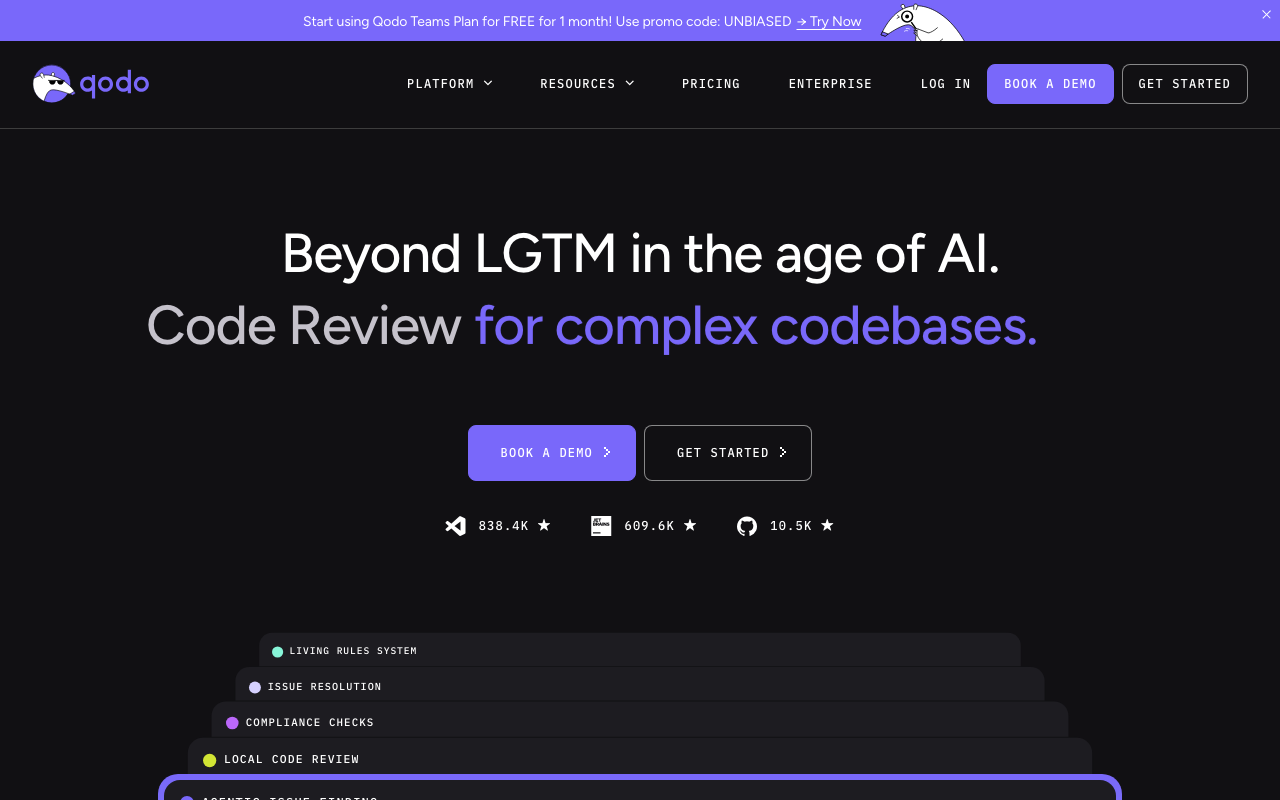
CodiumAI was an AI-powered code quality company founded in 2022 by Itamar Friedman and Dedy Kredo. The company’s original product was an IDE extension that used AI to generate meaningful unit tests - not placeholder stubs, but tests with real assertions covering edge cases, error paths, and boundary conditions. This test generation capability made CodiumAI popular among developers who wanted to improve test coverage without spending hours writing boilerplate test code.
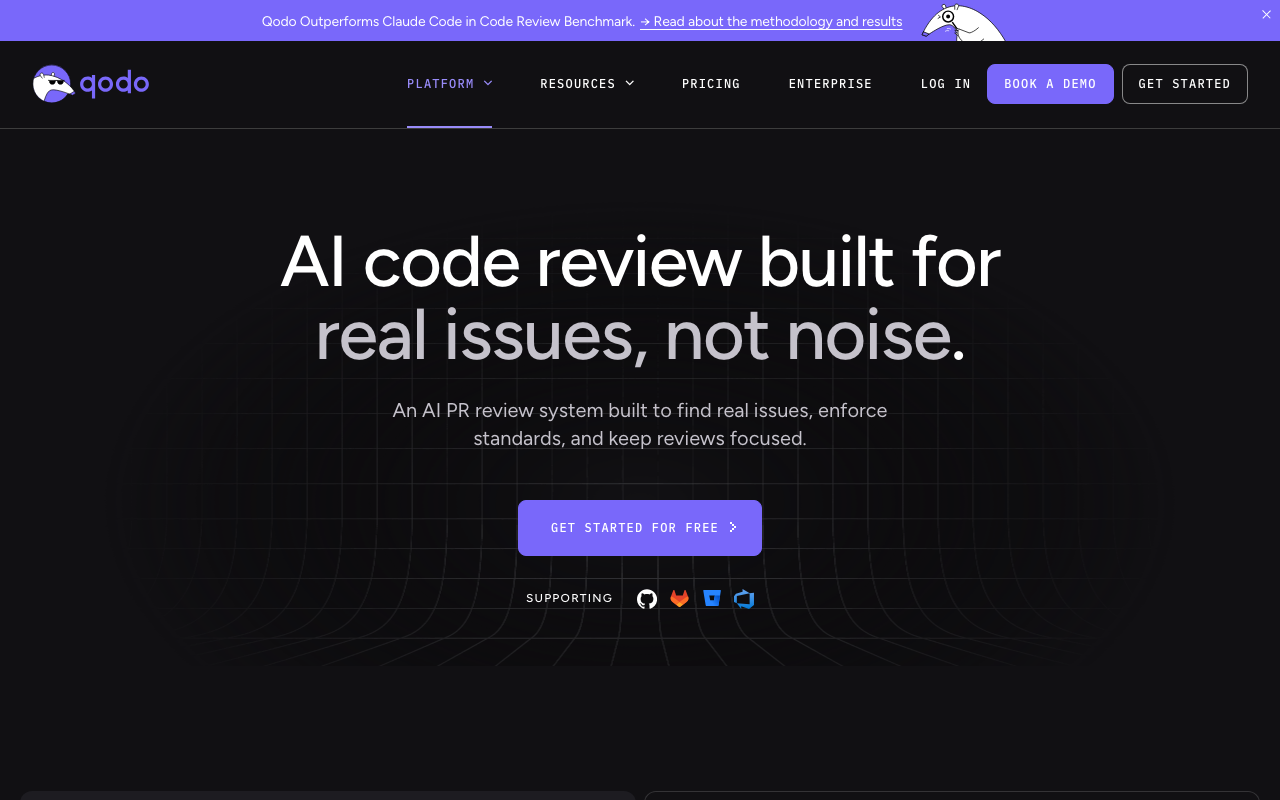
Over time, CodiumAI expanded well beyond test generation. The company built and open-sourced PR-Agent, an AI code review engine that automatically reviews pull requests on GitHub, GitLab, Bitbucket, and Azure DevOps. The platform grew to include a CLI tool, an enterprise context engine for multi-repo awareness, and a multi-agent review architecture.
In 2024, CodiumAI rebranded to Qodo. The new name reflected both the broader platform vision and the desire to end the naming confusion with VSCodium. Today, Qodo operates at qodo.ai and offers:
- Qodo Merge - AI-powered PR code review across multiple Git platforms
- Qodo Cover - automated test generation in popular frameworks (Jest, pytest, JUnit, Vitest)
- Qodo Gen - the overall AI development experience spanning IDE, CLI, and Git workflows
Qodo was recognized as a Gartner Visionary in AI Code Assistants in 2025 and raised $40 million in Series A funding. The February 2026 Qodo 2.0 release introduced a multi-agent review architecture that achieved the highest overall F1 score (60.1%) in comparative benchmarks across eight AI code review tools.
For more on the rebrand story, see our full post: What Happened to CodiumAI? The Rebrand to Qodo Explained.
What is Codium (VSCodium)?
Codium - more commonly referred to as VSCodium - is something entirely different. It is an open-source, community-maintained binary distribution of Microsoft’s Visual Studio Code editor with all Microsoft telemetry and tracking removed.
Here is the background. Microsoft publishes the VS Code source code under the MIT License on GitHub, which means anyone can build it from source. However, the official VS Code binaries that you download from code.visualstudio.com include Microsoft-specific telemetry, proprietary branding, and connections to Microsoft’s extension marketplace. These additions are not part of the open-source codebase - they are added during Microsoft’s build process.
VSCodium takes the same MIT-licensed source code and compiles it without those Microsoft additions. The result is an editor that looks and functions almost identically to VS Code but does not send telemetry data to Microsoft. This appeals to developers who care about privacy, work in organizations with strict data policies, or simply prefer fully open-source software.
Key characteristics of VSCodium:
- Completely free and open source - MIT License, no paid tiers
- Community maintained - no commercial company behind it
- Uses Open VSX Registry - instead of Microsoft’s Visual Studio Marketplace
- Same editor experience - themes, keybindings, and most extensions work identically
- No AI features - it is a code editor, not an AI tool
- Available since 2018 - predates CodiumAI by four years
VSCodium is not an AI product. It does not review your code, generate tests, or provide any AI-powered assistance. It is simply VS Code without Microsoft’s telemetry.
Key differences at a glance
| Dimension | CodiumAI / Qodo | Codium / VSCodium |
|---|---|---|
| What it is | AI code review and test generation platform | Open-source code editor (VS Code fork) |
| Organization | Qodo (commercial company, Israel-based) | Community project (no company) |
| Founded | 2022 (rebranded to Qodo in 2024) | 2018 |
| Pricing | Free tier, $30/user/month Teams, custom Enterprise | Completely free |
| Open source | Core engine (PR-Agent) is open source | Entirely open source (MIT License) |
| AI features | Yes - PR review, test generation, code analysis | None |
| Purpose | Review code, generate tests, improve code quality | Edit code with privacy |
| Relationship to VS Code | Extension that runs inside VS Code (or other IDEs) | Alternative build of VS Code itself |
| Website | qodo.ai | vscodium.com |
| Revenue model | SaaS subscriptions | None (community project) |
The table makes it clear: these are products in entirely different categories. One is an AI platform. The other is a text editor.
Detailed comparison
Use case and target audience
Qodo targets development teams that want AI assistance with code review and testing. Its users are typically engineering managers, team leads, and developers working on collaborative codebases where pull request quality and test coverage matter. The tool integrates into existing Git workflows and provides value at the team level.
VSCodium targets individual developers who want a VS Code-like editing experience without Microsoft telemetry. Its users are privacy-conscious developers, open-source advocates, and organizations with policies that restrict proprietary telemetry. It is a personal tool choice, not a team infrastructure decision.
Technology
Qodo is built on large language models and uses AI to analyze code diffs, understand context across repositories, and generate human-readable review comments and test code. Its open-source PR-Agent engine supports GitHub, GitLab, Bitbucket, Azure DevOps, CodeCommit, and Gitea.
VSCodium is built on the Electron framework and the Monaco editor - the same foundation as VS Code. It involves no AI technology. The “technology” of VSCodium is essentially a build configuration that strips out Microsoft-specific components from the VS Code source tree.
Licensing and openness
Qodo’s commercial platform is proprietary. However, the core PR-Agent engine is open source on GitHub under the Qodo organization, allowing teams to self-host and inspect the review logic. The commercial tiers add enterprise features like SSO, audit logging, and the multi-repo context engine.
VSCodium is fully open source under the MIT License. Everything about it is transparent - the build scripts, the configuration patches, and the distribution pipeline. There is no proprietary layer.
Can you use both together?
Yes, and this is perhaps the clearest illustration that these products are not competitors. You can run the Qodo extension inside VSCodium just as you would run it inside VS Code. VSCodium is the editor where you write code. Qodo is the AI tool that reviews and tests your code. They operate at different layers of the development stack.
The only practical consideration is that VSCodium uses the Open VSX Registry rather than Microsoft’s Visual Studio Marketplace. If the Qodo extension is available on Open VSX, installation is seamless. If not, you can download the extension as a .vsix file and install it manually. This is a minor inconvenience, not a compatibility issue.
For developers who use Qodo’s PR review features (which run as a GitHub/GitLab bot rather than an IDE extension), the choice of editor is entirely irrelevant. Qodo Merge reviews your pull requests regardless of whether you wrote the code in VS Code, VSCodium, Neovim, IntelliJ, or Notepad.
The rebrand that fixed the confusion
CodiumAI’s decision to rebrand to Qodo in 2024 was driven by two factors, and the naming confusion with VSCodium was explicitly one of them. The CodiumAI team acknowledged that the name overlap was causing real problems:
- Developers searching for VSCodium would land on CodiumAI’s website and get confused
- CodiumAI users would search for support and find VSCodium documentation instead
- Enterprise buyers would ask if CodiumAI was related to the open-source editor
- SEO and brand recognition were muddied by the shared terminology
The Qodo name has no overlap with any existing developer tool. Since the rebrand, the confusion has decreased substantially - though search engines still surface the old CodiumAI name in results, which is why articles like this one remain necessary.
The other reason for the rebrand was that CodiumAI had outgrown its original identity. The company had expanded from a test generation tool into a full AI code quality platform, and the old name was underselling the product. Qodo carries no legacy associations and allows the company to position itself on its own terms.
For the full rebrand story, see: What Happened to CodiumAI? The Rebrand to Qodo Explained.
Alternatives to consider
If you landed on this page looking for an AI code review tool (what CodiumAI/Qodo does), here are the main options:
- Qodo - the current name for CodiumAI. AI code review plus automated test generation. Free tier available, Teams at $30/user/month. See Qodo vs GitHub Copilot and Qodo vs CodeRabbit for detailed comparisons.
- GitHub Copilot - all-in-one AI coding platform with code review as one feature. $10/month individual, $19/user/month Business. Best for teams fully invested in GitHub. See GitHub Copilot alternatives.
- CodeRabbit - dedicated AI code review bot for pull requests. Strong alternative to Qodo with different review philosophy.
- CodeAnt AI - AI code review and code quality platform at $24-40/user/month. Combines automated PR review with code quality analysis, security vulnerability detection, and anti-pattern identification. A mid-range option between free tools and expensive enterprise platforms.
If you landed here looking for a privacy-focused code editor (what VSCodium is), your alternatives include:
- Neovim - terminal-based editor with extensive plugin ecosystem
- Emacs - highly extensible editor with a long history
- VS Code (standard) - if telemetry is not a concern, the official build gives you full marketplace access
- Zed - modern, fast code editor built in Rust with collaborative features
Summary
CodiumAI and Codium (VSCodium) were never the same product, never from the same organization, and never in the same product category. The confusion was always purely a naming coincidence.
CodiumAI was a commercial AI company that built tools for automated code review and test generation. It rebranded to Qodo in 2024, and the naming confusion is now resolved at the brand level. VSCodium is a community-driven open-source build of VS Code that removes Microsoft telemetry, and it continues to operate independently under its original name.
If you want AI to review your pull requests and generate tests, you want Qodo. If you want a telemetry-free code editor, you want VSCodium. And if you want both, you can install the Qodo extension inside VSCodium and use them together.
For more on Qodo and how it compares to other AI tools, see our related posts:
Frequently Asked Questions
Is CodiumAI the same as Codium (VSCodium)?
No. CodiumAI (now rebranded to Qodo) is a commercial AI code review and test generation platform. Codium, also known as VSCodium, is a community-driven open-source build of VS Code with Microsoft telemetry removed. They are completely unrelated products from different organizations with different purposes. The name similarity is a coincidence.
Why do people confuse CodiumAI and Codium?
The confusion comes from nearly identical names. CodiumAI was an AI startup that used the word Codium in its branding. VSCodium is an open-source VS Code fork that also uses the word Codium. Despite the shared word, the two projects have no affiliation, no shared codebase, and no business relationship. The CodiumAI team rebranded to Qodo in 2024 partly to eliminate this confusion.
What is CodiumAI called now?
CodiumAI rebranded to Qodo in 2024. The company kept the same team, technology, and products but changed its name to better reflect its expanded platform and to resolve the persistent confusion with VSCodium. All CodiumAI products now operate under the Qodo brand at qodo.ai.
Is VSCodium safe to use?
Yes. VSCodium is built from the same open-source VS Code codebase that Microsoft publishes on GitHub. The project simply compiles VS Code from source with Microsoft-specific telemetry and tracking removed. It is maintained by a community of contributors and the build process is fully transparent. Many developers and organizations use VSCodium as their primary editor for privacy reasons.
Can I install Qodo (CodiumAI) extensions in VSCodium?
Yes, with a caveat. VSCodium uses the Open VSX Registry instead of Microsoft's Visual Studio Marketplace by default. If the Qodo extension is published on Open VSX, you can install it directly. If not, you can manually download the .vsix file from the VS Code Marketplace and install it in VSCodium. Many VS Code extensions work in VSCodium without issues since both editors share the same underlying architecture.
Is Codium (VSCodium) free?
Yes, VSCodium is completely free and open source. It is licensed under the MIT License, the same license as the VS Code source code it is built from. There are no paid tiers, no premium features, and no subscription required. It is a community project with no commercial backing.
How much does Qodo (CodiumAI) cost?
Qodo offers a free Developer plan with 30 PR reviews and 250 IDE/CLI credits per month. The Teams plan costs $30/user/month when billed annually. Enterprise pricing is custom. The free tier is sufficient for individual developers to evaluate the platform. For full details, see the Qodo tool review on this site.
Does VSCodium support all VS Code extensions?
VSCodium supports most VS Code extensions, but not all. The key limitation is that VSCodium does not connect to Microsoft's Visual Studio Marketplace by default - it uses the Open VSX Registry instead. Some proprietary Microsoft extensions like Remote Development, Live Share, and certain language services are not available on Open VSX. Most community and third-party extensions are available or can be installed manually via .vsix files.
Did Codium (VSCodium) copy CodiumAI's name?
Neither project copied the other. VSCodium has existed since 2018 as a telemetry-free VS Code build, and its name is a portmanteau of VS Code and the suffix -ium. CodiumAI was founded in 2022 as an AI startup. Both independently chose names derived from the word code. The name collision was coincidental, and neither organization has accused the other of copying.
What are the best alternatives to both CodiumAI and VSCodium?
For AI code review alternatives to Qodo (formerly CodiumAI), consider CodeRabbit, GitHub Copilot Code Review, or CodeAnt AI ($24-40/user/month). For open-source editor alternatives to VSCodium, consider Neovim, Emacs, or the standard VS Code distribution if telemetry is not a concern. The alternatives depend entirely on which product you are looking for - an AI review tool or a code editor.
Should I use Qodo or VSCodium?
This is not an either-or choice because they serve completely different purposes. VSCodium is a code editor - where you write code. Qodo is an AI code review and test generation platform - which reviews your code and generates tests. You can use both together by running the Qodo extension inside VSCodium. The question of Qodo versus VSCodium is like asking whether you should use a hammer or a measuring tape - they do different things.
Why did CodiumAI rebrand to Qodo?
Two reasons. First, CodiumAI had expanded far beyond its original focus on AI test generation into a full code quality platform, and the old name no longer reflected the breadth of the product. Second, the persistent confusion with VSCodium was causing real problems - misdirected support requests, search confusion, and customer friction. The Qodo rebrand solved both issues simultaneously.
Explore More
Tool Reviews
 Qodo Review
 CodeAnt AI Review
Related Articles
- CodiumAI vs GitHub Copilot: Which AI Coding Assistant Should You Choose?
- Best AI Code Review Tools for Pull Requests in 2026
- Best AI Test Generation Tools in 2026: Complete Guide
- CodiumAI Alternatives: Best AI Tools for Automated Testing in 2026
- CodiumAI Review: AI-Powered Test Generation for VS Code
Free Newsletter
Stay ahead with AI dev tools
Weekly insights on AI code review, static analysis, and developer productivity. No spam, unsubscribe anytime.
Join developers getting weekly AI tool insights.
Related Articles
Checkmarx vs Veracode: Enterprise SAST Platforms Compared in 2026
Checkmarx vs Veracode - enterprise SAST, DAST, SCA, Gartner positioning, pricing ($40K-250K+), compliance, and when to choose each AppSec platform.
March 13, 2026
comparisonCodacy Free vs Pro: Which Plan Do You Need in 2026?
Codacy Free vs Pro compared - features, limits, pricing, and when to upgrade. Find the right Codacy plan for your team size and workflow.
March 13, 2026
comparisonCodacy vs Checkmarx: Developer Code Quality vs Enterprise AppSec in 2026
Codacy vs Checkmarx - developer code quality vs enterprise AppSec, pricing ($15/user vs $40K+), SAST, DAST, SCA, compliance, and when to choose each.
March 13, 2026